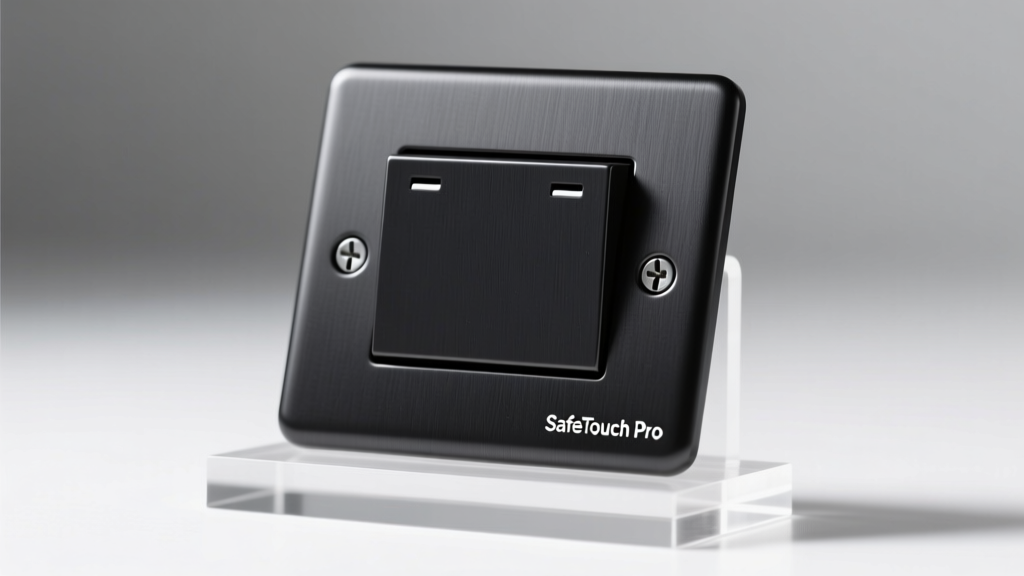
Switch plates seem minor—until a cracked, discolored, or ill-fitting one ruins your wall’s finish or poses a fire hazard. They’re not just decorative: UL-listed plates prevent arc faults, reduce dust infiltration, and protect wiring behind the wall. With over 120 million residential electrical outlets in the U.S. (U.S. Census Bureau, 2023), even small upgrades add up in safety and longevity.
Quick Comparison Table
| Product | Price Range | Best For | Key Feature |
|---|---|---|---|
| Leviton Decora Rocker Plate | $4–$8 | Modern homes needing code-compliant updates | UL-listed thermoset plastic; screwless snap-in design |
| Hubbell 5610A Metal Plate | $12–$20 | Kitchens, garages, or high-traffic areas | Die-cast zinc with scratch-resistant enamel finish |
| AXIOM Designer Acrylic Plate | $18–$32 | Renovations and designer-led spaces | 1/4" thick cast acrylic; custom color-matching available |
| Legrand Adorne Touch Plate | $25–$45 | Smart home integrations | Backlit LED edge + integrated touch sensor (requires neutral wire) |
| Pass & Seymour 8700 Series | $3–$6 | Rental properties or quick replacements | Flame-retardant polycarbonate; 20-year warranty |
Top Picks
Leviton Decora Rocker Plate
Best for homeowners updating older toggle switches to modern rocker style without rewiring. Its thermoset plastic resists yellowing and meets NEC 408.40 requirements for nonmetallic outlet covers. Includes matching wallplate screws and fits standard 1-gang boxes.
- Pros: Easy DIY install, flame-retardant, widely available at Home Depot and Lowe’s
- Cons: Limited color options beyond white, almond, and ivory; no screwless mounting on older versions
Price range: $4–$8 per plate (sold in 10-packs online).
Hubbell 5610A Metal Plate
Ideal for utility rooms, mudrooms, or rental units where durability matters more than decor. Die-cast zinc construction withstands repeated cleaning and impact—critical in commercial-grade applications. Tested to UL 20 standards for mechanical strength and heat resistance.
- Pros: Won’t crack under torque, resists graffiti and solvents, grounded metal option available
- Cons: Requires grounding screw (not included); heavier weight demands secure box mounting
Price range: $12–$20 per plate (single-pack only).
AXIOM Designer Acrylic Plate
Chosen by interior designers for high-end renovations where consistency with cabinet finishes or wall textures is essential. Each plate is CNC-cut from solid acrylic and polished edge-to-edge—no visible seams or injection-mold lines.
- Pros: Custom Pantone matching, 10-year UV fade warranty, compatible with Decora-style devices
- Cons: Not UL-listed for wet locations; requires careful handling during install
Price range: $18–$32 per plate (minimum order: 3 units).
Legrand Adorne Touch Plate
For smart-home adopters who want ambient control without cluttering walls with extra hardware. Integrates with Legrand’s Adorne ecosystem and works with Alexa and Google Assistant when paired with a compatible dimmer or fan control.
- Pros: Soft-touch activation, customizable LED color, no visible screws
- Cons: Requires neutral wire and compatible Adorne device—won’t work with standard switches
Price range: $25–$45 depending on configuration (e.g., single-pole vs. 3-way).
What to Look For
Not all switch plates meet basic safety standards—and many fail silently. Start with UL listing: look for the UL mark stamped directly on the back of the plate, not just on packaging. According to the National Fire Protection Association’s Electrical Safety Foundation International 2022 Report, 18% of residential electrical fires involved non-UL listed or damaged cover plates.
- Gang count: Match exactly—1-gang, 2-gang, etc.—or plates won’t align with device spacing
- Material thickness: Minimum 0.060" for plastic; 0.045" for metal (prevents warping)
- Mounting style: Screwless plates require specific devices (e.g., Leviton Decora); standard screw mounts fit nearly all switches
- Finish compatibility: Satin nickel plates shouldn’t be installed next to brushed brass unless both are from the same manufacturer’s collection
Common Mistakes
Homeowners often assume any plate fits any switch—especially after replacing a light switch or receptacle. But dimensions vary across brands: a Lutron Caseta switch needs a deeper recess than a standard toggle, and mismatched plates leave gaps that trap dust and moisture.
"We see three common failures in service calls: plates mounted over ungrounded metal boxes, using non-UL plastic plates near HVAC ducts, and stacking two plates to hide oversized holes—none meet NEC 408.40." — Licensed Master Electrician, NECA Journal, 2023
- Buying generic ‘universal’ plates without verifying gang count or device depth
- Ignoring temperature ratings—plastic plates rated only for 60°C shouldn’t be used near recessed lighting housings
- Using adhesive-backed plates in bathrooms or laundry rooms (violates NEC 408.40(c) for wet locations)
- Skipping grounding screws on metal plates—even if the box is grounded, the plate itself must bond to it
Can I use a metal switch plate with a plastic electrical box?
Yes—but only if the metal plate is properly grounded via a bonding jumper or pigtail to the box’s ground wire. Unbonded metal plates on plastic boxes create shock hazards and violate NEC 408.40(a). Always verify grounding continuity with a multimeter before final installation.
Do decorator-style plates require special switches?
Most decorator (Decora) plates fit standard Decora-form-factor devices—but not all. Some budget brands mimic the shape but have slightly off-center screw holes. Check the device’s spec sheet for “Decora-compatible” wording, or measure hole spacing: true Decora is 3.5" wide × 2.25" tall with 2.75" horizontal screw centers.
How do I clean acrylic or metal switch plates without damaging them?
Use microfiber cloths dampened with distilled water and mild dish soap. Avoid ammonia-based cleaners (like Windex) on acrylic—they cause microfractures over time. For metal plates, skip abrasive pads; instead, use a soft toothbrush dipped in vinegar to remove mineral deposits around screw holes.
Are black switch plates harder to keep clean than white ones?
Yes—especially matte black plates show fingerprints and dust more readily. A 2022 study by the American Society of Interior Designers found that satin black plates required 2.3x more weekly cleaning than gloss white in high-use entries. Consider textured black or charcoal gray for lower maintenance.
Why does my new switch plate wobble after installation?
Wobble usually means either: (1) the electrical box isn’t flush with drywall (more than 1/8" recess), or (2) the mounting screws are over-tightened, warping the plate. Fix it by adding nylon shims behind the plate or switching to shorter #6-32 x 3/8" screws. Never force-fit a plate—it stresses device terminals.
Can I paint a plastic switch plate to match my walls?
You can—but only with acrylic-based paints formulated for plastics (e.g., Rust-Oleum Specialty Plastic Primer + Paint). Sand lightly first, apply thin coats, and cure for 72 hours before reinstalling. Note: painting voids UL listing and may interfere with heat dissipation. For permanent color matching, consider custom acrylic plates instead.
A well-chosen switch plate lasts longer than the switch behind it—if installed correctly and matched to its environment. Prioritize UL listing and material integrity over trend-driven finishes, and always double-check gang count and device compatibility before ordering. Whether you're refreshing a rental unit or finishing a spec home, the right plate delivers quiet reliability, not just visual polish.