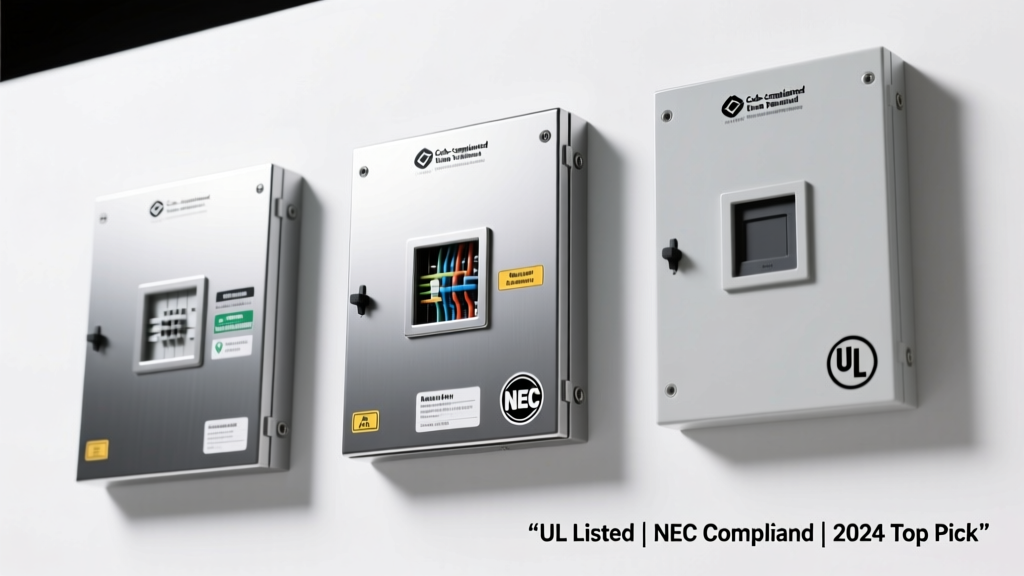
A sub panel is more than just an extra set of breakers—it’s a critical extension of your home’s electrical system that must match your main service, load demands, and local code requirements. Installing the wrong one risks overloading circuits, tripping breakers constantly, or failing inspection—especially in detached structures like garages or ADUs. Key considerations include amperage rating, busbar capacity, number of spaces, neutral-ground bonding status, and whether it’s suitable for indoor or outdoor use.
Quick Comparison Table
| Product | Price Range | Best For | Key Feature |
|---|---|---|---|
| Square D Homeline 100A | $85–$115 | Small garage or shed | UL-listed, pre-labeled neutral bar, 20-space design |
| Siemens PL1224B125 | $130–$165 | Workshop with 240V tools | 125A, 24-space, aluminum busbars, NEMA 1 enclosure |
| Eaton CH1224B100 | $145–$180 | Renovations requiring CH breakers | Compatible with Eaton CH series, 100A, 24-space, isolated ground bar included |
| GE PowerMark Gold TLM1224L125 | $175–$210 | Outdoor or damp locations | NEMA 3R rated, 125A, 24-space, factory-installed ground bar |
Top Picks
Square D Homeline 100A 20-Space Panel
This budget-friendly option suits homeowners adding basic lighting and outlets to a detached garage or small workshop. It’s UL-listed, includes a bonded neutral bar (for use as a sub panel only when the main panel handles grounding), and accepts Homeline breakers—which are widely available and affordable.
- Best for: DIYers upgrading a 60–100A feed; homes with existing Homeline main panels
- Key features: 100A main breaker, 20 total spaces, knockouts on all sides, compact footprint (14" W × 14" H)
- Pros: Low cost, easy to source breakers, simple installation for licensed electricians
- Cons: Not rated for outdoor use; neutral and ground bars are bonded (must be separated per NEC 250.30(A)(1) if used as a sub)
Price range: $85–$115
Siemens PL1224B125 125A 24-Space Panel
A favorite among contractors, this panel delivers flexibility and durability. Its 125A rating supports future expansion—think EV charger circuits or HVAC add-ons—and its aluminum busbars resist corrosion better than steel in humid environments.
- Best for: Workshops, ADUs, or whole-house expansions where load growth is expected
- Key features: 24 full-size spaces, separate neutral and ground bars, NEMA 1 indoor-rated steel enclosure
- Pros: High busbar ampacity (up to 125A), Siemens QP breakers widely compatible, excellent labeling
- Cons: Slightly heavier (22 lbs); QP breakers cost ~15% more than Homeline equivalents
Price range: $130–$165
Eaton CH1224B100 100A 24-Space Panel
If your main service panel uses Eaton CH breakers—or you’re committed to CH compatibility—this sub panel avoids mixing brands. It ships with an isolated ground bar, simplifying proper grounding setup per NEC Article 250.
- Best for: Homes with Eaton CH main panels; retrofits requiring consistent breaker lineage
- Key features: 100A main lug, 24 spaces, factory-installed insulated ground bar, removable neutral bar
- Pros: Seamless CH breaker integration, clear internal labeling, robust busbar construction
- Cons: Higher price point; CH breakers less common at big-box stores than Homeline or QP
Price range: $145–$180
What to Look For
Selecting the right sub panel isn’t just about amps—it’s about matching your feeder cable, physical space, and long-term needs. Start by calculating your actual load using NEC Article 220. Then verify compatibility with your main panel’s brand and breaker type. Most importantly, confirm whether the sub panel is main-breaker or main-lug: main-lug units require a disconnect switch upstream if installed outdoors or in detached buildings (NEC 225.31).
- Ampacity: Match or slightly exceed your feeder’s rating (e.g., 100A feeder → 100A or 125A panel)
- Spaces vs. Circuits: Aim for 20–30% spare spaces—Eaton recommends minimum 24 spaces for new installations (Eaton Engineering Bulletin EB-2022-01)
- Enclosure Rating: NEMA 1 for dry indoor use; NEMA 3R for outdoor or damp locations
- Grounding Configuration: Sub panels must have isolated neutral and ground bars—bonding is only allowed in the main service panel
Common Mistakes
Even experienced DIYers misstep here—often with safety or code implications. One frequent error is installing a main-breaker sub panel without verifying whether it’s permitted as a disconnect. Another is reusing old breakers that don’t match the panel’s busbar design, risking arcing or failure.
- Assuming “100A panel” means you can draw 100A continuously—NEC 215.2 requires 125% derating for continuous loads
- Overlooking feeder wire size: 100A requires at least 3 AWG copper or 1 AWG aluminum (NEC Table 310.16)
- Using a panel with bonded neutral/ground bars without separating them—this creates parallel neutral paths and violates NEC 250.24(A)(5)
- Ignoring local amendments: Some jurisdictions require AFCI/GFCI breakers in sub panels feeding bedrooms or garages
Can I install a sub panel myself?
Only if you’re licensed—or your jurisdiction allows owner-permitted work with full inspection. According to the National Fire Protection Association’s Electrical Safety Foundation International (ESFI) 2023 Home Electrical Safety Report, improper sub panel installation ranks among the top five causes of residential electrical fires. Even experienced handymen should hire a licensed electrician to verify grounding, torque specs, and load calculations.
Do I need a main breaker in my sub panel?
Not always—but it helps. A main breaker provides a local shutoff, which NEC 225.31 requires for detached structures unless a visible disconnect is installed within sight of the sub panel. Indoor sub panels fed from the same building typically use main-lug designs, saving cost and space.
How many circuits can a 100A sub panel support?
It depends on load—not just breaker count. A 100A panel with 20 spaces *can* hold 20 circuits, but NEC 220.40 limits total connected load. For example, a 100A panel supplying a garage with a 50A EV charger, 30A welder, and lighting may max out at just 6–8 actual circuits. Always perform a load calculation before finalizing layout.
Can I use aluminum feeder wire to a sub panel?
Yes—and it’s common for 100A+ runs due to cost and weight savings. But you must use aluminum-rated lugs (marked AL-CU or AL), apply antioxidant paste, and torque to manufacturer specs. The U.S. Consumer Product Safety Commission notes that 70% of aluminum wiring failures stem from improper termination—not the wire itself (CPSC Technical Bulletin, 2022).
What’s the difference between a main panel and a sub panel?
The main panel is the first point of disconnect after the utility meter and contains the primary service disconnect and bonded neutral/ground. A sub panel is fed from the main (or another sub) and must have isolated neutral and ground bars. As electrician and NEC trainer Mike Holt explains:
“If the neutral and ground are bonded anywhere downstream of the main service disconnect, you create a dangerous parallel path for neutral current—and that’s a fire hazard waiting for an inspector’s red pen.”
Should I choose a 125A or 200A sub panel for future-proofing?
Unless you’re planning major additions (e.g., full basement finish + heat pump + EV charger), 125A is the practical ceiling for most homes. Upgrading beyond that usually requires a larger main service—so invest in space (24–30 slots) and quality busbars instead of oversized amperage. Remember: your feeder cable, not the panel label, dictates real capacity.
Choosing the right sub panel prevents callbacks, failed inspections, and unsafe conditions down the line. Pair your selection with properly sized feeder wire, correct grounding, and professional verification—and you’ll gain reliable, expandable power where you need it most. For related guidance, see our guides on best electrical wire for sub panels and how to install a sub panel step-by-step.