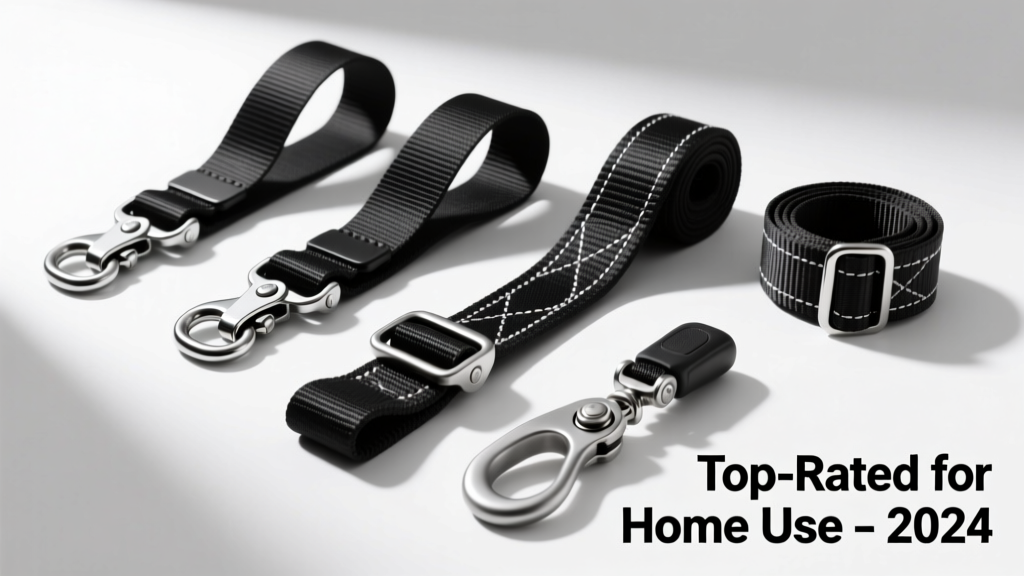
Straps are unsung heroes in home maintenance—securing furniture during moves, stabilizing shelves, bundling holiday lights, or reinforcing DIY builds. Yet most homeowners grab the first ratchet strap they see without checking working load limit (WLL), material durability, or buckle type. A strap rated for 500 lbs might fail at 200 lbs if the webbing is UV-degraded or the cam buckle lacks a locking mechanism. According to the U.S. Consumer Product Safety Commission’s 2022 injury data, 12% of strap-related incidents involved improper tensioning or mismatched hardware.
Quick Comparison Table
| Product | Price Range | Best For | Key Feature |
|---|---|---|---|
| Heavy-Duty Ratchet Strap Set (4-pack) | $22–$38 | Moving & furniture transport | 3,300-lb break strength; zinc-coated ratchet |
| Cam Lock Strap Kit (6-pack) | $14–$26 | Light-duty storage & garage organization | Self-locking cam; 150-lb WLL per strap |
| Adjustable Webbing Tie-Downs (2-pk) | $9–$17 | Seasonal decor & bike mounting | No-tools adjustment; nylon webbing with vinyl coating |
| Retractable Cargo Strap System | $45–$62 | Workshop tool racks & wall-mounted gear | Spring-loaded retraction; 250-lb WLL; integrated mounting brackets |
Top Picks
Heavy-Duty Ratchet Strap Set (4-pack)
Ideal for renters moving apartments or homeowners securing patio furniture before storms. These feature 1-inch polyester webbing, corrosion-resistant steel ratchets, and S-hooks with rubberized grips to prevent surface scratches.
- Pros: Highest WLL (1,100 lbs) in this category; color-coded tension indicators; includes carrying pouch
- Cons: Bulkier than cam straps; ratchet mechanism requires two hands to operate
Price range: $22–$38. Best paired with moving blankets for full-load protection.
Cam Lock Strap Kit (6-pack)
Perfect for organizing garages, hanging tools on pegboards, or bundling garden hoses. The cam buckle locks instantly under tension and releases with one thumb press—no learning curve.
- Pros: Fastest setup time (<5 seconds per strap); lightweight; works well with irregular shapes like ladders or rolled rugs
- Cons: Lower WLL means not suitable for overhead lifting or heavy appliances
Price range: $14–$26. Pair with pegboard accessories for modular workshop setups.
Adjustable Webbing Tie-Downs (2-pk)
Great for holiday light storage, securing bikes to wall mounts, or temporary shelving braces. These use a simple loop-and-pull design—no buckles to jam or lose.
- Pros: Silent operation (no metal clatter); weather-resistant coating prevents mildew; machine washable
- Cons: Requires manual re-tensioning over time; no visual load indicator
Price range: $9–$17. A go-to for seasonal tasks—see our holiday storage guide for more ideas.
What to Look For
Not all straps are interchangeable—even if they look identical. Start with your application’s maximum load, then match hardware to environment and frequency of use.
- Working Load Limit (WLL): Never exceed 1/3 of the strap’s break strength. For example, a 3,000-lb break strength strap has a 1,000-lb WLL.
- Webbing Material: Polyester resists UV and abrasion better than polypropylene; nylon stretches more (up to 15%), which can be helpful for shock absorption but risky for precision mounting.
- Buckle Type: Ratchet = high tension, repeat use; cam lock = speed + simplicity; over-center = low-cost, moderate hold.
- Length & Width: Standard 1-inch width handles most home tasks; lengths from 6 ft (shelving) to 15 ft (furniture anchoring) cover 90% of use cases.
Common Mistakes
Homeowners often assume ‘tighter is safer’—but overtightening nylon straps can permanently deform furniture legs or crack drywall anchors. Others reuse damaged webbing: frayed edges, faded color, or stiff, brittle texture signal UV degradation and reduced strength.
"A single nick in polyester webbing reduces tensile strength by up to 40%. If you see fuzz or discoloration, retire it—even if it still 'holds.'" — OSHA Compliance Bulletin, 2021
Can I use ratchet straps to hang a hammock indoors?
Yes—but only with proper structural anchoring. Standard drywall toggles aren’t enough. You’ll need lag bolts into ceiling joists (minimum 2x6 framing) and straps rated for at least 400 lbs WLL per anchor point. Always test with weight gradually before full use.
How often should I replace home-use straps?
Inspect before each use. Replace immediately if you spot cuts, melted fibers, rust on hardware, or inconsistent ratchet engagement. Even unused straps degrade: OSHA recommends replacing stored polyester straps every 5 years due to plasticizer loss.
Are cam-lock straps safe for securing appliances during transport?
No. Cam locks lack the mechanical advantage needed for high-tension loads. A refrigerator shifting during a turn can generate over 800 lbs of lateral force—well beyond the 150–250 lb WLL of most cam straps. Use ratchet straps with edge protectors instead.
Do I need different straps for indoor vs. outdoor use?
Yes. Outdoor straps require UV-stabilized webbing and stainless or zinc-plated hardware. Indoor-only straps often skip those upgrades to cut cost—and will deteriorate fast on a covered porch. Check the product spec sheet for ASTM D4355 (UV resistance) ratings.
Can I shorten a long strap myself?
You can cut and heat-seal polyester webbing using a soldering iron or butane torch—but only if the strap has no integrated hardware. Never cut near buckles or hooks. Better yet: buy adjustable-length straps or use webbing keepers to manage excess length cleanly.
Straps aren’t flashy—but getting them right prevents damage, saves time, and keeps DIY projects secure. Match the strap to the job’s real-world forces—not just what fits in the box. When in doubt, go one size up in WLL and choose hardware that matches your dexterity and environment.