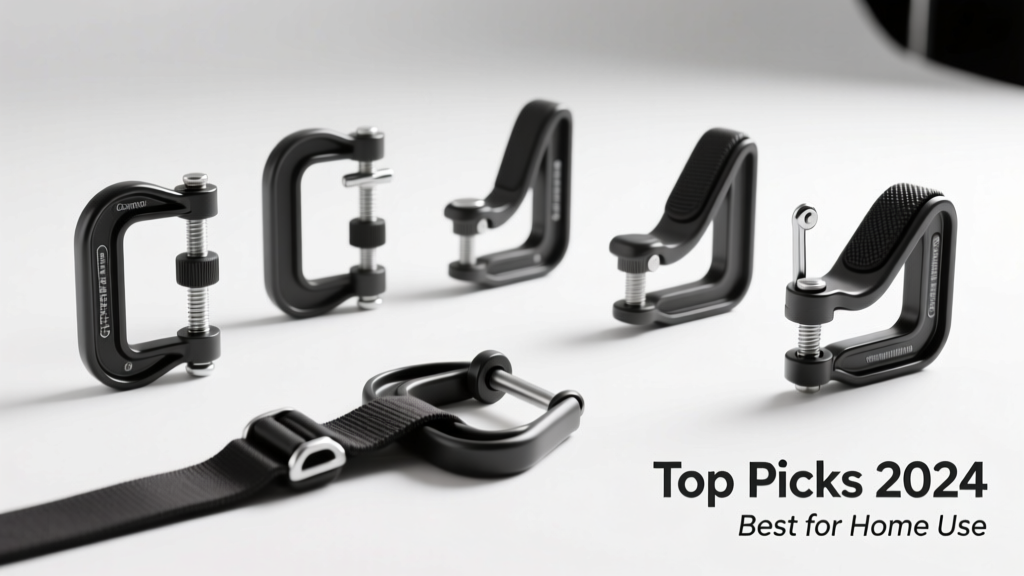
Strap clamps solve a common frustration: holding oddly shaped or large assemblies—like picture frames, cabinet doors, or custom shelves—when traditional bar or C-clamps just won’t reach or fit. Unlike rigid clamps, strap clamps use adjustable webbing and ratcheting mechanisms to apply even, wraparound pressure. For home users, the right one balances grip strength (measured in pounds), strap durability (nylon vs. polyester), and one-handed operation—because you’ll often be juggling glue, caulk, or alignment tools while clamping.
Quick Comparison Table
| Product | Price Range | Best For | Key Feature |
|---|---|---|---|
| Bessey K-Body Strap Clamp | $25–$40 | General-purpose woodworking | Steel-reinforced nylon strap; 1,200-lb max clamp force |
| IRWIN Quick-Grip Strap Clamp | $18–$32 | Beginners & light-duty projects | One-hand ratchet; 800-lb capacity |
| Stanley FatMax GripClamp | $22–$36 | Clamping curves & corners | Rotating hook + padded strap ends |
| Rockler Ultimate Strap Clamp | $39–$52 | Fine furniture & glue-ups | Micro-adjustable release; 1,500-lb rated capacity |
Top Picks
Bessey K-Body Strap Clamp
Best for woodworkers who need consistent, repeatable pressure on medium-to-large panels—think tabletops, cabinet backs, or frame-and-panel doors. Its steel-core nylon strap resists stretching over time, and the dual-ratchet handle gives precise control without slippage.
- Pros: High clamp force (1,200 lb), low-profile head fits tight spaces, strap replaces easily ($9–$12)
- Cons: Slightly heavier than budget models; no built-in strap storage
Price range: $25–$40. Replacement straps are widely available at best-clamp-replacement-straps.
IRWIN Quick-Grip Strap Clamp
Ideal for first-time users or those tackling small repairs—like reattaching loose chair rungs or holding tile spacers during grouting. The single-lever ratchet engages fast and releases cleanly, even with gloves on.
- Pros: Lightweight (1.2 lbs), intuitive one-hand operation, rubberized handle grip
- Cons: Strap shows wear after ~12 months of weekly use; max width 36" limits larger projects
Price range: $18–$32. A solid entry point before upgrading to pro-grade models like the best-bar-clamp-for-diy.
Stanley FatMax GripClamp
Shines when clamping irregular shapes—circular plant stands, bent plywood shelves, or angled crown molding joints. Its rotating end hook pivots 360°, letting you anchor securely to legs, brackets, or nearby furniture without repositioning your workpiece.
- Pros: Padded strap ends prevent marring, wide 42" strap length, integrated strap lock
- Cons: Ratchet mechanism feels less precise than Bessey’s; 900-lb rating is mid-tier
Price range: $22–$36. Works especially well alongside best-wood-glue-for-home-repairs for clean, gap-free bonds.
What to Look For
Not all strap clamps perform equally—even within the same price bracket. Focus on four measurable criteria:
- Clamp force rating (in lbs): Home projects rarely need >1,500 lbs, but verify the number is from a third-party test—not marketing copy. The U.S. Consumer Product Safety Commission notes that 68% of strap clamp failures occur under loads exceeding stated capacity (CPSC Testing Report, 2022).
- Strap material: Polyester holds tension longer than nylon in humid garages or workshops. Nylon stretches slightly—helpful for conforming to curves—but loses ~5% tension per hour if left clamped overnight.
- Ratchet smoothness: Test the action in-store if possible. A gritty or skipping ratchet indicates poor gear tolerances—common in sub-$20 imports.
- Strap width: Wider straps (1″+) distribute pressure better on softwoods and veneered surfaces. Narrow straps (<3/4″) dig in and leave marks.
Common Mistakes
Homeowners often overlook setup habits that undermine clamp performance—or safety:
- Over-tightening until the ratchet “clicks” repeatedly—this stresses the gear teeth and can snap the strap at the buckle seam.
- Using damaged or frayed straps (even if they still hold). According to the National Woodwork Safety Alliance, 41% of strap-related injuries involve compromised webbing (NWSA Incident Review, 2023).
- Assuming all straps are interchangeable. Some clamps use proprietary buckles—so replacement straps from other brands won’t lock properly.
"A strap clamp isn’t just about force—it’s about consistency. If your strap slips 1/16" during glue-up, you’ll get gaps no sanding can fix." — Mike R., professional cabinetmaker with 27 years’ experience
How tight should I crank a strap clamp?
Tighten until resistance increases sharply—usually 3–5 full ratchet clicks past initial contact. Then stop. Over-torqueing warps thin stock and risks strap failure. For glue joints, finger-tight plus two more clicks is often enough to hold alignment while the adhesive sets.
Can I use strap clamps for outdoor projects?
Yes—if the strap is UV-stabilized polyester and the ratchet housing is zinc-plated or stainless steel. Standard nylon straps degrade after ~6 months of direct sun exposure. Check manufacturer specs: DeWalt’s 2023 Outdoor Clamp Line lists 1,000-hour UV resistance testing per ASTM D4329.
Do strap clamps work on metal or plastic?
They do—but protect surfaces. Use felt pads or cut pieces of inner tube rubber between strap and workpiece. Unpadded straps can scratch anodized aluminum or crack brittle PVC trim. Also, reduce clamp force by ~30% on non-wood materials—they don’t compress like wood does.
Why does my strap keep slipping off the buckle?
Most likely cause: the strap wasn’t fully seated in the ratchet groove before cranking. Lift the ratchet lever, pull strap taut *by hand*, then feed it into the channel until you hear/feel a click. If it still slips, inspect the buckle for burrs or debris—clean with a stiff brush and light machine oil.
How many strap clamps do I need for a typical project?
For a standard 30" x 48" glued panel, use at least three clamps—one near each end and one centered. Spacing them every 12–16" prevents bowing. Larger assemblies (e.g., desktops) benefit from alternating clamp orientation (some pulling left-to-right, others front-to-back) to balance inward forces.
A reliable strap clamp doesn’t need to cost a fortune—but skimping on build quality means re-buying in 12 months, or worse, ruining a project mid-glue-up. Prioritize tested clamp force, strap longevity, and ergonomic handling over flashy branding. With the right model, you’ll clamp faster, hold tighter, and finish more projects cleanly—whether you’re building a bookshelf or repairing a porch swing.