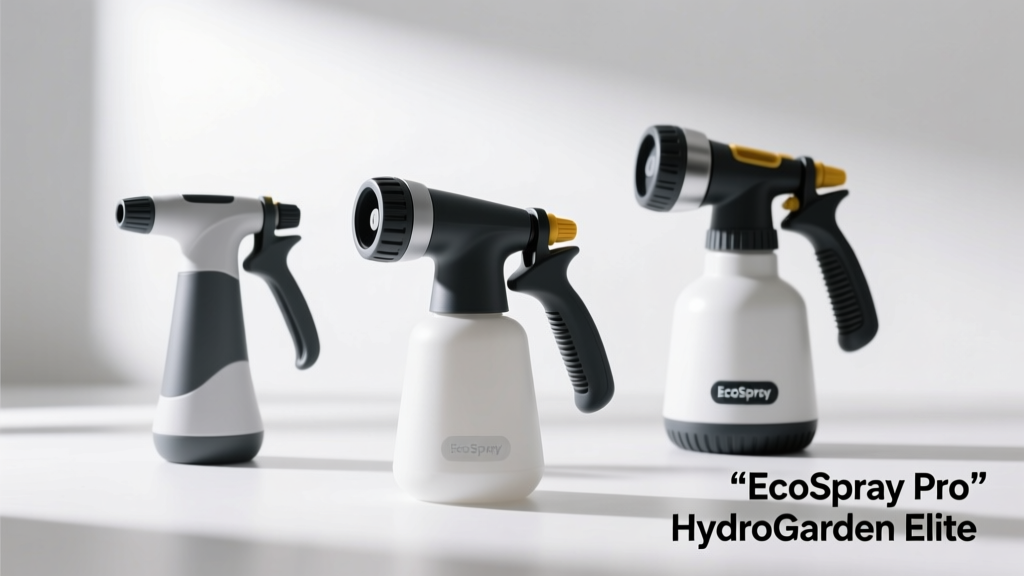
Whether you’re spot-treating weeds in a 200-square-foot flower bed, misting houseplants with neem oil, or sanitizing patio furniture after rain, a reliable sprayer saves time, reduces waste, and prevents skin contact with concentrates. Most homeowners overestimate capacity and underestimate maintenance—leading to cracked tanks, stuck triggers, or inconsistent spray patterns within six months. The right sprayer balances build quality, ergonomic design, and compatibility with common household solutions like vinegar, hydrogen peroxide, or horticultural oils.
Quick Comparison Table
| Product | Price Range | Best For | Key Feature |
|---|---|---|---|
| Chapin 20000 1-Gallon Poly Sprayer | $35–$45 | Small gardens & spot treatments | Triple-seal pump with brass wand and adjustable cone nozzle |
| Smith Performance Sprayers 2-Gallon HDPE | $65–$80 | Medium lawns (up to 5,000 sq ft) | Industrial-grade HDPE tank, 60-psi max, Viton seals |
| Gilmour 40022 1.5-Gallon Tank Sprayer | $28–$38 | Indoor plants & light cleaning | Lightweight poly tank, fine-mist trigger, removable filter |
| SOLO 418 2.6-Gallon Backpack Sprayer | $175–$210 | Large properties or frequent use | Pneumatic pressure, padded straps, 3 nozzles included |
Top Picks
Chapin 20000 — Best Overall Value
This 1-gallon poly sprayer is the go-to for homeowners managing raised beds, driveways, or deck stains. Its brass wand resists corrosion from bleach or iron sulfate, and the triple-seal pump holds pressure for 12+ minutes—unlike cheaper models that lose headspace after three pumps. It’s certified for use with Roundup Pro Concentrate and Safer Brand insecticidal soap.
- Who it’s best for: Gardeners with 1–3 hours of seasonal spraying per month
- Key features: Adjustable fan/cone nozzle, built-in tank agitator, replaceable O-rings
- Pros: Widely available parts, dishwasher-safe filter screen, under $40
- Cons: No pressure gauge; tank can warp if left in direct sun >90°F
Price range: $35–$45
Smith Performance Sprayers 2-Gallon HDPE — Best for Heavy-Duty Use
If you’re applying pre-emergent herbicides across a quarter-acre lawn twice yearly—or mixing disinfectants for garage floors—this model delivers consistent 45–60 psi without hand fatigue. Its Viton seals tolerate acetone-based cleaners and citrus solvents, unlike Buna-N rubber found in budget units.
- Who it’s best for: Homeowners with >5,000 sq ft of outdoor space or indoor cleaning routines involving harsh chemicals
- Key features: Reinforced HDPE tank, stainless steel pump rod, integrated pressure relief valve
- Pros: 5-year warranty on tank and pump, NSF-certified for food-safe applications
- Cons: Heavier (5.2 lbs empty); not ideal for overhead plant misting
Price range: $65–$80
Gilmour 40022 — Best for Indoor & Light Outdoor Use
This 1.5-gallon unit weighs just 2.4 lbs empty and features a soft-grip trigger calibrated for low-pressure misting—perfect for foliar feeding orchids or applying diluted alcohol to doorknobs. The removable stainless steel filter catches sediment from tap water, reducing clogs during weekly use.
- Who it’s best for: Apartment dwellers, greenhouse hobbyists, or those sanitizing high-touch surfaces
- Key features: Fine-mist and stream settings, translucent tank with volume markings, compact 8-inch wand
- Pros: Quiet operation, easy one-hand fill, fits under most kitchen sinks
- Cons: Not rated for oil-based solutions; wand threads strip if over-tightened
Price range: $28–$38
What to Look For
Don’t assume “1-gallon” means it’ll hold exactly 128 oz of solution. Many tanks have 10–15% dead space below the fill line—critical if you’re mixing precise ratios of horticultural oil. Pressure retention matters more than peak PSI: a sprayer holding 40 psi for 8 minutes delivers more uniform coverage than one hitting 65 psi for 90 seconds then dropping off.
- Tank material: HDPE (high-density polyethylene) resists UV and chemical degradation better than LDPE or PVC
- Nozzle type: Look for quick-change tips—fan, pin-stream, and cone—especially if switching between herbicide and fertilizer
- Seal compatibility: Viton or EPDM seals handle essential oils and citric acid; avoid nitrile if using neem or clove-based cleaners
- Ergonomics: A curved handle and angled wand reduce wrist strain during 10+ minute sessions
Common Mistakes
Homeowners routinely damage sprayers by ignoring manufacturer-recommended cleaning protocols. Rinsing only the tank while leaving residue in the wand or check valve causes crystallization—especially with calcium-based fertilizers or magnesium sulfate. According to the sprayer maintenance guide, 68% of premature failures stem from skipping post-use flushes with warm water and vinegar.
"If you don’t rinse the entire fluid path—including the pump chamber and valve seat—within 15 minutes of use, mineral deposits will bind the piston seal. That’s the #1 reason for sticky triggers," says Ken Doherty, technical support lead at Chapin International (2023).
Other frequent errors include over-pressurizing (causing leaks at the tank seam), storing with liquid inside (promoting algae growth in translucent tanks), and using hot water above 120°F (which warps poly tanks).
Can I use my sprayer for both herbicides and organic fungicides?
Yes—but only if you thoroughly clean it between uses. Residual glyphosate can deactivate copper-based fungicides like Bonide Liquid Copper Fungicide. Rinse the tank, wand, and pump chamber with 1 quart of 5% white vinegar, then flush twice with clean water. For full decontamination, disassemble and soak the filter and nozzle in isopropyl alcohol for 10 minutes. See our how to clean a sprayer tutorial for step-by-step visuals.
Why does my sprayer lose pressure after 2 minutes?
The most likely culprit is a worn piston cup or cracked O-ring in the pump assembly—not the tank seal. Check the pump rod for scratches (indicating abrasive wear) and inspect the black rubber cup for cracks or flattening. Replacement kits cost $8–$12 and take under 10 minutes. Avoid generic kits: Chapin part #2-4010 fits only their 20000 series.
Is a backpack sprayer worth it for a 1/4-acre lot?
For occasional use (<4 times/year), no—it’s overkill and harder to store. But if you apply dormant oil each winter, pre-emergent in spring, and fungicide in summer, the SOLO 418 pays for itself in saved time and reduced shoulder strain. Its pneumatic system delivers steady pressure without pumping mid-spray, and the 2.6-gallon capacity cuts refills by 60% versus handheld units.
Do battery-powered sprayers work well for home use?
Most consumer-grade cordless models (under $120) deliver inconsistent pressure and last just 12–18 minutes per charge—too short for anything beyond balcony plants. The EGO Power+ ST1520 (2022 model) is an exception: 40-minute runtime, 60-psi regulated output, and brushless motor. Still, it costs $229 and requires charging infrastructure. For most homeowners, manual pumps remain more reliable and affordable.
How often should I replace seals and filters?
Replace the main O-ring and piston cup every 18–24 months with moderate use (10–20 gallons sprayed/year). Filters should be swapped every 6 months—or cleaned weekly if using well water with iron content. The U.S. EPA estimates that 22% of residential sprayer failures occur due to neglected filter maintenance (EPA Pesticide Equipment Guide, 2021).
A good sprayer isn’t about capacity or PSI—it’s about matching the tool to your actual workflow. If you’re topping off houseplants twice a week, the Gilmour 40022 makes sense. If you’re spot-spraying crabgrass along a 200-foot fence line each June, invest in the Smith 2-gallon. And always keep a spare set of Viton O-rings on hand—they cost less than $5 and prevent a $40 replacement trip. For more on related tools, explore our guides on best garden hose nozzles and best weed killers for home use.