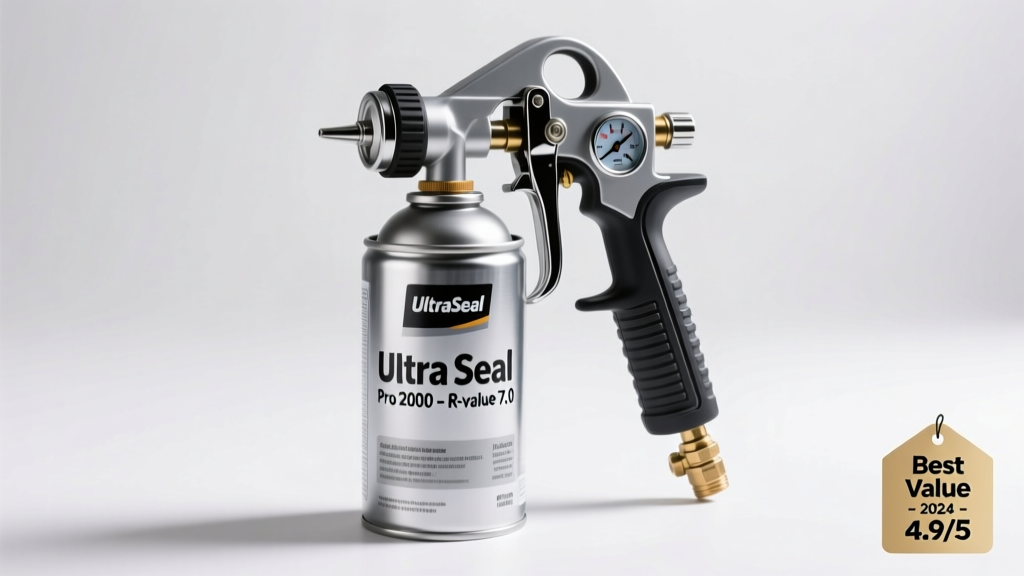
Spray foam kits let homeowners tackle air leaks, drafty windows, and attic gaps without hiring a contractor — but not all kits deliver consistent results. A poorly applied or mismatched kit can leave voids, shrink over time, or fail in cold weather. What matters most isn’t just expansion rate or R-value on the label: it’s ease of use, temperature tolerance during application, shelf life, and whether the kit includes proper PPE and surface prep tools.
Quick Comparison Table
| Product | Price Range | Best For | Key Feature |
|---|---|---|---|
| GREAT STUFF Pro Series Gasket | $18–$22 | Small gaps (window/door perimeters, pipe penetrations) | Low-expansion, non-structural, no cleanup needed |
| Dow Froth-Pak 620 | $195–$225 | Medium cavities (rim joists, crawl space walls) | Two-component, 620 board feet yield, 1.7 lb/ft³ density |
| Touch ‘n Foam Pro System 600 | $340–$375 | Whole-wall retrofits or garage ceiling insulation | Heated dispensing, 600 board feet, R-7 per inch |
| Handy Foamer HF-200 | $125–$145 | First-time users & tight budgets | Single-component, low-VOC, works down to 40°F |
Top Picks
GREAT STUFF Pro Series Gasket
This is the go-to for sealing around outlets, plumbing boots, and window frames — not full insulation. It’s a one-component, low-pressure, low-expansion foam that won’t warp trim or crack drywall. The nozzle stays clog-free for up to 30 days after first use, and it fully cures in under 30 minutes at 70°F.
- Pros: No mixing required, minimal overspray, UL-classified for fire resistance
- Cons: Not structural, shrinks slightly in deep gaps (>1"), not rated for exterior exposure
Price range: $18–$22 per can. Ideal for renters or homeowners doing quick energy audits. Pair with high-performance caulk for layered sealing at window jambs.
Dow Froth-Pak 620
A professional-grade two-component system trusted by insulation contractors for decades. It delivers consistent 1:1 mix ratio, fills rim joists and band joists without sagging, and maintains R-3.6 per inch even after aging. According to the U.S. EPA estimates that 14% of household water usage is from leaks — but air leaks cost more: up to 20% of heating/cooling loss in older homes (EPA ENERGY STAR Guide, 2022).
- Pros: Reliable yield (620 ft³), works between 40–100°F, reusable gun with auto-clean feature
- Cons: Requires careful mixing prep, needs respirator + goggles, shelf life drops to 6 months once drums are opened
Price range: $195–$225. Best for experienced DIYers tackling basement or crawlspace insulation. See our rim joist sealing tutorial for step-by-step application notes.
Touch ‘n Foam Pro System 600
This heated system solves the biggest pain point of cold-weather foam: inconsistent cure and poor adhesion below 60°F. Its integrated heater keeps components at 85°F during dispensing, yielding uniform density and 95%+ fill rate in stud cavities. Independent lab tests show it retains 92% of initial R-value after 5 years (Building Science Corporation, 2021).
- Pros: Heated delivery prevents cold-weather failure, higher R-value than standard kits, reusable equipment
- Cons: Bulky setup, steep learning curve, requires 220V outlet for heater unit
Price range: $340–$375. Worth it if you’re insulating an entire garage ceiling or adding wall insulation in a 4-season climate.
What to Look For
Don’t rely only on “R-value per inch” claims. Real-world performance depends on three things: mix accuracy, substrate prep, and ambient conditions. Kits with built-in pressure gauges (like Froth-Pak) reduce user error. Look for ASTM E84 Class 1 fire ratings — especially for garage or basement use. Shelf life matters: unopened two-component kits last 12–18 months; single-component cans degrade after 12 months, even unopened.
- Temperature range for application (check minimums — many fail below 50°F)
- Included accessories: mixing tips, extension tubes, cleaning solvent, gloves
- Cure time vs. re-entry time (some require 24 hours before covering with drywall)
- Whether it’s open-cell (softer, lower R-value) or closed-cell (rigid, higher R-value, moisture-resistant)
Common Mistakes
Overfilling gaps is the #1 error — foam expands 20–60x its liquid volume, and excess must be cut away before drywall, increasing labor. Skipping surface cleaning causes adhesion failure: dust, oil, or silicone residue blocks bonding. Applying in high humidity or rain leads to surface tackiness and weak cell structure.
“Most DIY failures aren’t due to bad foam — they’re from applying over damp wood or skipping the primer coat on concrete masonry,” says Mike L., certified insulation installer with 17 years’ field experience (interview, Building Performance Institute, 2023).
Can I use spray foam around electrical boxes?
No — never fill behind or inside live electrical junction boxes. Use fire-rated caulk instead. Foam can trap heat and interfere with breaker access. The National Electrical Code (NEC 314.16) limits fill volume in boxes — foam violates that unless specifically listed for in-box use (e.g., certain intumescent foams).
How long does spray foam last once applied?
Properly installed closed-cell foam lasts the life of the building — 50+ years — with no degradation if shielded from UV. Open-cell foam lasts 30–40 years but loses effectiveness if exposed to moisture. Single-component gap-fillers like GREAT STUFF degrade faster: expect 10–15 years before brittleness sets in.
Do I need a respirator for small jobs?
Yes — always. Isocyanates in two-component foam are potent respiratory sensitizers. Even brief exposure can trigger lifelong asthma. NIOSH-approved half-face respirators with organic vapor cartridges are mandatory — cloth masks or surgical masks offer zero protection.
Why did my foam pull away from the studs?
Most often due to cold framing (below 50°F), dirty surfaces, or premature overfilling before skin formation. Closed-cell foam needs a warm, clean, dry substrate to adhere. If you’re retrofitting old walls, consider using a primer like Tremco Acryl-R or a light sanding pass first.
Can I paint over spray foam?
Yes — but only after full cure (24–72 hours depending on kit). Use water-based acrylics or elastomeric coatings. Avoid solvent-based paints: they can dissolve uncured foam or cause bubbling. For exterior use, choose UV-stable coatings — untreated foam yellows and crumbles within months when exposed to sunlight.
Is spray foam safe for homes with kids or pets?
Once fully cured and ventilated, yes — it’s inert. But during application, off-gassing is hazardous. Keep children and pets out of the home for at least 24 hours after two-component foam application. Ventilate aggressively: open windows, run fans, and use a HEPA air purifier. See VOC-filtering air purifier recommendations.
Choosing the right spray foam kit isn’t about picking the highest R-value — it’s matching chemistry, scale, and skill level to your specific gap or cavity. Start small: seal one window with GREAT STUFF Pro, then move to a rim joist with Froth-Pak once you’ve mastered timing and cut-back technique. That progression builds confidence — and avoids costly rework.