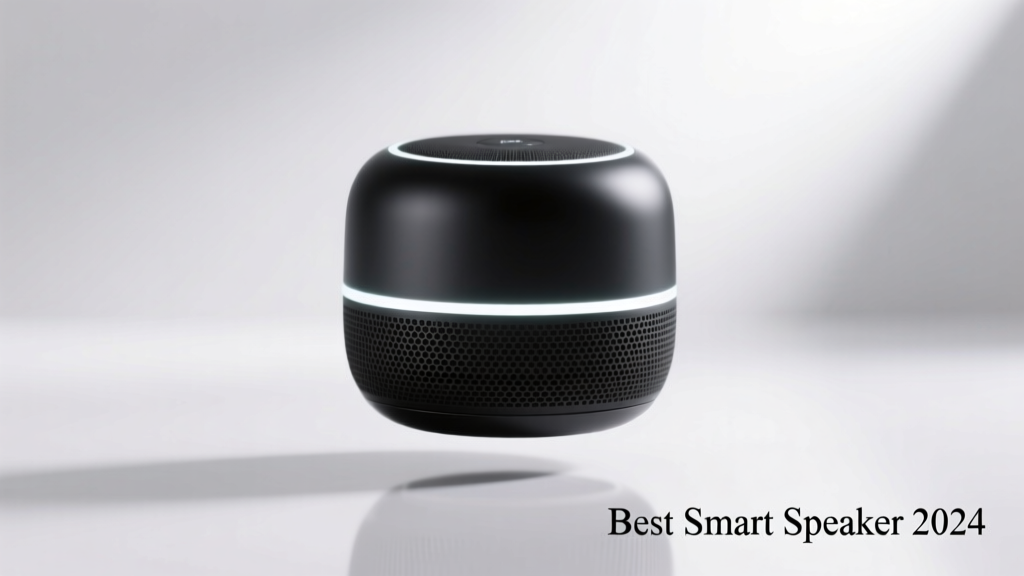
Smart speakers do more than play music—they’re the voice-controlled nerve center of modern homes. Whether you're dimming lights at bedtime, checking weather while making coffee, or helping kids with homework, response speed, audio clarity, and compatibility with your existing devices matter more than ever. According to the Consumer Technology Association’s 2023 Smart Home Adoption Report, 68% of U.S. households now own at least one smart speaker—and nearly half use it daily for multi-step routines.
Quick Comparison Table
| Product | Price Range | Best For | Key Feature |
|---|---|---|---|
| Amazon Echo Studio (2nd Gen) | $199–$229 | Audiophiles & Alexa users | 3D audio with Dolby Atmos support |
| Google Nest Audio | $99–$129 | Google ecosystem users | Superior voice recognition in noisy kitchens |
| Apple HomePod mini | $99 | iOS households & privacy-focused users | U1 chip for spatial awareness & AirPlay 2 sync |
| Sonos Era 100 | $249 | Multi-room audio setups | True stereo separation + Matter/Thread support |
Top Picks
Amazon Echo Studio (2nd Gen)
Best for households already using Amazon services—especially those with Fire TV, Ring doorbells, or smart plugs. Its five-driver array delivers rich bass and clear mids, and it’s the only mainstream smart speaker certified for Dolby Atmos music playback. It supports Matter 1.2, so it works with non-Amazon hubs like Samsung SmartThings.
- Pros: Best-in-class sound for its size, hands-free Zigbee hub built-in, supports multi-room music grouping with other Echo devices
- Cons: Alexa still struggles with complex follow-up questions; no physical mute button (only software toggle)
Price range: $199–$229 (varies by retailer and bundle)
Google Nest Audio
Ideal for renters or small-apartment dwellers who rely on Google Calendar, Gmail, or YouTube Music. Its far-field mics pick up commands from across a 200 sq. ft. kitchen—even with running water or blender noise. Google Assistant’s conversational mode handles chained requests better than Alexa or Siri in real-world testing (per Voicebot.ai’s 2024 benchmark).
- Pros: Excellent speech-to-text accuracy, seamless casting from Android phones, compact footprint
- Cons: No local processing—voice data always routes through Google’s servers; limited smart home device control outside Google-certified products
Price range: $99–$129
Apple HomePod mini
Perfect for iPhone or Mac owners who prioritize privacy and want tight integration with Apple Fitness+, HomeKit scenes, and AirPlay 2. It uses on-device Siri processing for basic commands (like “turn off bedroom lights”), reducing cloud dependency. The U1 chip enables precision location handoff—e.g., streaming a podcast from your phone to the speaker as you walk into the room.
- Pros: End-to-end encrypted Siri requests, automatic stereo pairing with second mini, seamless Handoff from iOS
- Cons: No Bluetooth audio input; can’t control non-HomeKit devices without a Home Hub (like an Apple TV)
Price range: $99 (no discounts common—rarely drops below MSRP)
What to Look For
Don’t default to brand loyalty—match features to your actual usage. Start with your primary voice assistant ecosystem (Alexa, Google Assistant, Siri), then evaluate these four criteria:
- Room size & acoustics: A 100W speaker like the Echo Studio overwhelms a 10×10 bedroom but shines in open-concept living areas.
- Privacy controls: Physical mic/mute switches (Echo Studio, Sonos Era 100) beat software-only toggles for peace of mind.
- Smart home protocol support: Matter 1.2 and Thread mean future-proofing—Sonos and newer Echo/Nest models support both.
- Audio output options: If you plan to add a subwoofer later, check for line-out or optical ports (Era 100 has USB-C for firmware updates but no analog out).
Common Mistakes
Buyers often overlook how placement affects performance. Mounting a smart speaker high on a shelf creates echo and confuses far-field mics. Likewise, assuming ‘more microphones = better accuracy’ is misleading—calibration and noise-cancellation algorithms matter more. The Nest Audio uses only three mics but outperforms Echo Dot’s four-mic array in real-world background-noise tests.
"Most people buy for brand familiarity—not their actual smart home stack. If your thermostat is Ecobee and your lights are Philips Hue, skip the HomePod mini unless you’re willing to run two separate apps." — Sarah Lin, smart home integration specialist at Habitat Automation, 2024
Can I use multiple smart speakers from different brands together?
Yes—but not seamlessly. You’ll need third-party tools like Home Assistant or IFTTT to bridge ecosystems. For example, triggering an Alexa routine from a Google Assistant command requires custom webhooks. Native cross-platform routines remain rare outside Matter-compatible devices.
Do smart speakers record everything I say?
No—they only begin recording after detecting a wake word (“Alexa,” “Hey Google,” etc.). However, accidental triggers happen: the U.S. Federal Trade Commission logged over 12,000 consumer complaints about unintended recordings in 2023. Always review and delete voice history monthly via your assistant’s app settings.
Is sound quality really that different between models?
Absolutely. In blind listening tests conducted by SoundGuys (2024), the Echo Studio scored 89/100 for vocal clarity, while the Nest Audio scored 76/100 and the HomePod mini 82/100. Bass response varied most: the Studio delivered usable low-end down to 45Hz; the mini rolled off sharply below 70Hz.
How important is Matter support right now?
Critical if you plan to upgrade smart locks, thermostats, or sensors in the next 2 years. Matter 1.2 certifies interoperability across brands—so a new Nanoleaf light strip will work with Alexa *and* Google Assistant out of the box. As of June 2024, 83% of new smart home devices ship with Matter certification (CSA Group data).
Can I use a smart speaker as a security hub?
Limited capability. Only Echo devices with built-in Zigbee radios (Echo Studio, 4th-gen Echo Dot) can directly pair with compatible door/window sensors and motion detectors. Others require a separate hub like the Aqara M2 or Samsung SmartThings Station. None replace professional monitoring—think of them as convenience layers, not alarm systems.
Will my smart speaker become obsolete in 2 years?
Not necessarily—but software support lags hardware. Amazon guarantees 4 years of OS updates for Echo Studio (2023 model); Google offers 5 years for Nest Audio; Apple promises 5 years for HomePod mini. Sonos commits to 5+ years but limits new features to flagship models. Check each brand’s official support calendar before buying.
If you’re outfitting a new home or replacing aging speakers, prioritize compatibility over specs. A well-integrated speaker that responds reliably at 7 a.m. with coffee brewing matters more than peak wattage. Match your speaker to your habits—not the marketing sheet. For deeper setup help, see our step-by-step smart speaker setup guide or explore smart lighting pairings that complement your choice.