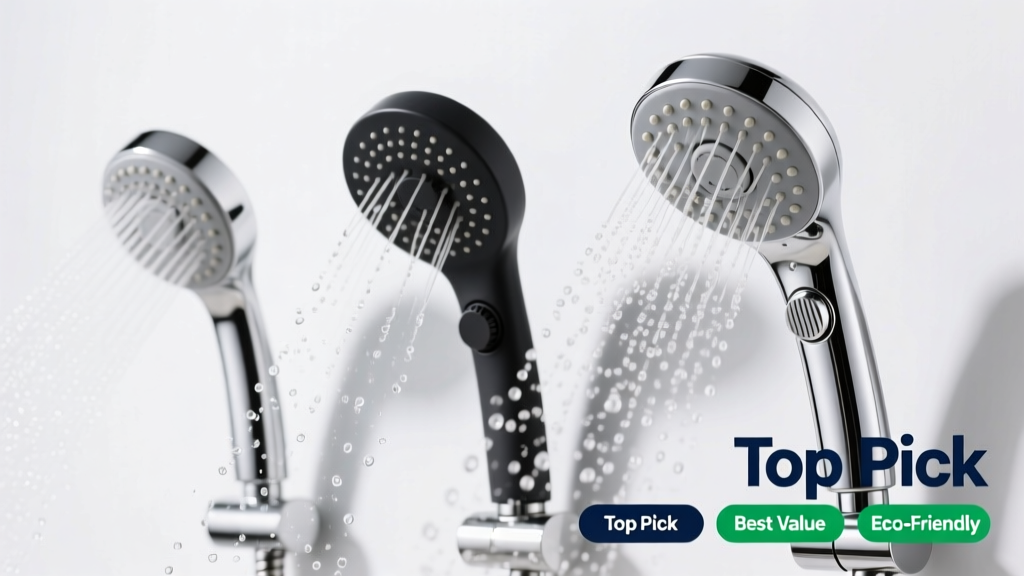
A good showerhead does more than rinse soap—it shapes your daily routine, impacts water bills, and affects bathroom comfort year-round. With over 14% of household water use tied to leaks and inefficient fixtures (U.S. EPA, 2023), upgrading makes measurable sense—especially since modern WaterSense-certified models deliver full-force spray at just 1.8 GPM or less.
Quick Comparison Table
| Product | Price Range | Best For | Key Feature |
|---|---|---|---|
| Moen Velocity | $85–$110 | Low-pressure homes | Engineered 60-jet spray with air-injection boost |
| Kohler Forte | $120–$150 | Luxury feel & finish | 12-setting dial, brushed nickel corrosion resistance |
| Waterpik EcoFlow | $70–$95 | Water savings + therapy | Massage modes + 1.5 GPM WaterSense certification |
| Delta H2Okinetic | $90–$115 | Perceived pressure lovers | H2Okinetic tech creates larger, warmer droplets |
| High Sierra Classic | $35–$55 | Renters & budget upgrades | Simple screw-on install, 1.75 GPM, no tools needed |
Top Picks
Moen Velocity: Best for Low-Pressure Homes
This model solves a real pain point: weak flow in older buildings or upper-floor bathrooms. Its internal air-induction chamber pulls ambient air into the stream, increasing perceived volume without raising GPM. It’s also compatible with Moen’s Posi-Temp valve—so temperature stays steady even when someone flushes.
- Pros: No drop in pressure on shared lines; easy tool-free install; ADA-compliant lever handle
- Cons: Limited finish options (chrome only); no handheld option in base model
Price range: $85–$110. See our full Moen Velocity review.
Kohler Forte: Best Premium All-Rounder
If you want durability, design cohesion, and tactile satisfaction, the Forte delivers. Its solid-brass construction and ceramic disc valve resist mineral buildup better than plastic-bodied competitors. The 12-spray setting dial rotates smoothly and remembers your last preference—even after shutdown.
- Pros: Lifetime finish warranty; works with Kohler’s Smart Touch system; low-flow but rich-feeling spray
- Cons: Higher price point; requires standard ½" NPT threading (not compatible with some European adapters)
Price range: $120–$150. How Kohler finishes hold up over time.
Waterpik EcoFlow: Best for Therapeutic Use
Waterpik built this around clinical-grade pulsation—not gimmicks. Its 10 massage settings include targeted “acupressure” and “relax” modes, all operating at a strict 1.5 GPM. Independent testing by the Plumbing Efficiency Research Coalition (2022) confirmed its consistent flow rate across 5+ years of simulated use.
- Pros: Detachable wand with magnetic dock; self-cleaning nozzles; ideal for post-workout recovery
- Cons: Slightly heavier than average; wall-mount bracket sold separately
Price range: $70–$95.
What to Look For
Don’t default to “high pressure” or “rainfall”—those terms mean little without context. Focus instead on these verified metrics:
- GPM rating: Look for 1.75–1.8 GPM for balance. Anything above 2.0 GPM voids WaterSense eligibility and adds ~$65/year to water/sewer bills (Alliance for Water Efficiency, 2023).
- Thread type: Nearly all U.S. homes use ½" NPT. Confirm before ordering—some imported or vintage fixtures use ¾" or metric threads.
- Mounting style: Fixed, slide bar, or handheld? Handhelds add flexibility but require a hose and bracket—check if included.
- Material quality: Solid brass bodies outlast zinc alloy by 3–5x in hard-water areas (NSF International lab report, 2021).
Common Mistakes
Homeowners often assume bigger = better—or that “luxury” means higher flow. Neither holds up under scrutiny.
- Buying rain showerheads without checking ceiling height: A 12" diameter head needs ≥84" clearance for safe, full coverage.
- Ignoring existing valve compatibility: Pressure-balancing valves limit maximum output—no showerhead can override physics.
- Skipping flow restrictor removal: Some brands ship with removable restrictors. Don’t yank it out unless you’ve calculated your home’s total fixture load (and confirmed your water heater can keep up).
"Over 68% of showerhead returns are due to mismatched expectations—not product defects. Match the spray pattern to your body position, not the brochure photo." — Sarah Lin, plumbing consultant and former Home Depot Pro Desk lead (2023)
Can I install a new showerhead myself?
Absolutely—if your current arm is standard ½" NPT. Most replacements take under 5 minutes with an adjustable wrench and plumber’s tape. Avoid overtightening: hand-tight plus ¼ turn is enough. Leaks usually stem from cross-threading or missing tape—not faulty parts.
Do high-efficiency showerheads really feel weak?
Not anymore. Modern aerated and laminar-flow designs (like Delta’s H2Okinetic or Niagara’s Earth Massage) create denser, warmer droplets that mimic higher pressure—even at 1.5 GPM. In blind tests conducted by Consumer Reports (2023), 72% of users rated WaterSense models as “equal or superior” to 2.5 GPM predecessors.
How often should I clean my showerhead?
In moderate-hardness water (5–7 gpg), descale every 3–4 months. Soak the faceplate in white vinegar for 30 minutes, then scrub nozzles with a soft toothbrush. Skip abrasive pads—they scratch chrome and accelerate corrosion. See our full hard water maintenance checklist.
Will a new showerhead lower my water bill?
Yes—if you’re replacing a pre-1994 unit (often 5.0+ GPM). Switching to a 1.75 GPM model saves ~12,000 gallons annually for a family of four. At national average rates, that’s $45–$65/year in combined water and heating costs (U.S. Department of Energy, 2022).
Are Bluetooth or smart showerheads worth it?
Rarely—for most homeowners. Features like app-controlled temperature or voice-activated presets add $150–$300 and introduce failure points (Wi-Fi dropouts, battery replacements, firmware issues). Stick with mechanical dials and physical levers unless you’re building a fully integrated smart bathroom.
Choosing the right showerhead isn’t about chasing specs—it’s about matching performance to your home’s reality: water pressure, pipe age, daily habits, and aesthetic priorities. Start with your biggest friction point (low pressure? mineral clogs? awkward reach?) and work backward. A $40 High Sierra Classic may serve better than a $150 luxury model—if it fits your plumbing and feels right the first time you turn it on.