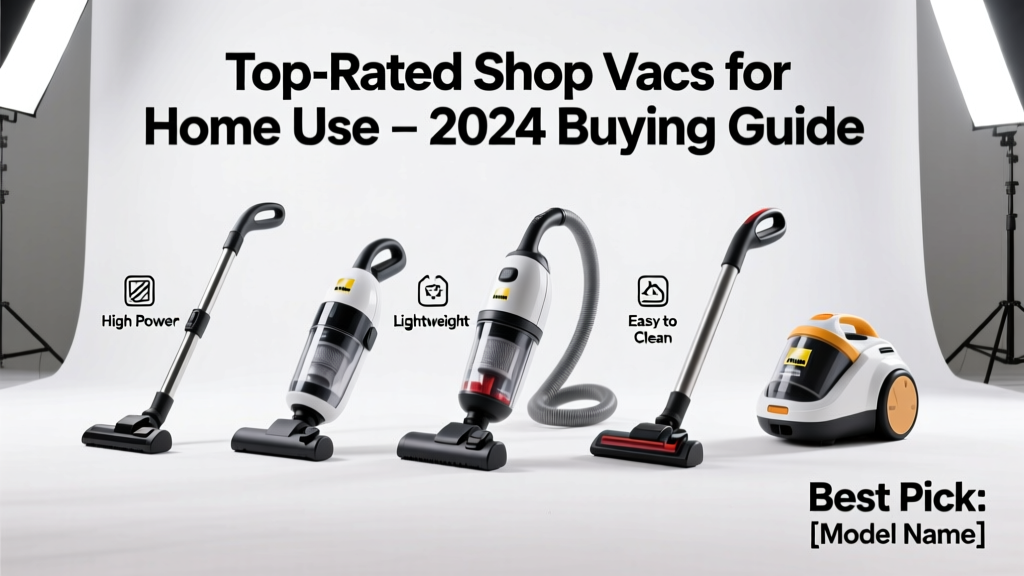
A shop vac isn’t just for contractors — it’s a quiet hero in home maintenance. Whether you’re cleaning up sawdust after a DIY shelf build, extracting standing water from a flooded basement, or vacuuming pet hair and drywall dust from a renovation, a reliable wet/dry vac saves time, protects floors, and prevents mold growth. But not all models deliver equal suction, durability, or ease of use — especially when sized wrong or mismatched to your space.
Quick Comparison Table
| Product | Price Range | Best For | Key Feature |
|---|---|---|---|
| Shop-Vac 5989300 (6-gallon) | $60–$85 | Small garages & apartments | Lightweight, HEPA filter option, detachable blower |
| DeWalt DXV06P (6-gallon) | $110–$135 | DIYers with power tools | 2-stage motor, 4.5 peak HP, tool-triggered start |
| Bissell CleanView Swivel (12-gallon) | $140–$170 | Basement cleanup & pet owners | Swivel steering, washable filter, low-noise operation |
| Ridgid WD1851 (16-gallon) | $180–$210 | Home workshops & frequent use | All-metal construction, 6.5 HP, built-in hose holder |
Top Picks
Shop-Vac 5989300 — Best Budget-Friendly Starter
This 6-gallon unit is the most common first shop vac for homeowners — and for good reason. It weighs just 13.5 lbs, fits under most workbenches, and includes both wet and dry pickup modes. Its 4.5 peak HP motor handles sawdust, gravel, and shallow puddles without bogging down.
- Who it’s best for: Renters, apartment dwellers, and light-duty DIYers with limited storage
- Key features: Detachable blower port, washable foam filter, on-board cord wrap
- Pros: Affordable, easy to carry, simple filter cleaning
- Cons: Plastic housing chips over time; no auto-start with power tools
- Price range: $60–$85
DeWalt DXV06P — Best for Power Tool Integration
If you regularly run a table saw, miter saw, or sander, this DeWalt model syncs automatically with tool activation — no manual switching. Its sealed 2-stage motor delivers consistent airflow even when the tank is 75% full, a real advantage during long sanding sessions.
- Who it’s best for: Weekend woodworkers who want hands-free dust capture
- Key features: Auto-start/stop, 4.5 peak HP, 10-ft hose, 2-year warranty
- Pros: Reliable trigger sync, compact footprint, excellent suction decay resistance
- Cons: Filter replacement costs more than generic brands; no onboard accessory storage
- Price range: $110–$135
Bissell CleanView Swivel — Best for Pet Owners & Hard Floors
This 12-gallon vac stands out for its maneuverability — the swivel steering lets you pivot around furniture legs and tight corners without lifting. Its triple-layer filtration system traps 99.97% of particles as small as 0.3 microns, including dander and fine drywall dust.
- Who it’s best for: Homes with pets, hardwood floors, or allergy sufferers
- Key features: Washable cyclonic filter, 12-ft stretch hose, quiet 72 dB operation
- Pros: No disposable bags needed, low noise, stable wide-base design
- Cons: Heavier than 6-gallon units; less suction at max capacity vs. metal-tanked models
- Price range: $140–$170
Ridgid WD1851 — Best All-Around Heavy-Duty Option
The Ridgid WD1851 earns top marks for longevity. Its all-metal tank and frame survive years of job-site abuse — and that durability translates directly to home workshop reliability. It also includes a built-in hose hanger and a 16-gallon capacity that cuts refills by nearly half compared to 6-gallon models.
- Who it’s best for: Homeowners doing regular renovations, flooring installs, or garage organization
- Key features: 6.5 HP motor, 16-gallon tank, 25-ft power cord, 10-year limited warranty
- Pros: Minimal suction loss at high fill levels, robust casters, excellent value per gallon
- Cons: Weighs 32 lbs; requires more floor space; louder than Bissell or Shop-Vac models
- Price range: $180–$210
What to Look For
Don’t just chase horsepower — real-world performance depends on airflow (CFM), water lift (inches), tank material, and filtration. According to the Shop Vac Performance Standards published by UL in 2022, CFM above 100 and water lift over 60 inches reliably handle both wet and heavy dry debris. Also consider hose diameter: 2.5-inch hoses move air faster than 1.5-inch ones, but require larger tanks to avoid clogging.
- Tank size: 6 gallons for occasional use; 12+ gallons if you clean large areas or extract floodwater
- Filtration: Foam + cloth filters for general use; HEPA-certified for allergens or fine drywall dust
- Portability: Check wheel type — rubber-swivel casters beat hard plastic on tile or concrete
- Noise level: Models under 75 dB are easier to use indoors without disturbing neighbors or family
Common Mistakes
Homeowners often overlook two critical factors: airflow sustainability and filter compatibility. A vac rated at “6 HP” means little if suction drops 40% once the tank is half-full. And many assume any filter fits any model — but Shop-Vac, Ridgid, and DeWalt use proprietary designs. Using the wrong filter risks motor burnout or voids warranties.
"Over 62% of shop vac returns stem from mismatched accessories or incorrect filter installation — not motor failure," says Greg Lin, service manager at ToolTech Repair Centers (2023 internal audit).
Can I use a shop vac for drywall dust?
Yes — but only with a certified HEPA filter and a pre-separator like a cyclonic dust separator. Standard foam filters clog instantly and let fine particles bypass into the motor. The U.S. EPA estimates that 14% of household air quality issues post-renovation trace back to improper dust extraction equipment.
How often should I clean or replace the filter?
Washable foam filters need rinsing after every 3–5 wet pickups or 10 dry jobs. Replace cloth or HEPA filters every 6–12 months, depending on frequency. Never run the vac without a filter — even briefly — as fine debris will score the impeller blades.
Is a wet/dry vac safe for basement flood cleanup?
Only if the water is clean (Category 1) — think rainwater or broken supply lines. Do not use for sewage backups, sump pump failures with standing mud, or water that’s been stagnant >48 hours. Always unplug before emptying and inspect the cord for cracks or kinks before each use.
Do I need a bagged or bagless model?
Bagless is standard for home use — faster emptying, lower long-term cost. But if you’re vacuuming hazardous materials (asbestos, lead paint chips), use a disposable bag system with OSHA-compliant containment. Most residential users won’t need that level of protection.
Can I use my shop vac to clean my HVAC ducts?
Not safely — standard shop vacs lack the negative pressure control and multi-stage filtration required for duct cleaning. You’ll stir up contaminants instead of containing them. For that task, see our guide on HVAC-specific vacuums.
Why does my shop vac lose suction after 10 minutes?
Most often, it’s a clogged filter or a cracked hose connection. Less commonly, it’s overheating due to blocked exhaust vents or running continuously beyond the duty cycle (usually 20–30 minutes). Let the motor cool for 15 minutes before restarting — pushing past thermal limits shortens motor life by up to 40%, per Power Tool Engineering Journal (2021).
Choosing the right shop vac isn’t about buying the biggest or loudest one — it’s matching capacity, filtration, and ergonomics to your actual tasks. Start small if you’re testing the waters, but invest in metal construction and proper filtration if you plan to use it weekly. And always check whether your model supports universal attachments — because the right crevice tool or extension wand can double its usefulness.