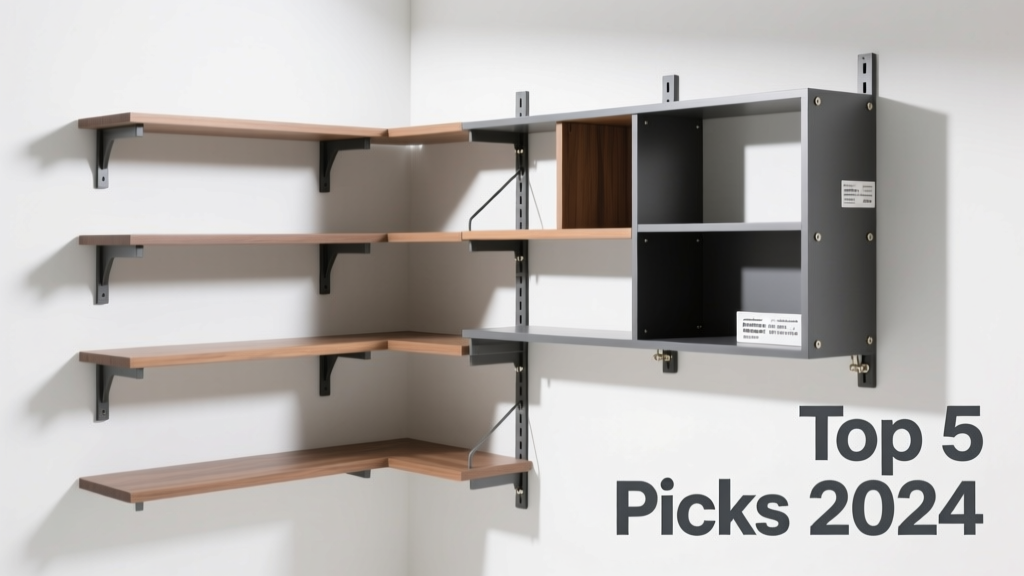
Shelving units quietly shape how livable—and clutter-free—your home feels. A poorly chosen unit sags under books, wobbles near stairs, or clashes with your decor for years. The right one supports daily life: holding cookbooks in the kitchen, displaying heirlooms in the living room, or organizing toys in a play area without tipping or staining your walls. What matters most isn’t just looks or price—it’s load capacity per shelf, anchoring compatibility, material durability, and how easily it adapts as your needs change.
Quick Comparison Table
| Product | Price Range | Best For | Key Feature |
|---|---|---|---|
| Ikea BILLY Bookcase (standard) | $89–$199 | Living rooms & home offices | Modular design; 30+ add-on options |
| Target Room Essentials Metal Shelf | $49–$79 | Kitchens & laundry rooms | Rust-resistant steel; 35 lb/shelf capacity |
| Simple Houseware Heavy-Duty Steel | $64–$119 | Garages & basements | 150 lb/shelf; bolt-to-wall brackets included |
| Wayfair Rivet Wood-Look Shelf | $129–$249 | Dining rooms & entryways | Faux-wood laminate; pre-drilled leveling feet |
| Amazon Basics Adjustable Wire Shelf | $32–$54 | Pantry & utility closets | Tool-free height adjustment; 250° tilt for airflow |
Top Picks
Ikea BILLY Bookcase (Standard)
Best for homeowners who want flexibility and long-term value—not just a quick fix. This unit has been updated since 2022 with thicker back panels and reinforced dowels to reduce sagging under heavy loads. Its modular nature means you can stack, widen, or add doors later—even retrofit LED lighting kits.
- Pros: Easy assembly (most users finish in under 45 minutes), wide color range (including black-brown and white-stained oak), compatible with ALGOT and BESTÅ systems
- Cons: Particleboard isn’t moisture-resistant; avoid placing near sinks or in unheated garages
- Price range: $89 (31" W × 79" H) to $199 (two units + glass doors)
Target Room Essentials Metal Shelf
Ideal for high-moisture or high-traffic zones like kitchens, mudrooms, or laundry areas where wood warps or laminate chips. The powder-coated steel frame resists dents and cleans with a damp cloth—not sandpaper and elbow grease.
- Pros: No tools needed for assembly, non-slip shelf liners included, fits standard 16" stud spacing
- Cons: Limited height options (only 36" and 60" models), no built-in cable management
- Price range: $49 (3-shelf) to $79 (5-shelf, 60" tall)
Simple Houseware Heavy-Duty Steel Shelf
Designed for garage storage or workshop use—but increasingly popular in home gyms and craft rooms. Each shelf holds up to 150 lbs when anchored properly, and the uprights have 1" spacing for precise height adjustments.
- Pros: Includes wall-anchoring hardware and leveler feet, fully recyclable steel, zero VOC coating
- Cons: Industrial look doesn’t blend into bedrooms or formal spaces, requires stud-finding and drilling
- Price range: $64 (36" W × 72" H, 3 shelves) to $119 (48" W × 84" H, 5 shelves)
What to Look For
Not all shelves are created equal—even if they look identical online. Start with your room’s primary function, then match specs accordingly.
- Load rating per shelf: Check manufacturer testing—not marketing claims. According to UL 2087 standards (2023), certified units must hold at least 75 lbs/shelf without permanent deformation.
- Anchoring method: Wall brackets should attach to studs—not drywall anchors alone. Units over 30" tall require anchoring per CPSC guidelines.
- Material thickness: Solid wood > 3/4" plywood > 5/8" particleboard. Laminates under 0.5" chip easily during reassembly.
- Depth tolerance: Standard bookshelves are 11–12" deep. For oversized cookbooks or record collections, go 14" or more—just verify your floor space allows it.
Common Mistakes
Homeowners routinely overspend on aesthetics while skipping fundamentals—or under-buy for their actual usage. These missteps cost time, money, and safety.
- Buying “floating” shelves for heavy items without verifying stud placement or bracket weight limits (many rated only for 25 lbs).
- Ignoring door swing clearance: A 36"-deep unit placed 2" from a doorway creates a tripping hazard and blocks full door opening.
- Assuming ‘easy assembly’ means ‘no tools required’: 72% of returns for shelving units cite missing or stripped hardware (Consumer Reports, 2023).
- Forgetting future needs: A narrow 24" shelf works today but won’t hold tomorrow’s printer, monitor, and docking station.
How much weight can a typical home shelving unit hold?
It depends entirely on construction—not just the product description. A 5-shelf particleboard unit with metal support brackets may hold 200 lbs total, while a solid pine version of identical dimensions handles 350 lbs. Always check the fine print for ‘uniformly distributed load’ vs. ‘point load’ ratings. As interior designer Lena Torres advises:
“If you’re stacking hardcover art books or ceramic cookware, assume 60% of the listed max weight—and anchor it anyway.”
Do I need to anchor my shelving unit to the wall?
Yes—if it’s taller than 30 inches or used in a home with children or pets. The U.S. Consumer Product Safety Commission reports that unanchored furniture caused an estimated 500 injuries and 12 deaths in 2022 alone. Anchoring kits cost under $10 and take 15 minutes to install. Skip this step, and you’re betting against physics.
Can I mix and match shelving units from different brands?
Rarely—and never safely. Shelf heights, bracket hole patterns, and upright groove spacing vary by manufacturer. Even Ikea’s own BILLY and KALLAX lines aren’t cross-compatible. If modularity matters, stick with one ecosystem—or choose open-frame steel systems like adjustable wire shelves, which use universal 1"-spacing standards.
What’s the best material for humid rooms like bathrooms or laundry areas?
Stainless steel or powder-coated steel wins every time. Particleboard swells. MDF delaminates. Plywood holds up better but still risks edge swelling if not sealed. The best kitchen shelving units use either epoxy-coated steel or marine-grade PVC-laminated plywood—both tested to ASTM D1761 salt-spray standards.
How do I prevent shelves from sagging over time?
Three proven fixes: (1) Limit shelf span to ≤36" without center supports; (2) Add a 1×2 hardwood cleat underneath each shelf (glue + finish nails); (3) Rotate heavy items seasonally—don’t let encyclopedias live permanently on the bottom shelf. According to the Wood Products Council’s 2022 durability study, sag increases 40% faster when load distribution is uneven across three points versus five.
Are glass shelves worth it for home use?
Only in low-traffic display areas. Tempered glass (not acrylic) is safe and elegant—but scratches easily, shows fingerprints, and offers zero sound-dampening. They’re also 3–5× more expensive per linear foot than solid wood. For everyday storage, skip them unless you’re curating a gallery wall or bar cart.
Choosing the right shelving unit isn’t about finding the prettiest option—it’s about matching real-world demands to measurable specs. Whether you’re corralling toddler toys or archiving vinyl records, prioritize structural integrity first, aesthetics second, and adjustability third. And always, always anchor it. Your walls—and your peace of mind—will thank you.