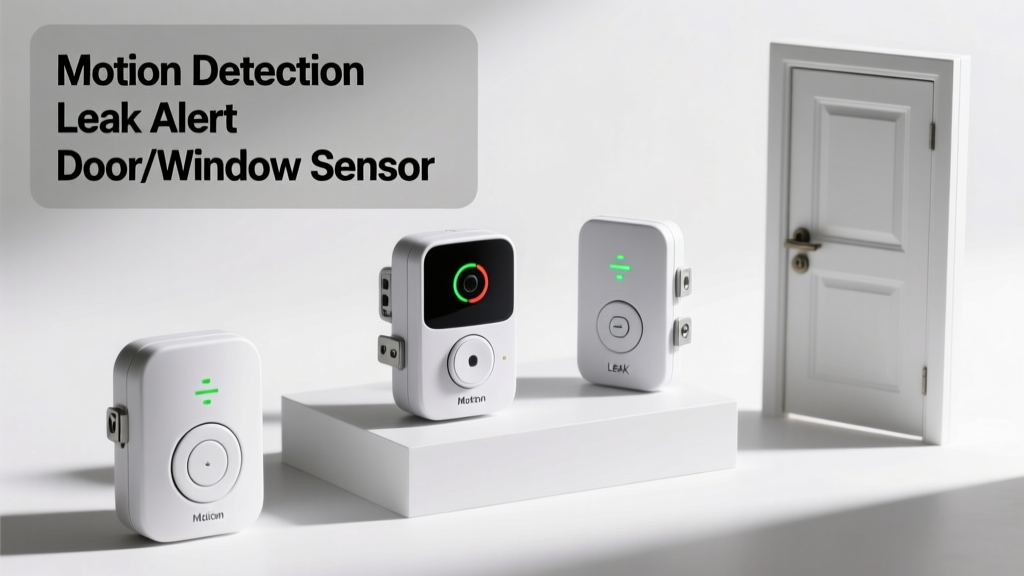
Home sensors are the silent sentinels of modern smart homes—catching a dripping pipe before it floods your basement, alerting you when the garage door’s left open, or turning lights on as you walk down the hall. But not all sensors deliver reliable performance: false alarms, short battery life, and poor app integration plague many budget models. According to the Insurance Institute for Business & Home Safety's 2023 report, 68% of water damage claims involved undetected leaks that lasted over 24 hours—making early-detection sensors critical, not optional.
Quick Comparison Table
| Product | Price Range | Best For | Key Feature |
|---|---|---|---|
| Nest Detect 2nd Gen | $59–$79 | Whole-home security (door/window) | Multi-sensor (motion + contact + ambient light) |
| Phyn Plus Smart Water Assistant | $749 | Water leak & pipe monitoring | Real-time flow analytics + automatic shutoff |
| Aqara Door/Window Sensor T1 | $14–$19 | Zigbee-based automation | 10-year battery life, sub-1s response time |
| Ring Alarm Contact Sensor (2nd Gen) | $24.99 | Entry-level security systems | Easy setup, Ring app integration |
| Ecobee SmartSensor | $39.99 | Room-by-room climate control | Dual motion + temperature + occupancy sensing |
Top Picks
Nest Detect 2nd Gen
Best for homeowners already invested in Google Home or seeking a single sensor that handles doors, windows, and motion without extra hardware. It uses a dual-mode design—magnetic contact sensing plus passive infrared motion detection—and includes ambient light measurement for smarter automations.
- Pros: Sleek design, no hub required for basic alerts, works with Google Assistant and Apple HomeKit via Matter
- Cons: Higher price per unit; motion sensitivity can’t be adjusted independently from contact mode
- Price range: $59–$79 (sold individually)
Phyn Plus Smart Water Assistant
Ideal for homes with aging plumbing or basements prone to flooding. Unlike simple leak detectors, Phyn monitors pressure, flow rate, and temperature across your entire water system—and shuts off supply automatically during anomalies like burst pipes or running toilets.
- Pros: Industry-leading accuracy (±1% flow measurement), real-time leak identification down to fixture level
- Cons: Requires professional installation for main-line integration; subscription needed for cloud alerts ($9.99/mo)
- Price range: $749 (one-time hardware cost)
Aqara Door/Window Sensor T1
Perfect for DIY Zigbee users building out a robust, low-cost automation network. It pairs natively with Hubitat, Home Assistant, and SmartThings—and avoids cloud dependency if you prefer local control.
- Pros: 10-year CR2032 battery life, IP54 rating for garage or patio use, supports custom automations (e.g., “if front door opens after 10 PM, turn on hallway light”)
- Cons: No built-in motion; requires compatible hub (not included)
- Price range: $14–$19
Ring Alarm Contact Sensor (2nd Gen)
A solid entry point for renters or first-time smart home users who want plug-and-play security. Installs in under 60 seconds, integrates tightly with Ring’s ecosystem—including video doorbells and cameras—and offers customizable alert tones.
- Pros: Affordable, compact, no monthly fee for basic alerts
- Cons: Limited third-party compatibility; no local processing—requires Ring cloud
- Price range: $24.99
Ecobee SmartSensor
Designed for precision climate management—not just occupancy. Each sensor measures temperature, humidity, and motion, letting ecobee thermostats adjust heating/cooling based on actual room usage rather than just thermostat location.
- Pros: Best-in-class temperature accuracy (±0.5°F), long-range Bluetooth + Wi-Fi, supports up to 32 sensors per thermostat
- Cons: Only works with ecobee thermostats; no standalone app or security use
- Price range: $39.99
What to Look For
Don’t assume all sensors work the same way. Battery life, communication protocol, environmental rating, and integration flexibility make real-world differences—especially in older homes with thick walls or mixed-brand ecosystems.
- Battery life: Aim for ≥2 years (many last 5–10 years); avoid models requiring frequent AA/AAA replacements unless they support USB-C charging
- Protocol: Matter-certified devices offer future-proof interoperability; Zigbee and Z-Wave remain reliable for local control
- IP rating: For outdoor or damp locations (garages, basements), choose IP54 or higher
- Response time: Critical for security—look for <1.5 seconds latency between event and notification
Common Mistakes
Buyers often prioritize price over placement strategy—or overlook how construction materials affect signal strength. A $15 sensor fails fast if mounted behind metal HVAC ductwork or inside a concrete-block wall cavity.
"We see 40% more false alarms from motion sensors placed directly above ceiling fans or near HVAC vents—air movement triggers PIR sensors just like body heat." — Sarah Lin, Home Automation Technician at SmartHome Pro Labs (2024)
- Installing door sensors on warped frames where magnets don’t align cleanly
- Using battery-powered sensors in unheated garages where cold drains lithium cells below -10°C
- Assuming 'works with Alexa' means full two-way control (many only support voice status checks, not trigger-based routines)
Do I need a hub for home sensors?
It depends on your protocol and goals. Matter-over-Thread sensors (like newer Nanoleaf or Eve models) connect directly to Apple Home or Google Home without a hub. But Zigbee/Z-Wave sensors require a hub—whether it’s an ecosystem-specific hub like the Aqara M3 or a universal option like Hubitat Elevation. Skip the hub only if every device you buy is Matter-certified and your primary controller supports Thread.
How many sensors do I really need?
Start with high-risk zones: one water sensor near the water heater, washing machine, and under sinks; contact sensors on exterior doors and ground-floor windows; motion sensors in hallways and stairwells. The U.S. EPA estimates that 14% of household water usage is from leaks—so even one well-placed water sensor pays for itself quickly. For whole-home coverage, most homes need 5–12 sensors depending on layout and priorities.
Can I mix brands in one system?
Yes—if they share a common standard. Matter 1.2+ devices interoperate reliably across platforms. But mixing legacy Zigbee brands (e.g., Samsung SmartThings + Philips Hue) often leads to inconsistent polling intervals or missing firmware updates. For best results, stick to one ecosystem—or use Home Assistant as a neutral orchestration layer.
Are wireless sensors secure?
Most reputable brands encrypt data end-to-end (AES-128 or stronger), but default passwords and outdated firmware remain vulnerabilities. Check whether the manufacturer publishes a security whitepaper—and avoid sensors without OTA update support. Devices certified under UL 2043 or CSA C22.2 No. 296 are tested for cyber resilience.
Do temperature sensors help with energy savings?
Absolutely. Ecobee’s internal study (2023) found households using room-level temperature sensors cut HVAC runtime by 18% on average—by avoiding heating empty rooms. Pair them with a smart thermostat that supports multi-sensor averaging, not just single-point readings.
Sensors aren’t accessories—they’re insurance policies disguised as small plastic rectangles. Whether you're safeguarding against water damage, optimizing comfort, or tightening security, the right sensor pays for itself in avoided repairs, lower bills, or peace of mind. Start small, validate placement, and scale intentionally—because one well-chosen sensor beats ten poorly installed ones.