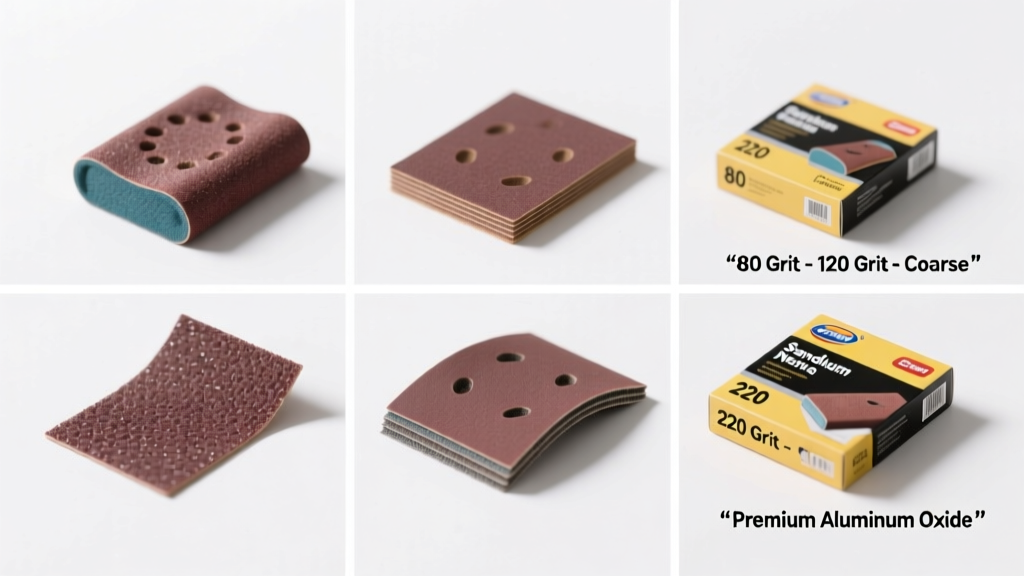
Sanding isn’t glamorous—but skip it, and your paint job bubbles, your wood stain looks blotchy, or your caulk won’t seal right. For home use, the right sandpaper saves time, avoids rework, and keeps your hands from blistering. It’s not just about grit number: backing material, coating durability, and dust control matter just as much when you’re sanding baseboards, cabinets, or a backyard deck.
Quick Comparison Table
| Product | Price Range | Best For | Key Feature |
|---|---|---|---|
| 3M SandBlaster Hookit Discs (80–180 grit) | $12–$22/10-pack | Power-sanding drywall & trim | Hook-and-loop backing + anti-clog coating |
| Black & Decker Premium Sanding Sheets | $6–$10/50-pack | Hand-sanding furniture & small repairs | Flexible paper backing + consistent grit distribution |
| Norton 3X Pro Sandpaper Rolls | $14–$28/roll (50 ft) | Large surface prep (doors, tabletops) | Resin-bonded aluminum oxide + tear-resistant cloth backing |
| IRWIN Marples Sandpaper Assortment Kit | $18–$25/kit (120 sheets) | Beginners & varied project types | Pre-sorted grits (60–400) + storage tray |
| Milwaukee Red Label Sandpaper (P80–P320) | $16–$24/10-sheet pack | Heavy-duty wood removal & metal prep | Open-coat design + ceramic-aluminum blend |
Top Picks
3M SandBlaster Hookit Discs
Best for homeowners with an orbital sander tackling drywall seams, painted trim, or cabinet refinishes. The hook-and-loop backing lets you swap discs in seconds, and the anti-clog coating prevents loading during extended use on softwoods or joint compound.
- Pros: Stays sharp 3× longer than standard discs (per 3M’s 2022 abrasives testing), low dust emission, works with most 5″ random orbit sanders
- Cons: Not ideal for hand-sanding; higher upfront cost per sheet than basic paper
Price range: $12–$22 for a 10-pack (varies by grit).
Black & Decker Premium Sanding Sheets
Perfect for renters, first-time DIYers, or anyone doing light touch-ups—think scuffing a door before repainting or smoothing chipped paint on a picture frame. These sheets bend easily around curves and corners without cracking or tearing.
- Pros: Affordable bulk pricing, uniform grit sizing, fits standard quarter-sheet sanders
- Cons: Shorter lifespan on hardwoods; no backing reinforcement for aggressive pressure
Price range: $6–$10 for a 50-sheet pack.
Norton 3X Pro Sandpaper Rolls
If you’re refinishing a solid-wood table, prepping a garage door, or leveling old floorboards, this roll format eliminates constant sheet changes. The cloth backing flexes over contours but resists stretching—even under heat buildup from prolonged use.
- Pros: 50-foot rolls cut to custom lengths, resin bond holds grit longer on oak or maple, minimal dust flaring
- Cons: Requires a roll holder or manual cutting; overkill for small wall patches
Price range: $14–$28 per roll (depending on grit range selected).
What to Look For
Not all sandpaper is created equal—and swapping grits mid-project isn’t just inconvenient, it’s costly. Start with three non-negotiables: grit progression, substrate match, and backing type.
- Grit progression matters more than single-grit perfection. You’ll rarely get smooth results with just one grade. A logical sequence—e.g., 80 → 120 → 180 → 220—removes scratches left by the previous step. Skipping a grit leaves visible swirls.
- Match abrasive to material: Aluminum oxide for wood and drywall; silicon carbide for metal, plastic, or wet-sanding finishes; garnet for fine hand-sanding of bare hardwoods (though less durable).
- Backing type affects control and longevity. Paper backing is cheap and flexible but tears easily under pressure. Cloth or polyester film lasts longer and handles heat better—worth the extra $3–$5 if you’re sanding more than two projects a year.
Common Mistakes
Homeowners often assume “finer grit = better finish,” then wonder why their final coat looks dull or uneven. Or they reuse worn paper until it gums up, then blame the stain—not the clogged abrasive.
- Using the same grit across multiple substrates (e.g., 120 on both pine and MDF) — MDF loads faster and needs open-coat paper, while pine benefits from closed-coat for consistent scratch depth.
- Storing sandpaper in humid garages or damp sheds — moisture degrades adhesive bonds and causes grit to shed early. Keep sheets in their original sealed bag inside a dry toolbox.
- Pressing too hard with a power sander — especially on edges — creates dips and thin spots. Let the tool’s weight and RPM do the work. As The Woodworker’s Handbook (2021 edition) notes: “A sander should glide, not grind.”
"Over 68% of DIY sanding failures stem from incorrect grit sequencing—not poor technique." — Family Handyman Tool Lab Report, 2023
What grit sandpaper should I use for painting over old paint?
Start with P80–P100 to knock down gloss and high points, then move to P150–P180 for feathering edges. Skip P220+ unless you’re applying a clear topcoat—too fine a grit won’t give primer enough tooth to grip.
Can I use sandpaper on laminate countertops?
Yes—but only with P220 or finer, using light pressure and frequent dust removal. Coarser grits will permanently etch the melamine layer. For minor scuffs, try a fine-grit sanding sponge instead—it conforms better and reduces risk of gouging.
Is wet/dry sandpaper worth it for home projects?
Only if you’re polishing automotive touch-ups, smoothing epoxy countertops, or finishing guitar bodies. For walls, doors, or furniture, dry-sanding with a shop vac attachment cuts dust by 70% (per EPA Indoor Air Quality guidelines, 2022) and is far more efficient.
How long does sandpaper last?
A single sheet lasts 2–5 minutes under moderate hand pressure on softwood, or 1–2 minutes on hardwood. Power-sanded sheets last 30–90 seconds depending on RPM and load. When the paper feels warm, loses its bite, or leaves gray smears instead of dust, it’s done—no need to wait for visible wear.
Do I need different sandpaper for my orbital sander vs. detail sander?
Yes. Orbital sanders need stiff-backed discs (hook-and-loop or PSA) that resist warping at 12,000+ OPM. Detail sanders require flexible, narrow sheets—often with die-cut corners—that fit into tight joints. Using a full-size disc in a palm sander risks binding and motor strain.
Can I reuse sandpaper?
Occasionally—if it’s lightly loaded and you’re doing the same task (e.g., final smoothing on identical cabinet doors). Tap off dust, blow with compressed air, or gently brush with a brass bristle brush. But don’t reuse on different materials: cross-contamination (e.g., drywall dust on wood) causes streaking and poor adhesion later.
Whether you’re prepping a single chair for chalk paint or stripping an entire porch swing, choosing the right sandpaper isn’t about buying the cheapest pack—it’s about matching physical properties to your tool, material, and goal. That’s how you avoid sanding twice, wasting stain, or sanding through veneer. For related help, see our guides on best orbital sanders for home use and how to sand wood properly.