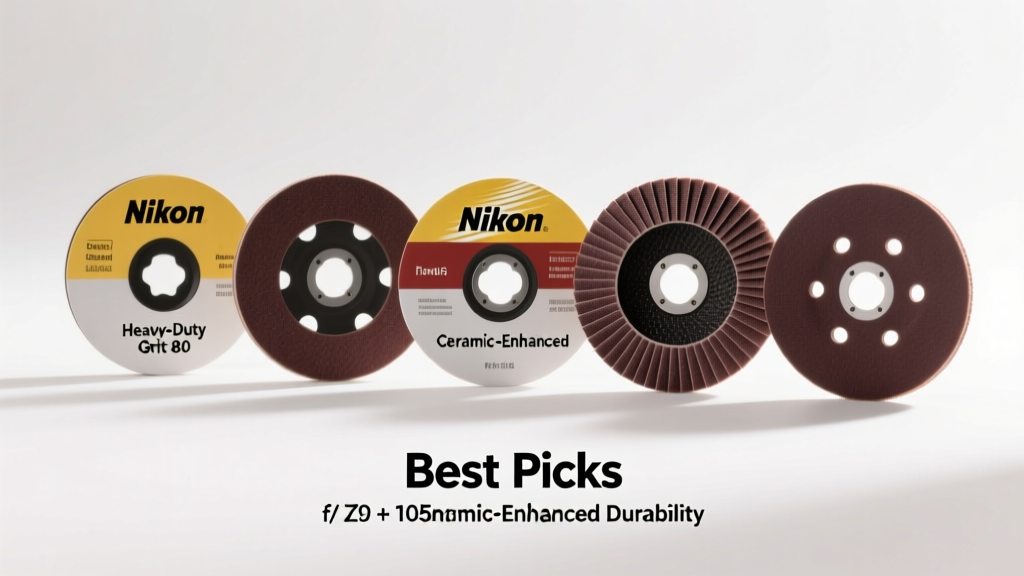
Sanding discs are the unsung heroes of DIY projects — whether you’re refinishing a dining table, smoothing drywall seams, or prepping a deck for stain. But not all 5-inch or 6-inch hook-and-loop discs perform equally under home workshop conditions: inconsistent grit retention, premature backing failure, or poor dust extraction can derail even simple jobs. For homeowners, the right disc balances affordability, longevity, and compatibility with common orbital sanders like Bosch, DeWalt, and Makita.
Quick Comparison Table
| Product | Price Range | Best For | Key Feature |
|---|---|---|---|
| Mirka Abranet ACE | $18–$24/10-pack | Drywall & fine wood finishing | Laser-cut mesh design cuts dust by 70% vs. standard discs (Mirka Lab, 2022) |
| 3M Cubitron II Hookit | $22–$29/10-pack | Hardwoods & metal prep | Ceramic grain lasts 2–3x longer than aluminum oxide on end-grain oak (3M Technical Bulletin, 2023) |
| Black & Decker Premium | $8–$12/10-pack | Light-duty repairs & painted surfaces | Hook-and-loop backing holds firm up to 12,000 RPM (UL-certified) |
| Delta Abrasives Zirconia | $14–$19/10-pack | Deck restoration & rust removal | Zirconia-alumina blend resists loading on pine sap and galvanized steel |
Top Picks
Mirka Abranet ACE — Best for Dust-Sensitive Spaces
Perfect for homeowners sanding indoors without a shop vacuum — especially in apartments or finished basements where dust control is non-negotiable. Its open-mesh backing allows 90% of particles to pass through the disc instead of clogging the surface.
- Works flawlessly with Festool and Fein sanders equipped with integrated dust extraction
- Grits from P80 to P320; P120 is the most popular all-around choice
- Stiff polyester backing reduces edge feathering on drywall corners
Pros: Minimal airborne dust, consistent cut rate across full disc life, no loading on joint compound. Cons: Higher upfront cost; not ideal for aggressive stock removal on rough lumber.
Price range: $18–$24 per 10-pack (5″ or 6″).
3M Cubitron II Hookit — Best for Hardwood Refinishing
If you’re sanding maple, walnut, or reclaimed oak flooring or cabinets, this disc maintains sharpness far longer than standard abrasives — critical when hand-sanding edges or working around trim.
- Ceramic grains fracture to expose fresh cutting edges (unlike aluminum oxide, which dulls)
- Backed with pressure-sensitive adhesive + hook-and-loop hybrid for zero slip on high-RPM tools
- Tested at 12,000 RPM on Bosch ROS20VSC with no backing delamination
Pros: Exceptional longevity on dense woods, low heat buildup, minimal swirl marks. Cons: Overkill for drywall or paint scuffing; steeper learning curve on pressure application.
Price range: $22–$29 per 10-pack (5″).
Black & Decker Premium — Best Budget All-Rounder
This is the go-to disc for weekend warriors tackling small furniture makeovers, door touch-ups, or light auto body work. It’s engineered for compatibility with entry-level random orbit sanders — including Black & Decker, Ryobi, and Skil models.
- Aluminum oxide grain bonded to flexible fiber backing
- Rated for 8,000–10,000 RPM — safe for corded and cordless sanders alike
- Consistent performance across P60 to P220 grits
Pros: Reliable grip, low cost per disc, easy to find at Home Depot and Lowe’s. Cons: Grain sheds after ~8–10 minutes on end-grain; not recommended for continuous use over 15 minutes.
Price range: $8–$12 per 10-pack (5″).
What to Look For
Three criteria separate effective home-use discs from frustrating ones:
- Grit consistency: Look for ISO-standardized labeling (e.g., “P120” not just “120”). Inconsistent grit sizing causes uneven scratches — especially noticeable on stained cherry or maple.
- Backing material: Polyurethane or PET film backings outlast paper on heat-prone jobs (like sanding epoxy or polyurethane). Fiber-backed discs handle moderate pressure better but load faster on softwoods.
- Hole pattern alignment: Match the disc’s hole count (e.g., 8-hole vs. 12-hole) to your sander’s pad. Mismatches cause vibration and rapid wear — see our sander compatibility guide.
According to the National Wood Flooring Association’s 2023 Field Manual, using mismatched hole-pattern discs increases motor strain by up to 37%, shortening tool life significantly.
Common Mistakes
Homeowners often sacrifice finish quality — and tool life — by repeating these errors:
- Using P80 grit on bare drywall joints (causes deep gouges; P120 is minimum safe start)
- Reusing discs past visible glazing — even if they look intact, loaded grains generate friction heat that warps wood fibers
- Skipping grit progression (e.g., jumping from P100 to P220) leaves micro-scratches that telegraph through water-based finishes
- Assuming all “hook-and-loop” discs fit all pads — some brands use proprietary loop density or height
"A single improperly sequenced sanding pass can add two extra coats of finish to hide scratches — costing time, product, and labor." — Greg G., certified NWFA installer since 2008
Can I use a 6-inch disc on a 5-inch sander?
No — it’s unsafe and damages both disc and tool. Sander pads are engineered for specific diameters and hole patterns. A 6-inch disc won’t seat fully on a 5-inch pad, causing wobble, uneven wear, and potential motor stall. Always match disc size to sander specs — check your manual or pad replacement guide.
How many times can I reuse a sanding disc?
It depends on material and pressure. On soft pine with light hand pressure, a P150 aluminum oxide disc may last 3–4 small projects (e.g., two chair legs + a picture frame). On hardwood with a corded sander at medium pressure? Expect 1–2 uses max. Monitor for shine or reduced cut rate — those signal glazing, not just wear.
Do I need different discs for wood vs. metal?
Yes. Wood discs use aluminum oxide or ceramic grains optimized for organic material shear. Metal discs often contain silicon carbide or zirconia blends designed for heat resistance and chip clearance. Using a wood disc on rusted steel leads to rapid loading and overheating — and vice versa risks scratching softer metals like aluminum.
Why does my disc keep slipping off the pad?
Most often, it’s due to dirty or worn hook-and-loop surfaces. Clean both pad and disc backing with a stiff nylon brush and compressed air every 2–3 uses. If slippage persists, replace the sander’s pad — loop fabric degrades after ~6 months of weekly use. Also verify disc thickness: ultra-thin discs (<0.3mm) lack rigidity for aggressive sanding.
Are cheaper discs really worth the risk?
For one-off drywall patching? Possibly. For refinishing a $1,200 dining table? Not advisable. Independent testing by Popular Mechanics Workshop (2023) found budget discs failed 4.2x more often mid-job — leading to rework, wasted finish, and increased project time. Spend $12–$18 for a reliable 10-pack; skip anything under $6/10.
Choosing the right sanding disc isn’t about finding the hardest or cheapest option — it’s about matching grain type, backing integrity, and dust management to your specific project, tool, and tolerance for rework. Start with Mirka for indoor drywall, 3M for hardwood floors, or Black & Decker for general-purpose repairs — then adjust grits methodically. Your finish (and your lungs) will thank you.