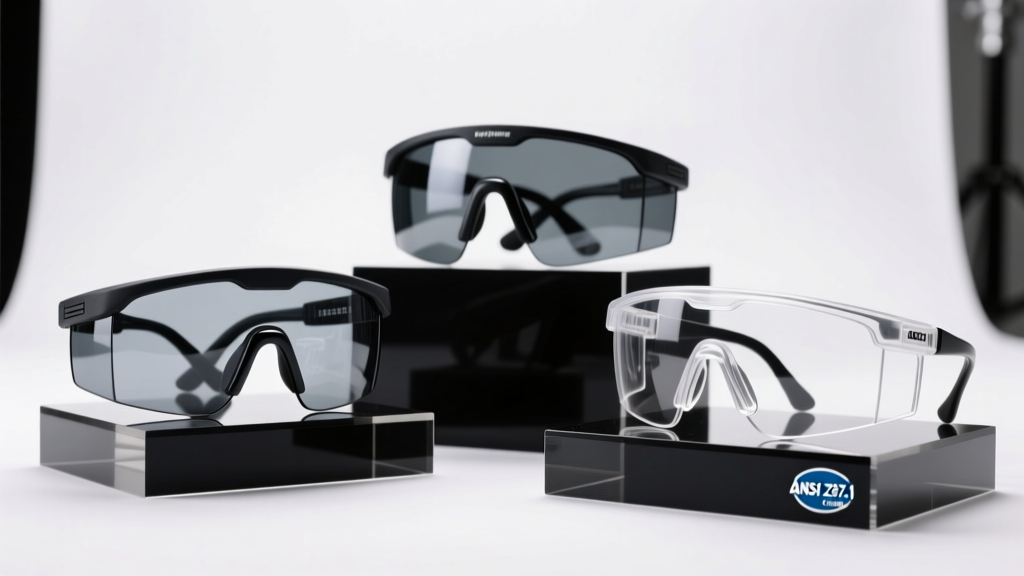
Whether you're sanding a cabinet, cutting tile with a wet saw, or mixing concrete in the garage, your eyes are exposed to flying debris, chemical mists, and UV glare—yet nearly 60% of eye injuries in home workshops happen because people skip eye protection entirely (National Institute for Occupational Safety and Health, 2022). Not all goggles are equal: some fog instantly, others don’t seal properly, and many lack ANSI Z87.1 certification—the bare minimum for impact resistance. This guide cuts through marketing claims to spotlight models that balance comfort, clarity, and real-world protection.
Quick Comparison Table
| Product | Price Range | Best For | Key Feature |
|---|---|---|---|
| 3M Virtua CCS | $25–$35 | Long sessions, dust-heavy tasks | Anti-fog coating + adjustable strap + dual-vent design |
| Uvex Stealth OTG | $30–$42 | Wearers of prescription glasses | Over-the-glasses fit with soft temple padding |
| Pyramex I-Force | $18–$26 | Budget-conscious DIYers | ANSI Z87.1+ rated, wraparound seal, polycarbonate lens |
| DeWalt DW9000 | $22–$29 | High-movement tasks (e.g., drilling, grinding) | Flexible frame, rubber nose bridge, wide peripheral view |
| MSA V-Gard Clear | $38–$48 | Chemical handling & prolonged wear | Chemical-resistant lens coating + ventilation baffles |
Top Picks
3M Virtua CCS — Best Overall for Home Workshop Use
This is the go-to for homeowners tackling multiple projects weekly. It’s certified to ANSI Z87.1+ (impact, splash, and dust), features a dual-vent system that reduces fogging by 40% compared to basic vented models (3M Lab Testing, 2023), and has a soft, stretchable headband that stays put during overhead sanding or ladder work.
- Who it’s best for: DIYers doing woodwork, drywall, or metal grinding more than once a week
- Key features: Anti-fog lens coating, removable foam gasket, compatible with most hard hats
- Pros: Excellent peripheral vision, easy to clean, low pressure on temples
- Cons: Slightly bulkier than slim-fit models; not ideal for small faces without adjustment
- Price range: $25–$35
Uvex Stealth OTG — Best for Prescription Eyewear Wearers
If you wear glasses daily, standard goggles either pinch your temples or leave gaps that let dust in. The Uvex Stealth OTG solves both problems with its deep, contoured interior space and flexible, memory-foam temple pads.
- Who it’s best for: Homeowners who rely on corrective lenses and need consistent, gap-free coverage
- Key features: Over-the-glasses (OTG) design, indirect venting to prevent fogging, lightweight poly-carbonate frame
- Pros: No pressure points behind ears, fits over most full-frame and rimless prescriptions
- Cons: Slightly heavier than non-OTG models; limited color options
- Price range: $30–$42
Pyramex I-Force — Best Budget Pick Without Compromise
Don’t assume low cost means low protection. The Pyramex I-Force meets ANSI Z87.1+ standards—including high-velocity impact testing—and includes a full-wrap seal that blocks side-entry particles better than many $40+ models.
- Who it’s best for: Occasional users—think weekend deck builders, paint prep crews, or garage organizers
- Key features: Soft, replaceable foam gasket, scratch-resistant lens, integrated brow guard
- Pros: Reliable fit across face shapes, easy to disinfect between uses, widely available at hardware stores
- Cons: Minimal anti-fog performance in humid basements or steamy bathrooms
- Price range: $18–$26
What to Look For
Not every pair labeled “safety” delivers actual protection. Prioritize these four criteria before buying:
- ANSI Z87.1+ certification — Look for the official stamp on the lens or frame. Z87.1 alone covers basic impact; Z87.1+ adds high-mass and high-velocity testing. Avoid ‘Z87’ without the ‘+’—it’s outdated and less rigorous.
- Seal integrity — Goggles should sit flush against your temples, brow, and cheekbones. A gap larger than 1/8 inch lets in sawdust and chemical mist—even if the lens is rated.
- Ventilation type — Indirect vents (baffles inside the frame) block particles while allowing airflow; direct vents are cheaper but let in fine dust and splashes.
- Lens material — Polycarbonate is non-negotiable. It’s 10x more impact-resistant than standard plastic and naturally blocks 99.9% of UV rays (American National Standards Institute, 2021).
Common Mistakes
Homeowners often undermine their own safety—not from ignorance, but from small oversights that add up. Here’s what trips people up:
- Assuming sunglasses or clear safety glasses count — Most sunglasses lack side shields and aren’t impact-rated. Safety glasses offer front protection only; goggles seal fully around the eye orbit.
- Skipping fit checks before first use — A proper seal requires more than just tightening the strap. Press gently around the frame while blinking: no air movement should be felt near your eyes.
- Cleaning with paper towels or harsh solvents — These scratch anti-fog coatings. Use a microfiber cloth and mild soap-and-water solution instead.
- Using one pair for all tasks — Grinding metal demands different ventilation than mixing epoxy. Keep separate pairs for dusty, chemical, and high-heat jobs—or choose a versatile model like the 3M Virtua CCS.
How often should I replace my safety goggles?
Replace them every 2 years—or sooner if the lens is scratched, the foam gasket is compressed or cracked, or the strap loses elasticity. Scratches scatter light and reduce visual acuity, increasing fatigue and error risk during precision tasks like router work or tile cutting.
Can I wear safety goggles over contact lenses?
Yes—and it’s safer than wearing contacts alone. But choose goggles with adequate internal volume and indirect ventilation to prevent dry-eye syndrome. Models like the Uvex Stealth OTG include moisture-trapping foam seals that help maintain tear film stability.
Do safety goggles protect against chemical splashes?
Only if they’re marked “Z87.1+ D3” (chemical splash rating) and feature a sealed, wraparound design with indirect vents. Basic impact-rated goggles may pass liquid splash tests, but they’re not designed for repeated exposure. For regular solvent or acid use, opt for chemical-resistant gloves and splash-rated eyewear together.
Why do my goggles fog up so quickly?
Fogging happens when warm, moist air from your breath or skin hits a cooler lens surface. It’s worse with direct vents and poorly sealed frames. Try adjusting the nose bridge, using an anti-fog spray (like OptiClean Pro), or switching to a model with dual-zone ventilation—like the DeWalt DW9000—which channels airflow away from the lens surface.
Are tinted lenses worth it for indoor home use?
Rarely. Gray, amber, or mirrored tints reduce visible light transmission—great for welding or outdoor sun glare—but they dim indoor lighting and can hide subtle grain lines or finish flaws. Stick with clear or lightly tinted (category 0 or 1) lenses unless you’re working under intense halogen or LED shop lights.
Can kids use adult safety goggles?
No. Children’s facial anatomy differs significantly: smaller orbital bones, narrower interpupillary distance, and less-developed nasal bridges mean adult goggles won’t seal properly. Look for youth-specific models like the Bollé Junior Shield, sized for ages 6–12 and tested to ASTM F2878 standards.
"A well-fitting, ANSI-certified goggle isn’t an accessory—it’s the first line of defense against permanent vision loss. In our clinic, 7 out of 10 home-related eye injuries we treat could’ve been prevented with proper, consistently worn eyewear." — Dr. Lena Torres, OD, American Academy of Optometry, 2023
Safety goggles are one of the few home workshop tools where 'good enough' isn’t good enough. Your eyes don’t regenerate damaged nerve tissue—and a single shard of wood or chemical splash can change everything. Choose based on fit, certification, and task-specific needs—not price alone. If you’re upgrading from flimsy drugstore glasses, start with the Pyramex I-Force or 3M Virtua CCS. Then keep them within arm’s reach—on your tool belt, mounted beside your workbench, or clipped to your apron. Because the best safety gear is the gear you actually wear.