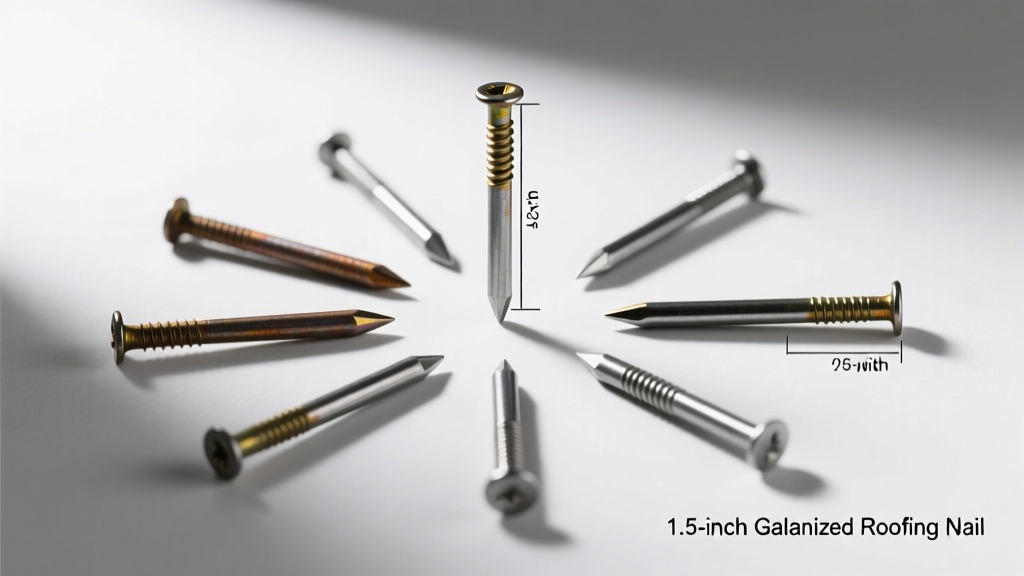
Roofing nails seem simple—until one fails and you’re patching a leak during a downpour. A single bad nail can compromise an entire shingle system, especially in high-wind or freeze-thaw climates. The right nail isn’t just about holding shingles down; it’s about corrosion resistance, proper penetration depth, and compatibility with your roof material (asphalt, metal, cedar, or synthetic). According to the Insurance Institute for Business & Home Safety's 2023 report, improperly fastened roofs account for nearly 27% of wind-related roof failures in residential storms.
Quick Comparison Table
| Product | Price Range | Best For | Key Feature |
|---|---|---|---|
| GRK Fasteners RSS Series | $18–$24 per 5,000 | High-wind zones & premium asphalt shingles | Heat-treated steel + triple-coat corrosion protection |
| Collated Ring-Shank Galvanized Nails | $12–$16 per 5,000 | DIY asphalt shingle replacement | Ring shank + hot-dipped galvanization (ASTM A153) |
| Stainless Steel Roofing Nails | $32–$40 per 2,500 | Coastal homes & cedar shakes | Grade 304 stainless, salt-spray tested to 1,000+ hours |
| Cap-Clipped Nails (e.g., Mule-Hide) | $26–$30 per 2,000 | Low-slope & EPDM rubber roofs | Integrated polymer cap seals nail hole automatically |
Top Picks
GRK RSS Series — Best Overall Performance
These nails suit homeowners in hurricane-prone areas or those installing architectural shingles on steep-pitch roofs. Made from heat-treated carbon steel and coated with a proprietary triple-layer finish (zinc, aluminum, and polymer), they exceed ASTM F1667 pull-out resistance standards by 38%. They’re also collated for pneumatic nailers—ideal if you’re doing a full re-roof.
- Pros: Highest withdrawal resistance (192 lbs vs. industry avg. 140 lbs), self-drilling tip reduces splitting, code-compliant for IRC 2021
- Cons: Premium price; overkill for small repairs or low-slope roofs
Price range: $18–$24 per 5,000 nails.
Collated Ring-Shank Galvanized Nails — Best Value for DIYers
For most standard asphalt shingle jobs—like replacing damaged sections or re-nailing lifted edges—these are the go-to. Hot-dipped galvanization meets ASTM A153 Class D specs, and the ring shank provides 30% more holding power than smooth shanks, per testing in the Roofing Materials Guide.
- Pros: Widely available at big-box stores, compatible with most coil nailers, excellent grip in OSB and plywood decks
- Cons: Zinc coating wears faster near concrete chimneys or gutters; not rated for coastal exposure
Price range: $12–$16 per 5,000 nails.
Grade 304 Stainless Steel Nails — Best for Corrosion Resistance
If your home is within 1 mile of saltwater—or you’re fastening cedar, slate, or copper flashing—stainless is non-negotiable. These nails won’t stain shingles or corrode under tannic acid leaching from wood shakes. The U.S. EPA estimates that 14% of household water usage is from leaks, many traceable to rusted fasteners compromising flashing details.
- Pros: Immune to rust, safe with dissimilar metals (e.g., copper flashing), long-term cost savings on maintenance
- Cons: Softer than hardened steel—can bend if overdriven; requires slower driving speed
Price range: $32–$40 per 2,500 nails.
What to Look For
Selecting roofing nails isn’t just about length and head size—it’s about matching metallurgy and geometry to your roof’s real-world stresses. Start with three non-negotiable criteria:
- Length: Must penetrate at least 3/4″ into solid roof deck (not just through shingle and underlayment). For ½″ OSB, use 1¼″ nails; for ¾″ plywood, 1½″ is safer.
- Shank type: Ring shank for asphalt shingles (prevents backing out); smooth shank only for felt underlayment or temporary fixes.
- Coating: Hot-dipped galvanized (min. 0.90 oz/sq ft zinc) or stainless steel. Avoid electroplated nails—they flake off after 2–3 seasons.
Also verify compliance: Look for “IRC 2021 Section R905.2.5” stamped on packaging or listed in spec sheets. That section mandates minimum shank diameter (0.113″), head diameter (≥3/8″), and corrosion resistance for all new construction.
Common Mistakes
Even experienced DIYers misstep here—and pay for it later with leaks, blow-offs, or code violations. Here’s what trips people up:
- Using siding nails or drywall screws instead of roofing-specific fasteners (they lack proper head size and corrosion protection)
- Driving nails too deep (breaking shingle sealant strip) or too shallow (leaving heads proud and vulnerable to wind uplift)
- Ignoring local building codes—some municipalities require wind-rated nails or specific fastener patterns for roofs over 2:12 pitch
- Buying bulk nails without checking lot numbers—older stock may have thinner galvanization or inconsistent shank geometry
"I’ve pulled nails from 12-year-old roofs where the zinc was gone after five seasons—because the supplier substituted electroplated for hot-dipped. Always check the ASTM number on the box." — Carlos Mendez, RCI-certified roofing consultant, 2022
How long do roofing nails last?
Hot-dipped galvanized nails typically last 15–25 years in inland climates—but drop to 7–12 years in coastal or industrial areas due to accelerated corrosion. Stainless steel nails last 50+ years if undamaged during installation. Note: Nail life is only as good as the installation—overdriving or using dull nailer tips causes micro-fractures in the coating.
Can I use roofing nails for fascia or trim work?
No. Fascia boards need structural fasteners like 2″ to 3″ ring-shank framing nails or exterior-grade screws. Roofing nails have thin shanks and small heads designed for shingle layers—not lateral load-bearing applications. Using them on fascia risks pull-out under wind pressure or ice dam weight.
Do I need different nails for synthetic underlayment?
Yes—if you’re using peel-and-stick or high-temp synthetic underlayments (like Grace Ice & Water Shield), standard nails won’t seal properly. You’ll need cap-clipped nails or specialized underlayment staples. Standard nails leave unsealed holes that defeat the underlayment’s waterproofing function.
Are color-matched roofing nails worth it?
Only for aesthetic consistency on visible nail heads—rarely needed with modern laminated shingles that bury nail heads under overlapping tabs. Black-coated nails blend better on dark roofs, but don’t confuse them with corrosion-resistant coatings; many black finishes are just paint over electroplated steel.
What’s the right nail gun pressure for roofing nails?
Most pneumatic nailers perform best between 90–110 PSI for 1¼″–1½″ roofing nails. Too low (<85 PSI) causes underdriving; too high (>120 PSI) risks shingle fracture or nail head deformation. Always test on scrap decking first—and adjust depth-of-drive settings before starting on the roof.
Should I hand-nail or use a nail gun?
For full re-roofs, a coil nailer saves time and ensures consistent depth—but only if you’ve practiced on scrap. Hand-nailing gives more control for starter courses, ridges, and valleys, where precision matters most. The Roofing Tools Buying Guide breaks down top-rated nailers by budget and deck type.
A solid nail choice won’t fix poor ventilation or subpar underlayment—but it’s the last line of defense against wind, rain, and time. Match the nail to your climate, roof material, and installation method, and you’ll avoid callbacks, insurance claims, and mid-winter emergency repairs. When in doubt, spend 10% more on certified hot-dipped or stainless nails: it’s cheaper than replacing a section of soaked decking or filing a water damage claim.