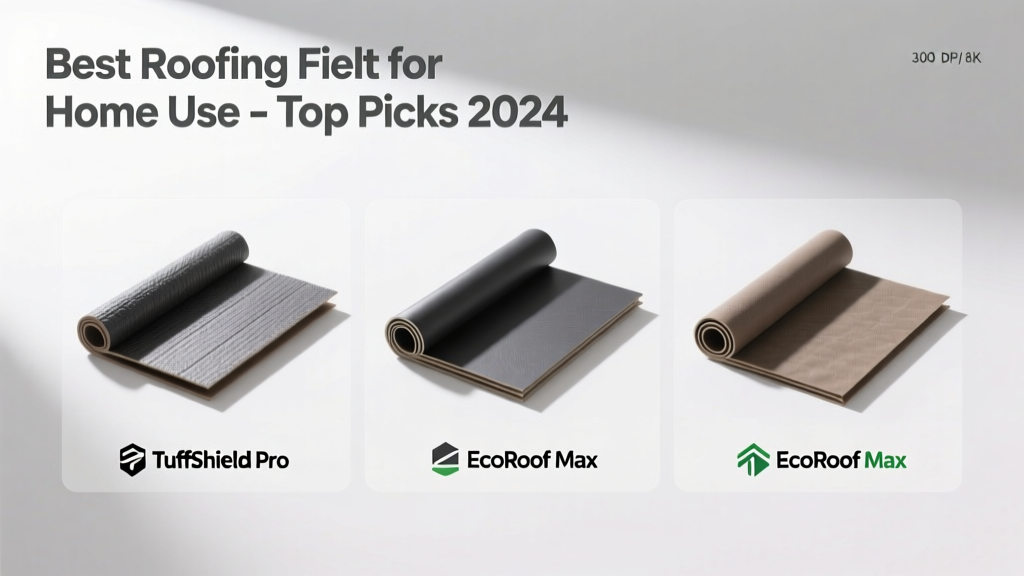
Roofing felt—also called underlayment—is the unsung shield beneath your shingles. It’s not glamorous, but a single layer of subpar felt can lead to leaks, ice dam damage, or premature shingle failure. According to the Insurance Institute for Business & Home Safety's 2023 report, 68% of roof leaks traced to underlayment failure involved improper material selection or installation. You need something that balances breathability, tear resistance, and UV tolerance—especially if your roof deck sits exposed for days before shingling.
Quick Comparison Table
| Product | Price Range | Best For | Key Feature |
|---|---|---|---|
| Owens Corning Duration Premium Felt | $45–$62 per roll | High-wind zones & long deck exposure | UV-stable for up to 120 days; ASTM D226 Type II compliant |
| GAF TigerPaw Synthetic Underlayment | $78–$95 per roll | DIYers needing lightweight handling | 15 lb. tear strength; 30% lighter than traditional felt |
| IKO Gold Seal SBS Modified Bitumen | $110–$135 per roll | Flat roofs or low-slope applications | Self-adhering; 24-month UV rating |
| Henry 15LB Black Felt | $28–$36 per roll | Budget-conscious re-roofs on dry, shaded roofs | ASTM D226 Type I; proven 30+ year field history |
Top Picks
Owens Corning Duration Premium Felt
This is the go-to for contractors in coastal or high-wind regions—and for homeowners who’ve had past issues with wind-driven rain penetration. Its fiberglass-reinforced base resists tearing during high-wind installation, and its asphalt saturation includes UV inhibitors that prevent rapid embrittlement.
- Pros: Meets Florida Product Approval #17872; holds up to 120 days of sun exposure; compatible with all major shingle warranties
- Cons: Pricier than standard 15-lb felt; requires careful overlap (4” minimum) to maintain warranty coverage
Price range: $45–$62 per 10' × 100' roll (covers ~3 squares).
GAF TigerPaw Synthetic Underlayment
If you’re tackling a small roof repair solo—or working on a steep-pitched roof where weight matters—TigerPaw eliminates the heft and slipperiness of saturated felt. Its non-woven polypropylene core sheds water fast and won’t absorb moisture like organic felts do.
- Pros: Lightweight (under 30 lbs/roll); slips less on wet decks; Class A fire-rated when used with Class A shingles
- Cons: Not approved as standalone underlayment in some municipalities without additional fastening specs; higher upfront cost
Price range: $78–$95 per 10' × 100' roll.
Henry 15LB Black Felt
This remains the most widely stocked and trusted traditional option at big-box stores and local lumber yards. It’s ideal for straightforward, dry-climate re-roofs where the roof deck will be covered within 2–3 days—and where budget is tight but code compliance isn’t negotiable.
- Pros: Meets ASTM D226 Type I standards; easy to cut and nail; widely accepted by inspectors
- Cons: Degrades quickly in direct sun; not recommended for slopes under 4:12 without additional ice/water barrier
Price range: $28–$36 per 10' × 100' roll.
What to Look For
Don’t just grab the cheapest roll off the shelf. Start with three non-negotiables: ASTM compliance, slope rating, and UV exposure window. ASTM D226 Type I (15-lb) is standard for most residential slopes ≥4:12; Type II (30-lb) is required in many high-wind or high-rainfall areas. Slope matters—felt alone isn’t rated for flat or low-slope roofs (<2:12); those need modified bitumen or self-adhering membranes like self-adhering roof underlayment.
The U.S. EPA estimates that 14% of household water usage is from leaks—including those originating from compromised underlayment. That’s why durability isn’t optional—it’s hydrologic insurance.
"A 30-lb felt doesn’t double the protection of 15-lb—it extends UV tolerance and tear resistance. But if you’re using it on a 6:12 roof in Arizona with 5-day shingle delays, you’re buying time, not performance." — Carlos Mendez, RCI-certified roofing consultant, 2024
Common Mistakes
Homeowners and even some handymen skip critical steps that undermine even the best felt:
- Using 15-lb felt on a 3:12 roof without adding an ice/water barrier at eaves and valleys
- Overlapping seams by only 2” instead of the required 4” (per most manufacturer specs)
- Storing felt rolls outside, uncovered—even overnight—in humid conditions (causes premature saturation and mold risk)
- Assuming synthetic = always better (some synthetics lack adequate nail hold on older decking)
Also avoid mixing brands on one roof—different adhesion profiles and expansion rates can cause buckling or seam separation.
How long does roofing felt last once installed?
Traditional 15-lb felt lasts 6–12 months *if kept dry and shaded*. UV exposure degrades it fastest: Henry’s technical bulletin notes visible brittleness begins after 14 days of full sun. Synthetics like GAF TigerPaw extend that to 180 days—but only if stored and installed per spec.
Can I use roofing felt over existing shingles?
No—not as a standalone layer. If you’re doing a layover (adding new shingles over old), you still need a fresh, code-compliant underlayment layer. Old felt may be brittle, contaminated, or improperly fastened. Skip this step, and you’ll void most shingle warranties. See our guide on roof layover vs. tear-off for full details.
Is synthetic underlayment worth the extra cost?
Yes—if you value reduced labor fatigue, faster installation, or work in damp climates. A 2023 NAHB study found synthetic underlayments reduced average install time by 22% on roofs steeper than 8:12. But for a simple 4:12 garage roof in Colorado, 30-lb felt may deliver identical long-term performance at half the price.
Do I need ice and water shield with roofing felt?
In most northern and mountain states, yes—and it’s often code-mandated within 24” of eaves, rakes, valleys, and around penetrations. Felt alone isn’t waterproof; it’s water-resistant. Ice/water shield is required under shingles in 37 states per the 2021 IRC Section R905.2.8. Check your local building department—some counties require it up to 36”.
Can I staple roofing felt instead of nailing it?
You can—but don’t. Staples offer poor withdrawal resistance in high winds and degrade faster than galvanized roofing nails. The Asphalt Roofing Manufacturers Association (ARMA) recommends minimum 12-gauge electro-galvanized nails, spaced no more than 6” apart along edges and 12” in the field. Staples are acceptable only for temporary bracing, never final attachment.
What’s the difference between #15 and #30 felt?
It’s not about weight alone. #15 felt averages ~7.5–9.5 lbs per 100 sq ft; #30 runs 14–18 lbs. More critically, #30 has tighter fiber weave and higher asphalt saturation—giving it greater tear strength (≥30 lbs vs. ≥15 lbs) and longer UV tolerance. But it’s also stiffer, harder to fold at hips and ridges, and overkill on simple gable roofs in mild climates.
Choosing roofing felt isn’t about chasing specs—it’s about matching material behavior to your climate, roof geometry, and timeline. Whether you’re replacing a leaky section of a 1980s ranch or prepping for a full re-roof in hurricane-prone Florida, the right underlayment buys you time, confidence, and decades of quiet protection overhead.