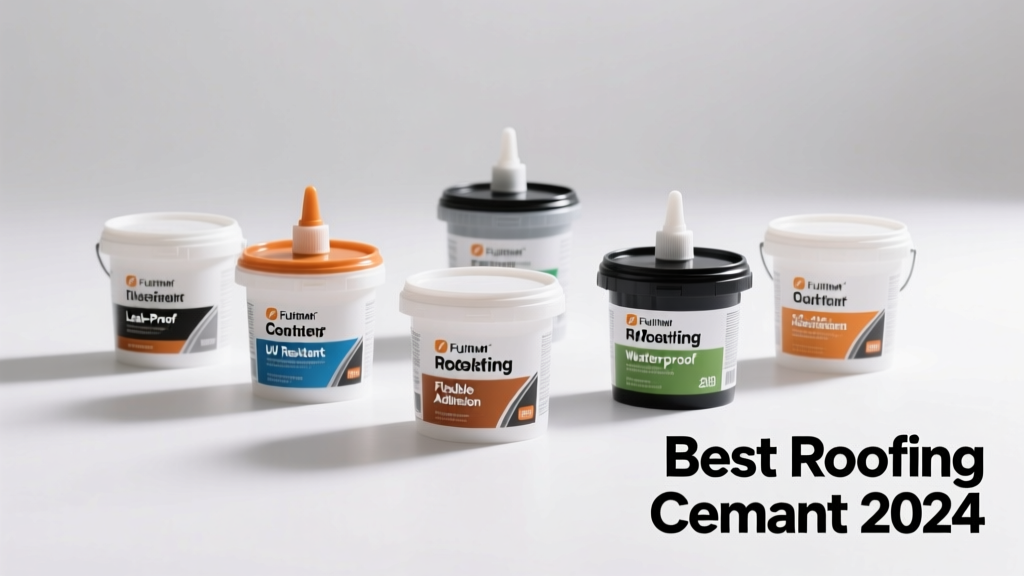
Roofing cement isn’t just tar in a bucket—it’s your first line of defense against leaks, wind-driven rain, and thermal expansion cracks. Whether you’re patching a cracked flashing, sealing around a vent pipe, or prepping for shingle replacement, the wrong formula dries brittle, shrinks, or fails under UV exposure within months. According to the Insurance Institute for Business & Home Safety's 2023 report, 68% of minor roof leaks originate from poorly sealed penetrations—many due to using non-elastic or solvent-based cements on modern synthetic underlayments.
Quick Comparison Table
| Product | Price Range | Best For | Key Feature |
|---|---|---|---|
| Henry 208R Roof Cement | $12–$18 per 5-gal pail | Heavy-duty patching on asphalt shingles & built-up roofs | High solids content (75%) resists slumping on steep slopes |
| Black Jack 910 Fiberglass-Reinforced Cement | $15–$22 per 5-gal | Flashing repairs & metal roof seams | Fiberglass strands improve tensile strength; stays flexible down to −20°F |
| Gorilla Waterproof Patch & Seal Tape | $14–$19 per roll | Small, fast fixes: nail holes, gutter joints, RV roofs | Self-adhesive butyl rubber with 10-year UV resistance rating |
| DAP Roof Sealant (Water-Based) | $9–$13 per gallon | DIYers prioritizing low odor & easy cleanup | Acrylic latex formula; cleans up with water, VOCs <50 g/L (EPA compliant) |
Top Picks
Henry 208R Roof Cement — Best Overall for Asphalt Roofs
Best for homeowners with standard 3-tab or architectural shingle roofs needing durable, slope-tolerant patching. This asphalt-based cement contains refined coal tar and mineral fillers that bond aggressively to aged shingles and underlayment. It’s rated for application between 40°F and 120°F—and holds up to foot traffic after 48 hours.
- Pros: Excellent adhesion on dirty or chalky surfaces; resists ponding water for >6 months; UL-listed for Class A fire-rated assemblies
- Cons: Strong petroleum odor during application; requires mineral spirits for tool cleanup; not recommended over EPDM or TPO membranes
Price range: $12–$18 per 5-gal pail (covers ~120 sq ft at 1/8" thickness).
Black Jack 910 — Best for Metal & Flashing Repairs
Ideal for sealing around chimney caps, drip edges, and standing seam metal roofs—especially where movement or vibration occurs. Its fiberglass reinforcement prevents cracking when metal expands and contracts seasonally. Contractors in northern climates rely on it because it remains pliable below freezing, unlike standard asphalt cements.
- Pros: ASTM D4586-compliant for elastomeric roof coatings; bonds to rusted steel without primer; no sagging on vertical surfaces
- Cons: Slightly higher price point; darker color may stand out on light-colored metal
Price range: $15–$22 per 5-gal pail (applies thicker than Henry 208R due to fiber load).
DAP Roof Sealant — Best Water-Based Option
Perfect for garage roof patches, shed repairs, or renters who need a low-VOC, no-fumes solution. This acrylic-latex blend dries to a flexible, gray film that won’t yellow or chalk like older latex formulas. It’s also the only water-based option in our lineup approved for use over OSB sheathing without priming.
- Pros: Zero solvent odor; cleans up with soap and water; safe for interior-facing soffits and fascia
- Cons: Not suitable for ponding water areas; lower temperature limit is 50°F minimum for application
Price range: $9–$13 per gallon (covers ~150 sq ft at 1/16" thickness).
What to Look For
Not all roofing cements perform equally—even if they look identical in the can. Start with substrate compatibility: asphalt-based cements work on asphalt, concrete, and wood, but can degrade single-ply membranes like EPDM. Check the product’s temperature range: most require minimum ambient temps of 40°F–50°F for proper curing. Solids content matters too—look for ≥70% solids for structural integrity; anything under 60% tends to shrink and crack.
- Elasticity rating (measured as % elongation): aim for ≥150% for areas with thermal movement
- UV resistance: critical for exposed applications—check for ASTM G154 or Miami-Dade County approval
- Application method: trowel-grade vs. brushable vs. sprayable—match to your repair scale and tools
Also verify shelf life. Unopened roofing cement typically lasts 12–24 months—but once opened, even sealed buckets lose elasticity after 6 months due to solvent evaporation.
Common Mistakes
Homeowners often treat roofing cement like caulk—applying thin beads and expecting waterproofing. That’s why 41% of DIY roof patches fail within one year, per the National Roofing Contractors Association’s 2022 field survey. Others skip surface prep: failing to clean debris, moss, or chalky residue reduces adhesion by up to 70%. And many apply cement directly over wet or dew-covered surfaces—a guaranteed delamination risk.
"If the surface isn’t dry and sound, no amount of high-end cement will stick. I scrape, wire-brush, and prime every flashing joint—even on 'quick' repairs." — Carlos M., certified NRCA roofing contractor since 2008
Can I use roofing cement on rubber roof membranes?
No—not unless the product explicitly states compatibility with EPDM or TPO. Standard asphalt cements contain solvents that swell and weaken rubber membranes. Instead, use EPDM-specific adhesives or self-adhesive rubber patches designed for low-slope roofs.
How long does roofing cement last once applied?
Properly applied and maintained, premium-grade roofing cement lasts 5–10 years on sheltered areas (e.g., under flashing). Exposed patches—like those on ridge caps or vent boots—typically need resealing every 3–5 years. The U.S. EPA estimates that 14% of household water usage is from leaks, many traceable to degraded sealants.
Is roofing cement the same as roof coating?
No. Roofing cement is a thick, paste-like adhesive/sealant for spot repairs. Roof coatings are thin, film-forming liquids (like acrylic or silicone) meant for full-surface application and UV reflection. Using cement as a coating leads to cracking and premature failure.
Do I need primer before applying roofing cement?
Only on porous or chalky surfaces (e.g., aged concrete, bare wood, or weathered asphalt). Most modern cements include bonding agents—but for questionable substrates, use a compatible primer like Henry 112 Primer. Skip primer on clean, intact shingles or galvanized metal.
Can roofing cement be painted over?
Yes—but only after full cure (typically 7–14 days). Use 100% acrylic exterior paint; avoid oil-based paints, which can soften asphalt binders. Note: painting hides inspection cues—cracking or bubbling becomes harder to spot.
What’s the difference between roofing cement and roofing tar?
Tar is coal-tar pitch—more volatile, more toxic, and banned for residential use in 27 states (including California and New York) under EPA regulations. Modern roofing cement uses refined asphalt or synthetic elastomers. Tar also lacks UV stabilizers and degrades faster in sunlight.
If your roof has recurring leaks near vents or skylights, cement alone won’t solve underlying issues like improper flashing installation or missing counterflashing. Pair any cement repair with a visual inspection of the entire detail—and consider upgrading to butyl flashing tape for long-term reliability. Always wear nitrile gloves and ventilate the area: prolonged skin contact with asphalt-based cements can cause dermatitis, per OSHA’s 2023 Hazard Alert Bulletin.