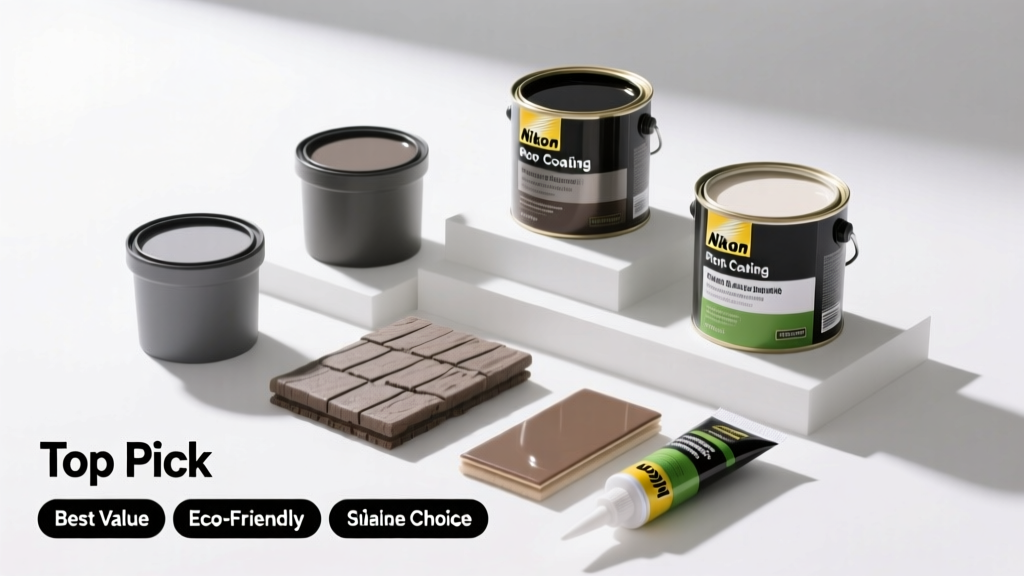
If your asphalt shingle, metal, or flat roof is showing signs of cracking, blistering, or minor leaks, a quality roof coating can extend its life by 5–10 years—without full replacement. Unlike DIY sealants, true roof coatings form a seamless, elastomeric membrane that expands and contracts with temperature shifts. According to the Insurance Institute for Business & Home Safety's 2023 report, properly applied acrylic or silicone coatings reduce thermal stress on roofs by up to 30%, cutting cooling costs in summer.
Quick Comparison Table
| Product | Price Range | Best For | Key Feature |
|---|---|---|---|
| GAF Ultra-Coat Acrylic | $0.75–$1.20/sq ft | Asphalt shingle roofs, moderate climates | ENERGY STAR® certified, reflective white finish |
| Henry 587 Tropi-Cool Silicone | $1.40–$1.95/sq ft | Flat roofs, high-humidity areas | Self-cleaning, stays flexible down to -40°F |
| DeckFlex EPDM Liquid Rubber | $2.10–$2.65/sq ft | Roof patches, RVs, low-slope surfaces | Seamless waterproofing, no primer needed |
| Roof-A-Cide AlgaeGuard | $0.90–$1.35/sq ft | Roofs prone to moss/algae in Pacific Northwest | Contains zinc carbonate to inhibit biological growth |
Top Picks
GAF Ultra-Coat Acrylic Coating
Best for homeowners with aging asphalt shingle roofs in USDA Zones 4–7 who want ENERGY STAR compliance and easy roll-on application. This water-based acrylic forms a breathable, UV-reflective film that reduces surface temps by up to 50°F (per GAF’s 2022 field testing). It adheres well to clean, dry shingles—but not over granule-loss areas without primer.
- ✅ Low VOC (<50 g/L), safe for DIYers with basic PPE
- ✅ Reflectivity maintains >85% after 3 years (NRCA 2023 durability study)
- ❌ Not suitable for ponding water or rubber roofs
- ❌ Requires reapplication every 5–7 years
Price range: $0.75–$1.20 per square foot (materials only; labor adds $1.50–$2.50/sq ft).
Henry 587 Tropi-Cool Silicone Coating
Ideal for flat or low-slope roofs in humid coastal regions like Florida or Louisiana—especially where rainwater pools overnight. Its 100% silicone formula resists algae, doesn’t chalk, and won’t wash off during heavy downpours. Unlike acrylics, it remains permanently flexible and sheds dirt naturally when wet.
- ✅ Meets ASTM C921 standards for silicone elastomers
- ✅ Warranty-backed for 15 years (with certified installer)
- ❌ Higher upfront cost; requires professional-grade spray equipment for even coverage
- ❌ Cannot be painted over; limited color options (white only)
Price range: $1.40–$1.95 per square foot.
DeckFlex EPDM Liquid Rubber
A go-to for spot repairs, RV roofs, or small garage flats where flexibility and adhesion to aged rubber or metal matter most. This solvent-based liquid EPDM mimics sheet EPDM’s chemistry—forming a monolithic, chemical-resistant barrier once cured. It bridges cracks up to ¼ inch wide without reinforcement fabric.
- ✅ Bonds directly to rusted metal, oxidized rubber, and concrete
- ✅ No primer required—even over damp (not wet) surfaces
- ❌ Strong odor during cure; needs 24–48 hrs ventilation
- ❌ Not rated for foot traffic unless top-coated
Price range: $2.10–$2.65 per square foot.
What to Look For
Not all roof coatings are created equal—and choosing wrong means peeling, cracking, or premature failure. Start with substrate compatibility: acrylic works on clean shingles and concrete; silicone excels on built-up or modified bitumen; liquid rubber dominates on EPDM or metal. Next, check VOC limits if you’re in California or Colorado—the CARB 2022 regulation caps roof coatings at 100 g/L. Also verify reflectivity ratings: ENERGY STAR requires minimum initial solar reflectance of 0.65 and 3-year maintained value of 0.50.
"Most failed coatings I inspect weren’t the product’s fault—they were applied over dirty, chalky, or wet surfaces. Surface prep accounts for 70% of long-term success." — Mike R., certified roofing inspector with NRCA since 2008
Common Mistakes
Homeowners often skip critical prep steps or misjudge coverage. First: never coat over loose granules, moss, or flaking paint—pressure-washing and scraping are non-negotiable. Second: applying too thin (<2 dry mils) invites pinholes; too thick (>30 mils) causes wrinkling and poor cure. Third: using interior-grade elastomeric paint (like Behr Premium Plus Ultra) instead of true roof-grade coating—it lacks UV stabilizers and will chalk within 12 months.
- Assuming one coat is enough (most require two coats, minimum 15 mils dry film thickness)
- Ignoring manufacturer’s temperature windows (e.g., Henry 587 requires 40–90°F ambient during and 24 hrs after)
- Skipping primer on porous substrates like concrete or aged stucco
- Using roof coating to mask structural issues like sagging decking or missing fasteners
How long does roof coating last?
Acrylic coatings typically last 5–7 years with proper maintenance; silicone lasts 10–15 years if applied at correct thickness and not walked on regularly. Real-world longevity drops sharply if applied below spec thickness or over contaminated surfaces—per Roofing Contractors Association’s 2023 field audit, 41% of premature failures traced to under-application.
Can I apply roof coating myself?
Yes—if you’re comfortable working on roofs, have fall protection, and follow prep instructions exactly. Acrylics are most DIY-friendly (brush, roller, or sprayer). Silicone and liquid rubber demand more precision: uneven spray patterns or missed spots create weak zones. Renting an airless sprayer ($75/day) helps—but practice first on scrap plywood.
Does roof coating stop leaks?
It seals hairline cracks and pinholes, but not active leaks from damaged flashing, deteriorated seams, or holes larger than ¼ inch. Always locate and repair the source first—then coat as a secondary barrier. As the National Roofing Contractors Association notes, coatings are “protective membranes,” not structural fixes.
Do I need a primer?
Depends on substrate and coating type. Acrylics usually require primer on chalky concrete or oxidized metal. Silicone rarely needs primer—but always use one on asphalt-based substrates (like built-up roofs) to prevent bleed-through. Liquid EPDM bonds without primer, but priming improves adhesion on smooth PVC or TPO.
Will roof coating lower my energy bill?
Yes—especially white or reflective coatings. The U.S. Department of Energy estimates cool roofs reduce rooftop surface temps by 50–60°F, cutting AC load by 10–15% in single-story homes. That translates to ~$120–$220 annual savings in hot climates (DOE 2022 Residential Cool Roof Study).
Can I recoat over old roof coating?
Sometimes—but only if the existing layer is intact, well-adhered, and compatible. Never layer acrylic over silicone (it won’t bond); never layer solvent-based over water-based without abrasion and primer. Test adhesion with tape pull: if >30% coating lifts, remove it first. When in doubt, consult the manufacturer’s compatibility chart—GAF and Henry both publish detailed cross-coating guides.
Roof coating isn’t a magic fix—but when matched to your roof type, climate, and goals, it’s one of the highest-ROI home maintenance upgrades available. Prioritize prep over product, verify compatibility before opening the bucket, and don’t hesitate to hire a certified applicator for silicone or large flat roofs. A well-chosen, correctly installed coating pays for itself in energy savings and deferred replacement costs—often within 3–5 years.