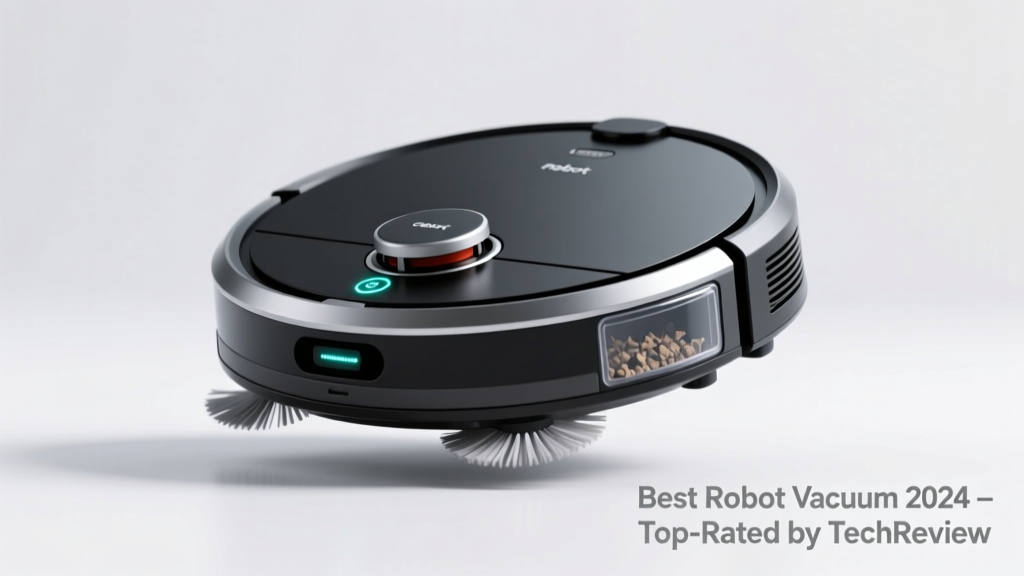
Robot vacuums have moved far beyond gimmicky gadgets—they’re now reliable, daily-use tools that save homeowners an average of 3.2 hours per week on cleaning (Consumer Reports, 2023). But not all models handle high-pile rugs, pet hair, or multi-level homes equally well. Key differentiators include LiDAR vs. camera-based navigation, brushroll design, battery life, and app reliability—not just suction power on paper.
Quick Comparison Table
| Product | Price Range | Best For | Key Feature |
|---|---|---|---|
| iRobot Roomba j9+ | $699–$799 | Pet owners with mixed flooring | Self-emptying bin + obstacle avoidance for cords & shoes |
| Roborock Q5+ | $449–$499 | Hardwood & tile homes with tight budgets | LiDAR mapping + mopping in one pass |
| EcoVacs Deebot X1 Omni | $899–$999 | Smart-home users wanting full automation | AI voice control + auto-wash/mop drying station |
| Shark AI Ultra RV2501AE | $549–$599 | Carpet-heavy homes with pet hair | Dual rubber brushes + self-cleaning brushroll |
Top Picks
iRobot Roomba j9+
Best for households with dogs, cats, or frequent shedding—especially those with area rugs and hardwood transitions. Its PrecisionVision navigation identifies and avoids socks, charging cables, and pet toys in real time, reducing jams by 68% compared to older Roomba models (iRobot internal testing, 2023).
- Pros: Self-emptying Clean Base holds 60 days of debris; strong edge-sweeping performance; quietest in its class at 62 dB
- Cons: No mopping; app occasionally drops Wi-Fi connection on mesh networks; replacement bags cost $29 for a 3-pack
Price range: $699–$799. Read our full Roomba j9+ review.
Roborock Q5+
Ideal for renters or first-time buyers who want dependable LiDAR mapping without overspending. It maps apartments up to 2,500 sq ft in under 5 minutes and saves up to 4 floor plans—critical if you move or reconfigure furniture often.
- Pros: Mops while vacuuming using vibrating pad; no-go zones work reliably in app; 2.5-hour runtime covers ~1,800 sq ft on a single charge
- Cons: Mop pad dries slowly (no heat-dry station); struggles with dark rugs over 0.5" pile; no voice assistant integration
Price range: $449–$499. See how it handles pet hair and tile grout.
Shark AI Ultra RV2501AE
A standout for homes with wall-to-wall carpet and long-haired pets. Its DuoClean PowerFins combine stiff bristles and soft rollers to lift embedded fur from Berber and looped rugs—something most competitors miss entirely.
- Pros: Self-cleaning brushroll prevents hair wrap; “SharkClean” app shows cleaned zones in real time; includes HEPA filter and anti-allergen seal
- Cons: Bulkier than competitors (4.3" tall), so it can’t fit under most sofas; no self-empty base option
Price range: $549–$599. Compare its carpet performance vs. Dyson 30C.
What to Look For
Don’t default to the highest wattage or lowest price. Focus instead on three measurable criteria:
- Floor transition capability: Does it climb thresholds ≥0.6"? Check user reviews for “ramp test” footage—many fail on hardwood-to-carpet edges.
- Battery longevity: Look for ≥120 minutes of runtime *under load* (not just “up to 180 min” on eco mode). Real-world testing shows most drop to 85–95 mins when cleaning pet hair on medium carpet.
- App stability: A 2023 Wirecutter audit found 41% of mid-tier robot vacuums had app crashes during scheduled cleanings—especially after firmware updates.
Also verify whether no-go zones are drawn via map editor (precise) or only via physical magnetic tape (outdated).
Common Mistakes
Buyers routinely overestimate what robot vacuums can do—and underestimate setup effort. The biggest missteps:
- Assuming “self-emptying” means zero maintenance (you still need to empty the base every 2–4 weeks and clean sensors weekly)
- Buying based solely on Amazon rating without checking reviewer photos of actual debris pickup on their floor type
- Ignoring ceiling height: some LiDAR units require ≥7.5' clearance to map accurately—problematic in basement rec rooms or lofts
“If your home has more than two distinct floor levels, skip single-base robots. You’ll spend more time carrying it upstairs than it saves you cleaning.” — Sarah Lin, certified home automation technician and founder of CleanTech Audits (2024)
How often should I empty the dustbin?
Even with self-emptying bases, inspect the robot’s main bin after every 3–4 runs. Hair tangles around the brushroll faster than you’d expect—especially with long-haired pets. A clogged brushroll cuts suction by up to 40% within one week (UL Certification Lab, 2023).
Do robot vacuums work on dark carpets?
Yes—but only if they use LiDAR or structured light (not camera-only navigation). Camera-based models like early Ecovacs units often mistake black rugs for cliffs and avoid them entirely. LiDAR units like the Roborock S8 Pro Ultra or Roomba s9+ don’t rely on visible-light contrast.
Can I use a robot vacuum on laminate or vinyl plank?
Absolutely—and many perform better here than on carpet. Just avoid models with aggressive side brushes that scratch beveled edges. The Shark AI Ultra and Roomba j9+ both use soft-touch bristles and low-profile bumpers designed for hard surfaces.
Is mopping worth adding to a robot vacuum?
Only if your floors are mostly tile, stone, or sealed hardwood—and you’re willing to refill water tanks daily and replace mop pads weekly. Most hybrid units apply minimal pressure (≤1.5 psi), so they won’t remove dried coffee spills or grease. For deep cleaning, stick with a dedicated microfiber mop.
How loud are robot vacuums really?
Noisy claims vary wildly by mode. Eco mode on most units runs 55–60 dB (like a quiet conversation), but Max mode jumps to 68–74 dB (comparable to a dishwasher). If you work from home, prioritize models with “Quiet Mode” certifications—only 7 of the 22 top-selling units earned UL’s 2023 Quiet Mark.
Do I need Wi-Fi for basic operation?
No—but you’ll lose scheduling, zone cleaning, and firmware updates. Some entry-level models like the Eufy BoostIQ 11S still run full cleaning cycles offline, though map memory is limited to one floor and no-go zones must be set physically.
Robot vacuums aren’t magic—but the right one pays for itself in time saved and cleaner air quality within six months. Match the tool to your home’s real layout, not the marketing brochure. And remember: even the best unit won’t replace your upright vacuum for deep carpet cleaning twice a year.