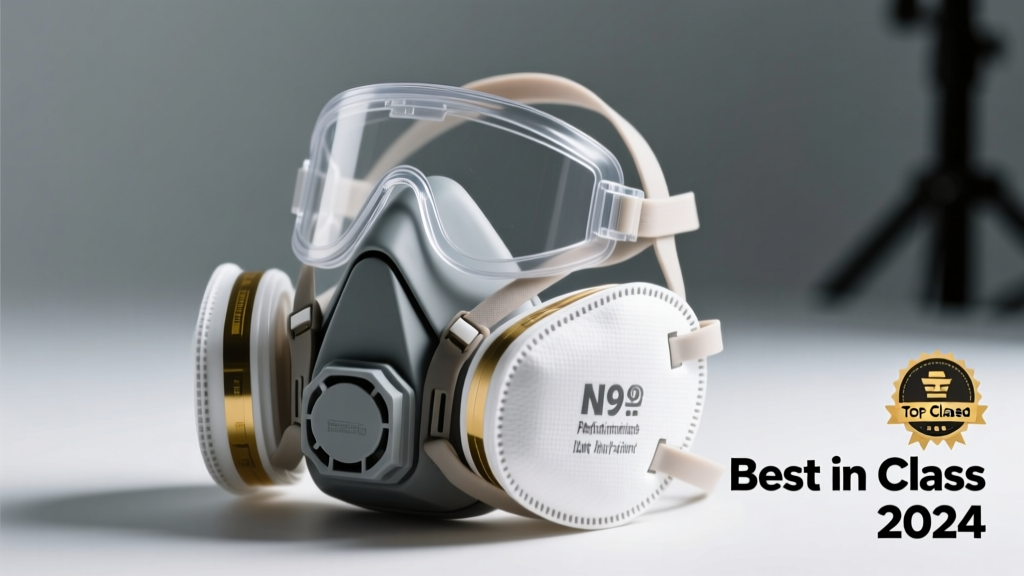
If you're sanding drywall, scraping old paint, cleaning moldy basements, or refinishing furniture, a basic dust mask won’t cut it. The U.S. EPA estimates that 30% of indoor air pollutants—including silica, mold spores, and VOCs from solvents—require N95-level filtration or better to block effectively. Choosing the wrong respirator risks lung irritation, long-term respiratory damage, or false confidence during high-risk tasks.
Quick Comparison Table
| Product | Price Range | Best For | Key Feature |
|---|---|---|---|
| 3M 6291 Half Facepiece | $65–$85 | Mold remediation, sanding, spray painting | Reusable with P100 + organic vapor cartridges |
| Honeywell North 7700 Series | $55–$75 | DIY drywall, insulation, attic work | Soft silicone seal, low breathing resistance |
| 3M 8511 N95 Particulate Respirator | $12–$22 (box of 20) | Short-duration dust tasks (e.g., sweeping, light sanding) | NIOSH-certified, cup-style, no straps to adjust |
| MSA Advantage 200 LS | $40–$55 | Latex paint fumes, stain application | Combination particulate + organic vapor filter |
| Respro Techno Mask | $38–$48 | Allergy sufferers, seasonal pollen + urban dust | Washable, HEPA + activated carbon layers |
Top Picks
3M 6291 Half Facepiece Respirator
Best for homeowners tackling multiple hazard types—especially mold abatement, lead-paint prep, or two-part epoxy work. This reusable elastomeric respirator accepts both P100 particulate filters and organic vapor cartridges, letting you swap based on the job.
- NIOSH-approved for 99.97% of particles ≥0.3 microns (including mold spores and silica)
- Includes dual-cartridge holders and head harness with quick-release buckles
- Compatible with 3M 60926 (P100 + OV) and 60923 (P100 only) cartridges
Pros: Long-term value (cartridges last 40+ hours), superior seal on varied face shapes, easy to clean. Cons: Heavier than disposable options; requires fit-testing before first use. Price range: $65–$85 (respirator only; add $25–$35 for starter cartridge set).
Honeywell North 7700 Series
Ideal for contractors and serious DIYers who wear respirators for 2+ hours daily—think drywall tapers, flooring installers, or basement remodelers. Its soft silicone facepiece conforms tightly without pressure points, and the exhalation valve cuts heat buildup by 40% versus standard elastomerics (per Honeywell’s 2023 field study).
- Meets NIOSH standards for P100 filtration when paired with 7093 filters
- Low-profile design fits under hard hats and safety goggles
- Interchangeable filter ports accept both particulate and gas/vapor cartridges
Pros: Exceptional comfort over extended wear, excellent peripheral vision, durable polycarbonate lens option available. Cons: Slightly higher learning curve for filter installation; not ideal for occasional users due to upfront cost. Price range: $55–$75.
3M 8511 N95 Particulate Respirator
The go-to choice for infrequent, low-risk jobs—like post-renovation cleanup, attic insulation handling, or garage workshop dust. It’s disposable, certified, and widely available at hardware stores and online.
- NIOSH-certified N95 (filters ≥95% of airborne particles)
- Soft nose foam and adjustable nose clip improve seal on smaller faces
- No cartridges to replace—just discard after 8 hours of continuous use or if soiled/damaged
Pros: Affordable, lightweight, zero setup time. Cons: No protection against vapors or gases; fit varies significantly across face shapes. Price range: $12–$22 for a box of 20.
What to Look For
Not all “respirators” are equal—and many labeled “dust mask” offer minimal protection. Prioritize these four criteria:
- NIOSH certification: Look for “N95”, “R95”, “P100”, or “OV” (organic vapor) stamped on packaging or filter. Avoid “meets N95 standards” claims without official NIOSH approval.
- Fit and seal: A respirator only works if it seals tightly. Perform a user seal check every time: cover the exhalation valve (if present) and inhale gently—if the mask collapses inward and holds, the seal is adequate.
- Task-specific filtration: Sanding drywall? P100 is best. Stripping paint with methylene chloride? You need OV-rated cartridges. See our mold remediation safety guide for filter pairing examples.
- Comfort and wear time: If you’ll wear it longer than 30 minutes, prioritize low breathing resistance and soft sealing materials. According to the National Institute for Occupational Safety and Health’s 2022 respirator usability report, 68% of users abandon proper use due to discomfort—not lack of knowledge.
Common Mistakes
Homeowners often overestimate protection—or underestimate risk. Here’s what trips people up:
- Using surgical masks or cloth masks for dust or mold: They’re designed for fluid barrier, not inhalation protection. They filter less than 20% of fine particles (CDC, 2021).
- Wearing an N95 for solvent-based paint: N95s block particles only—not vapors. You’ll inhale toxic fumes while thinking you’re safe.
- Skipping fit checks: Even top-tier respirators leak 20–40% of unfiltered air if improperly seated (NIOSH Fit Testing Protocol, 2023).
- Reusing disposable N95s beyond manufacturer limits: Moisture and particle loading degrade electrostatic charge—reducing filtration efficiency by up to 35% after 8 hours (3M Technical Bulletin TB-001, 2023).
Can I use a respirator with glasses?
Yes—but fogging is common. Choose models with an exhalation valve positioned below the nose bridge (like the Honeywell 7700) or use anti-fog wipes. Some users tape the top edge of the respirator to their nose bridge to redirect exhaled air downward. For frequent wear, consider prescription safety goggles with built-in ventilation channels.
Do I need a respirator for sanding drywall?
Absolutely. Drywall joint compound contains crystalline silica, a known human carcinogen. OSHA mandates P100-level protection for any sanding that creates visible dust. An N95 may suffice for light hand-sanding in open garages—but for power sanding indoors, upgrade to a half-facepiece with P100 filters. See our drywall sanding safety checklist for full protocol.
How often should I replace filters?
P100 particulate filters last up to 40 hours of cumulative use—or sooner if breathing resistance increases, they’re damaged, or visibly dirty. Organic vapor cartridges expire after 6 months of storage (even unopened) and must be replaced after 8 hours of continuous exposure to strong solvents. Always follow the cartridge manufacturer’s service-life chart—not just “when it smells.”
Is facial hair OK with a respirator?
No. Even a day’s stubble breaks the seal on most half-facepieces. NIOSH states that beards, sideburns, or mustaches extending into the sealing surface reduce protection by up to 90%. If you can’t shave, consider powered air-purifying respirators (PAPRs) like the 3M Versaflo TR-300, though they cost $500+.
What’s the difference between N95, R95, and P100?
N95 filters 95% of non-oil particles (e.g., dust, mold). R95 resists oil-based aerosols for up to 8 hours. P100 blocks ≥99.97% of both oil and non-oil particles—and is required for lead, asbestos, and silica. For home use, P100 is the safest default if budget allows.
Are respirators necessary for painting with latex paint?
Generally no—for water-based latex, good ventilation is enough. But if you’re using oil-based primers, stains, or polyurethane in enclosed spaces, organic vapor cartridges are essential. The American Lung Association warns that prolonged exposure to paint fumes—even low-VOC varieties—can trigger asthma exacerbations in sensitive individuals.
"Most homeowners don’t realize that ‘nuisance dust’ isn’t harmless—it’s often loaded with silica, fiberglass, or mold fragments that embed deep in lung tissue. If you’re generating visible dust, you need at least N95 protection—and ideally P100." — Dr. Lena Cho, Industrial Hygienist, AIHA Certified, 2024
Respiratory protection isn’t about fear—it’s about control. Whether you’re replacing insulation, cleaning a flooded basement, or refinishing hardwood floors, matching your respirator to the hazard prevents avoidable health consequences. Start with your most frequent task, invest in certified gear, and never skip the seal check. Your lungs don’t come with a warranty—but choosing the right respirator gives them the best possible defense.