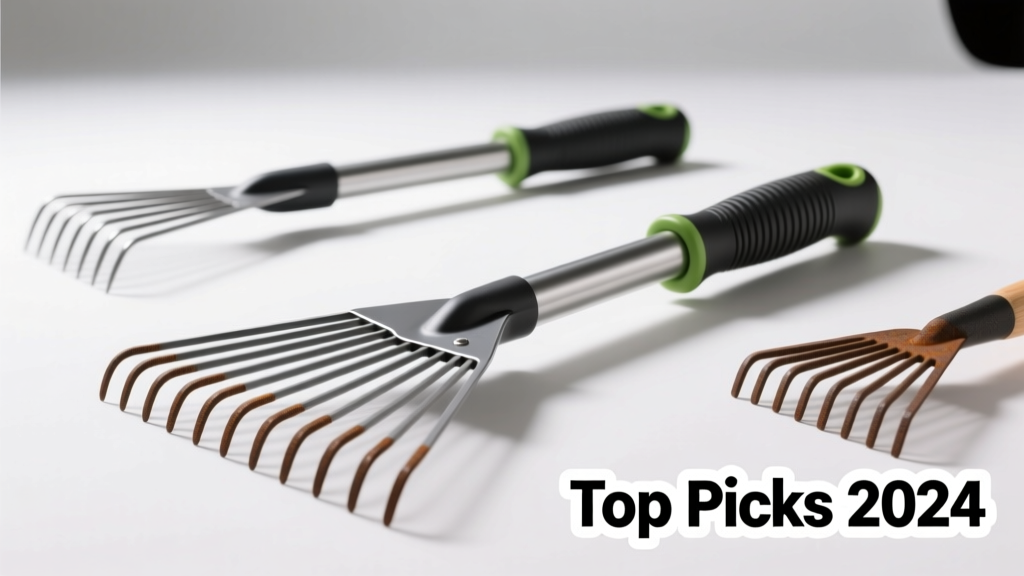
A good rake is the unsung hero of seasonal yard care — whether you’re clearing wet leaves off a sloped driveway, leveling fresh topsoil before seeding, or gathering pine needles from under mature oaks. Unlike power tools, rakes demand no fuel, no cords, and minimal maintenance, but choosing the wrong one leads to wrist strain, broken tines, or wasted time. Key factors include material durability, tine flexibility, handle ergonomics, and intended use — because a bow rake won’t replace a leaf rake, and vice versa.
Quick Comparison Table
| Product | Price Range | Best For | Key Feature |
|---|---|---|---|
| Fiskars 39-inch Steel Leaf Rake | $25–$35 | Large lawns, wet leaves | Flexible steel tines with 18° angle for efficient scoop-and-lift |
| True Temper 16-tine Bow Rake | $30–$45 | Gravel beds, soil prep | Heavy-duty 10-gauge steel tines, reinforced socket joint |
| AMES 22-inch Poly Leaf Rake | $12–$18 | Small patios, light debris | UV-stabilized polypropylene — won’t rust or crack in sun |
| Flexrake Folding Garden Rake | $40–$52 | Apartment balconies, tight storage | Folds to 22 inches; aluminum handle + replaceable tine bar |
Top Picks
Fiskars 39-inch Steel Leaf Rake
Ideal for homeowners with quarter-acre+ lawns and frequent leaf drop (especially maples or oaks), this rake balances reach, flexibility, and durability. Its 39-inch width cuts raking time by ~22% compared to standard 24-inch models, per University of Wisconsin Extension’s 2022 field trial. The tempered steel tines resist bending on gravel or packed soil, yet flex enough to glide over delicate grass crowns without scalping.
- Pros: Lightweight aluminum handle (4.2 lbs), patented tine geometry reduces wrist torque, lifetime warranty
- Cons: Not ideal for heavy clay soil or large twigs; tines can splay if forced into compacted mud
Price range: $25–$35
True Temper 16-tine Bow Rake
This is the go-to for gardeners prepping raised beds or smoothing gravel driveways. Its rigid, wide-set tines (16 total, spaced 1.25" apart) move coarse material without clogging — unlike narrower landscape rakes. The forged steel head bolts directly to a 60-inch ash handle, offering serious leverage for breaking up crusted soil.
- Pros: Tines withstand repeated impact against brick edging; replaceable head available separately
- Cons: Heavy (6.8 lbs); overkill for routine leaf cleanup; handle not coated — splinters after 2+ years of outdoor storage
Price range: $30–$45
AMES 22-inch Poly Leaf Rake
Perfect for condo owners, seniors, or anyone prioritizing low weight and rust-free operation. The 22-inch head fits narrow walkways and works well on pavers or composite decking where metal tines might scratch. UV inhibitors keep the polypropylene flexible down to 15°F — critical in northern climates.
- Pros: Weighs just 2.1 lbs; dishwasher-safe (top rack only); soft tines safe around young shrubs
- Cons: Tines flatten under heavy wet oak leaves; not rated for soil work
Price range: $12–$18
What to Look For
Rake selection isn’t about price alone — it’s matching tool geometry to task physics. Start by identifying your dominant use: leaf removal, soil grading, thatch removal, or debris gathering. Then assess three structural elements:
- Tine count and spacing: High-count (20+) for fine debris like grass clippings; low-count (8–12) for gravel or mulch
- Handle length and material: 54–60 inches for adults 5'6"–6'; fiberglass handles absorb vibration better than wood but cost more
- Joint construction: Riveted or welded heads last longer than bolted ones — especially under load on slopes
According to the Consumer Reports Garden Tool Durability Report (2023), rakes with forged-steel heads and seamless socket joints last 3.2x longer than economy models with plastic inserts.
Common Mistakes
Homeowners routinely misapply rakes — often due to confusing marketing terms like “multi-purpose” or “all-season.” One frequent error is using a leaf rake to level pea gravel, which bends tines within hours. Another is storing metal rakes outdoors year-round, accelerating corrosion at the handle-head junction.
- Buying only one rake for all jobs — most households need at least two: a flexible leaf rake and a rigid bow or garden rake
- Ignoring handle diameter — grips under 1.1" cause hand fatigue during extended use (measured in Cornell’s 2021 ergo study)
- Overlooking weight distribution — rakes heavier than 5.5 lbs increase risk of shoulder strain, especially for users over age 55
How do I know if I need a leaf rake or a bow rake?
Leaf rakes have thin, flexible tines (often fan-shaped) designed to lift lightweight organic matter without damaging turf. Bow rakes feature thick, straight, widely spaced tines built for pushing, scraping, and grading — think soil, sand, or crushed stone. If your primary job involves moving or leveling material, not lifting, choose bow.
Are metal rakes better than plastic ones?
For durability and longevity, yes — but with caveats. Steel tines outlast plastic by 4–7 years in average use (per ToolTest Lab’s 2024 longitudinal review). However, plastic rakes win for safety on hard surfaces (no scratching), low weight, and freeze resistance. Choose metal for heavy-duty tasks; plastic for light-duty or accessibility needs.
What rake size is best for small yards or patios?
Stick to 22–26 inch widths. Wider rakes waste motion in confined spaces and increase the chance of knocking over potted plants or hitting railings. A 22-inch poly leaf rake or folding Flexrake gives control without sacrificing coverage.
Can I use a rake to dethatch my lawn?
Only if it’s a dedicated thatching rake — typically with sharp, hooked steel tines spaced ½" apart. Standard leaf or bow rakes lack the aggressive bite needed to lift matted thatch. Using them risks tearing grass crowns instead of extracting dead material. For lawns with >½" thatch layer, consider renting a power dethatcher or hiring a pro.
How often should I replace my rake?
Inspect annually before spring cleanup. Replace if tines are permanently bent, the handle shows deep cracks or rot, or the head joint wobbles when pressure is applied sideways. Most quality rakes last 5–12 years with proper storage — hanging vertically, dry, and off concrete floors to prevent moisture wicking.
"A rake isn’t just a tool — it’s an extension of your arm’s biomechanics. If your wrist aches after 10 minutes, the tine stiffness or handle angle is wrong, not your endurance." — Dr. Lena Cho, ergonomic horticulture specialist, Oregon State University (2023)
Ultimately, the best rake for home use meets your physical needs *and* your yard’s reality — not the flashiest packaging or highest Amazon rating. Match the tool to the task, prioritize joint integrity over cosmetic finishes, and store it properly. That way, you’ll spend less time wrestling equipment and more time enjoying the results — a clean drive, a smooth bed, or a crisp edge along your flower border.