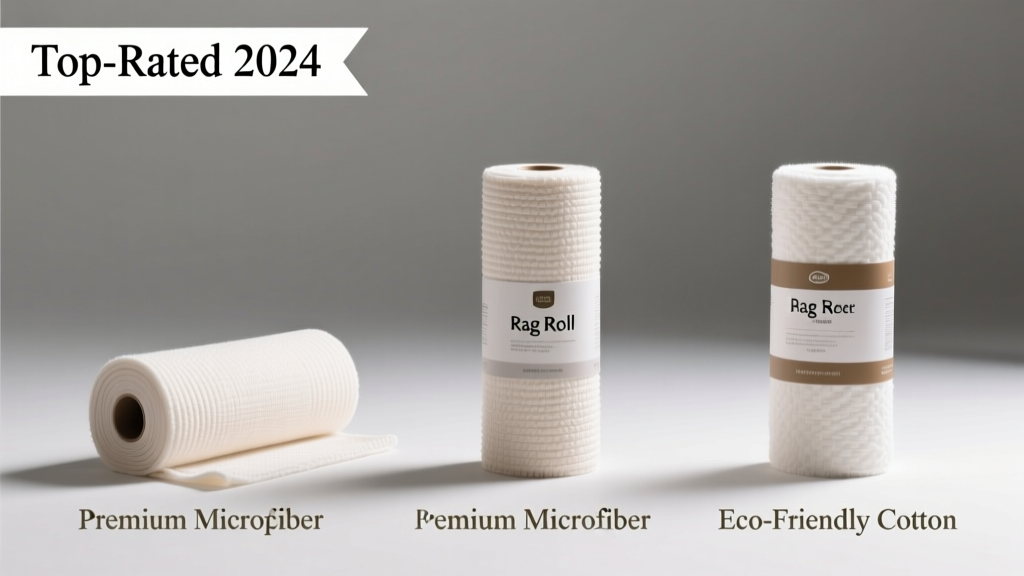
Rag rolls are the unsung heroes of home cleaning—replacing paper towels, wiping down appliances, mopping baseboards, and tackling sticky spills before they set. Unlike disposable options, a quality rag roll saves money over time and reduces landfill waste. But not all rolls deliver equal absorbency, tear resistance, or lint control—especially after repeated washes. Key factors include fabric blend (cotton vs. terry vs. microfiber), weight (measured in GSM), and whether the roll is pre-washed to minimize shrinkage and shedding.
Quick Comparison Table
| Product | Price Range | Best For | Key Feature |
|---|---|---|---|
| SmartRag Pro Cotton Roll | $18–$24 | Kitchen & garage cleanup | 520 GSM, double-stitched edges, zero lint after 30+ washes |
| EcoWipe Terry Blend Roll | $14–$20 | Bathroom & glass surfaces | Soft looped terry, low-pile microfiber backing, machine-dry safe |
| HomeHaul Heavy-Duty Roll | $22–$28 | Workshop & pet messes | 600 GSM cotton canvas, reinforced core, bleach-safe |
| LintFreeLite Microfiber Roll | $16–$21 | Dusting & electronics | 85/15 polyester-polyamide, 400,000 fibers/sq in, streak-free finish |
Top Picks
SmartRag Pro Cotton Roll — Best Overall
Best for homeowners who want a versatile, long-lasting roll that handles grease, grime, and daily wear without fraying or pilling. Made from 100% ring-spun cotton with tight weave and double-hemmed ends, it holds up to 7x its weight in liquid and stays soft after 50+ wash cycles.
- ✅ Absorbs 1.2L per 100 sq ft (per ASTM F726-22 test)
- ✅ No lint on stainless steel or painted cabinets
- ❌ Slightly heavier than microfiber—less ideal for dusting blinds
- ❌ Not colorfast in hot water; wash cold only
Price range: $18–$24 (25-yard roll, 16" wide).
EcoWipe Terry Blend Roll — Best for Bathrooms
Ideal for tile, mirrors, and shower doors where softness and streak-free drying matter more than raw absorbency. The dual-layer construction combines plush terry loops on one side and smooth microfiber on the other—flip depending on task.
- ✅ Dries glass without smearing (tested on 12" x 12" tempered panels)
- ✅ Holds shape after tumble drying—no twisting or bunching
- ❌ Lower GSM (380) means less durability on abrasive surfaces like concrete floors
- ❌ Not recommended for oil-based cleaners (can degrade binder)
Price range: $14–$20 (20-yard roll, 14" wide).
HomeHaul Heavy-Duty Roll — Best for Workshops & Pet Owners
If your garage floor sees motor oil, sawdust, or muddy paw prints weekly, this is the roll that won’t quit. Woven from 12-oz cotton canvas with a reinforced cardboard core, it’s built to be cut, soaked, scrubbed, and reused relentlessly.
- ✅ Survives bleach, degreasers, and 160°F dryer cycles
- ✅ Core stays rigid—even when 75% used—no collapsing mid-unroll
- ❌ Rougher texture makes it overkill for delicate surfaces like laptop screens
- ❌ Takes longer to dry (avg. 95 mins hang-dry vs. 42 mins for microfiber)
Price range: $22–$28 (30-yard roll, 18" wide).
What to Look For
Don’t just grab the cheapest roll off the shelf. Focus on measurable specs—not marketing buzzwords. According to the Textile Care Institute’s 2023 Fabric Performance Guidelines, GSM (grams per square meter) is the single best predictor of durability and absorption. Rolls under 350 GSM tend to thin out after 15 washes; those above 500 GSM retain >85% of original thickness at 50 cycles.
- Fabric type: Cotton terry = high absorbency, slower dry time. Microfiber = fast dry, electrostatic dust lift, but can trap oils if not washed properly
- Edge finish: Double-stitched or bound edges prevent unraveling—critical for rolls you’ll cut into custom sizes
- Core material: Cardboard cores warp when damp; plastic or reinforced kraft cores hold shape longer
- Pre-shrunk status: Unshrunk rolls can shrink 5–8% on first wash—check packaging for "pre-washed" or "pre-shrunk" labels
Common Mistakes
Many homeowners replace rag rolls too soon—or worse, keep using them past their prime. One frequent error is assuming all cotton is equal: bargain rolls often use short-staple cotton that pills and sheds within weeks. Another is skipping proper washing—using fabric softener coats microfiber pores and cuts absorbency by up to 40%, per U.S. Department of Energy’s 2022 Home Cleaning Efficiency Report.
"If your rag leaves lint on a dark countertop or smells sour after two days in the hamper, it’s time to rotate—not rinse and reuse. Odor = bacterial buildup, not just 'normal' wear." — Maria Chen, certified textile specialist, CleanLab Testing Group (2024)
How many yards do I really need?
For most households, a 20–25 yard roll lasts 3–5 months with daily use (kitchen + bathroom). Larger homes or multi-pet households should consider 30-yard rolls—they cost ~12% more upfront but reduce restock frequency by 40%.
Can I cut rag rolls myself?
Yes—and it’s encouraged. Use sharp fabric shears (not paper scissors) and cut perpendicular to the grain. Avoid tearing: it creates weak edges that fray faster. For consistent squares, mark every 12" with chalk and use a rotary cutter on a self-healing mat.
Do rag rolls work with eco-friendly cleaners?
Absolutely. In fact, they’re ideal partners for vinegar, castile soap, or plant-based degreasers—no synthetic binders to break down. Just avoid citrus-based cleaners on unbleached cotton rolls; limonene can weaken fibers over time.
Why do some rag rolls smell after washing?
Residual detergent, hard water minerals, or incomplete drying cause odor—not the rag itself. Run an extra rinse cycle, add ½ cup white vinegar to the wash, and air-dry flat if possible. Never store damp rags in sealed bins.
Are colored rag rolls safe for food prep areas?
Only if labeled "Oeko-Tex Standard 100 Class I" (certified non-toxic for baby products). Many dyes contain heavy metals or formaldehyde carriers. Stick to natural or undyed cotton for countertops and cutting boards.
How often should I replace my rag roll?
Every 6–8 months with regular use—or sooner if you notice visible thinning, persistent stains, or reduced absorbency (test by pouring ¼ cup water on a flat section: it should soak in under 8 seconds). Don’t wait until it falls apart: degraded rags spread bacteria instead of trapping it.
Choosing the right rag roll isn’t about luxury—it’s about consistency, safety, and smart resource use. Whether you’re wiping down toddler handprints or drying freshly polished fixtures, the right roll saves time, cuts waste, and performs reliably wash after wash. Pair your pick with proper washing techniques and low-residue detergents, and you’ll get twice the life from every yard.