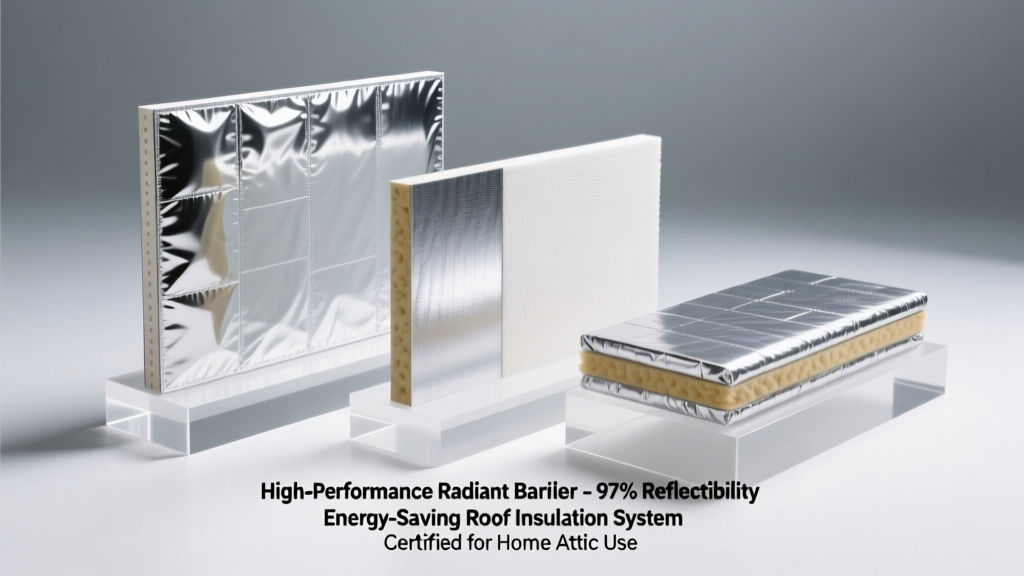
Radiant barriers reflect up to 97% of radiant heat—making them one of the most cost-effective ways to reduce summer attic temperatures and lower HVAC loads. Unlike insulation, which slows conductive heat flow, radiant barriers stop heat before it enters your attic space. But not all products perform equally: emissivity ratings, staple-ability, vapor permeability, and compatibility with existing insulation matter more than sheer reflectivity alone.
Quick Comparison Table
| Product | Price Range | Best For | Key Feature |
|---|---|---|---|
| Reflectix DB+ Double Bubble | $0.35–$0.48/sq ft | DIY attic stapling over rafters | Double-layer bubble core + reinforced foil; ASTM C1313-compliant |
| AtticFoil Radiant Barrier Roll | $0.29–$0.37/sq ft | Large attics, professional installs | 0.03 emissivity, perforated for moisture venting, Class A fire rating |
| Low-E Pro Insulation | $0.52–$0.65/sq ft | Hot-humid climates (FL, TX, LA) | Vapor-permeable membrane + low-emissivity coating; meets IRC 2021 Appendix N |
| ThermaPure Radiant Shield | $0.41–$0.49/sq ft | Roof deck under shingles | Self-adhesive, UV-stable, rated for direct nailing through foil layer |
Top Picks
Reflectix DB+ Double Bubble — Best Overall Value
This double-bubble radiant barrier combines structural rigidity with high reflectivity (97%) and a tested emissivity of 0.04. It’s ideal for homeowners installing over attic rafters—its air pockets add minimal R-value (R-1.2) while resisting compression and dust accumulation better than single-layer foils.
- Who it’s best for: DIYers in dry or mixed-dry climates (AZ, CO, NM, CA) with open rafter bays
- Key features: Reinforced 5-mil aluminum, tear-resistant, ASTM E2599-tested reflectance, no glue bleed-through
- Pros: Easy to cut and staple, minimal sagging over time, compatible with blown-in cellulose
- Cons: Not vapor-permeable—avoid in humid zones without proper attic ventilation
- Price range: $0.35–$0.48 per square foot (rolls up to 120 ft × 4 ft)
AtticFoil Radiant Barrier Roll — Best for Large-Scale Installations
With an emissivity of just 0.03 and perforations every 1.5 inches, AtticFoil moves moisture while blocking radiant heat. Its 3.5-mil reinforced aluminum holds up under foot traffic during install and resists oxidation better than budget foils.
- Who it’s best for: Contractors and homeowners tackling 1,000+ sq ft attics with existing fiberglass or spray foam
- Key features: UL 723 Class A fire rating, FSC-certified kraft paper backing option, available in 10-, 25-, and 50-ft widths
- Pros: Excellent humidity tolerance, widely stocked at local building supply yards, easy to overlap and tape seams
- Cons: Requires careful stapling to avoid tearing; not recommended for roof-deck applications
- Price range: $0.29–$0.37 per square foot (bulk discounts apply at 5,000+ sq ft)
Low-E Pro Insulation — Best for Humid Climates
Unlike traditional foil barriers, Low-E Pro uses a micro-perforated polyethylene film with a sputter-coated aluminum layer. It passes the vapor permeance test (12.5 perms) while maintaining 0.04 emissivity—critical in states where condensation risk is high.
- Who it’s best for: Homes in Florida, Louisiana, eastern Texas, and coastal Carolinas
- Key features: Meets 2021 IRC Appendix N for radiant barrier compliance in hot-humid zones, mold-resistant backing
- Pros: Breathes without sacrificing reflectivity, reduces attic dew point by up to 8°F (per Florida Solar Energy Center 2022 field study)
- Cons: Slightly higher cost; requires precise seam sealing with manufacturer-approved tape
- Price range: $0.52–$0.65 per square foot
What to Look For
Don’t assume “shiny = effective.” Emissivity—not reflectivity—is the gold standard metric. Look for products with emissivity ≤ 0.05 (lower is better). Also verify third-party testing: ASTM C1313 for material classification, ASTM E2599 for reflectance, and UL 723 for flame spread.
- Emissivity rating ≤ 0.05 (check product spec sheet—not marketing copy)
- Vapor permeance ≥ 5 perms if installing under roof decking or in humid zones
- Fire rating: Class A (ASTM E84) required for attic installations in most jurisdictions
- Backing type: Kraft paper adds durability but blocks vapor; perforated film allows drying
- Thickness: 3–5 mil aluminum resists tearing during staple installation
Common Mistakes
Homeowners often undermine radiant barrier performance before the first staple goes in. The biggest errors? Installing foil directly against insulation (traps moisture), skipping attic ventilation (reduces effectiveness by up to 40%), or using non-UL-rated products near recessed lighting or ductwork.
"A radiant barrier installed without at least 1 inch of air space on at least one side loses over half its thermal resistance—regardless of emissivity." — Dr. Danny Parker, Director of the Florida Solar Energy Center, 2023
How much energy can a radiant barrier actually save?
In southern U.S. climates, radiant barriers reduce attic surface temperatures by 20–30°F and cut cooling energy use by 5–10%, according to the U.S. Department of Energy’s 2022 Residential Energy Consumption Survey. Savings drop to 2–4% in northern zones—so prioritize attic ventilation and air sealing first if you’re in MN or ME.
Can I install a radiant barrier over existing insulation?
No—never lay foil directly on top of batts or blown-in insulation. That creates a vapor trap and risks mold growth. Instead, staple it to the underside of rafters (creating an air gap), or use a draped-over-joist method with 2-inch clearance above insulation. For retrofitting, consider radiant barrier + insulation combo products like TechShield OSB.
Do radiant barriers work in winter?
Yes—but differently. In cold months, they help retain interior heat by reflecting long-wave infrared back into living spaces. However, their net annual benefit skews heavily toward summer cooling in Zones 1–3 (DOE climate map). In colder zones, pairing with adequate attic insulation (R-49+) delivers greater ROI.
Is a radiant barrier the same as reflective insulation?
No. Reflective insulation includes trapped air layers (e.g., bubble wrap, foam cores) and provides measurable R-value. Radiant barriers are thin, low-mass foils designed solely to reflect radiant heat—and must have an adjacent air space to function. Confusing the two leads to misapplied expectations and underperformance.
Should I choose foil-faced OSB or a separate radiant barrier?
Foil-faced sheathing (like LP TechShield) works well on new construction but offers limited retrofit flexibility. Separate radiant barrier rolls give you control over placement—especially useful when upgrading older homes with existing roof decks or complex rafter layouts. Both meet IRC requirements when installed per manufacturer instructions.
Choosing the right radiant barrier isn’t about picking the shiniest roll—it’s about matching material science to your climate, attic structure, and long-term moisture management plan. Prioritize verified emissivity, correct air gaps, and vapor control over price alone. And remember: no radiant barrier replaces proper attic ventilation or air sealing—the biggest source of conditioned air loss in most homes remains unsealed can lights and duct boots.