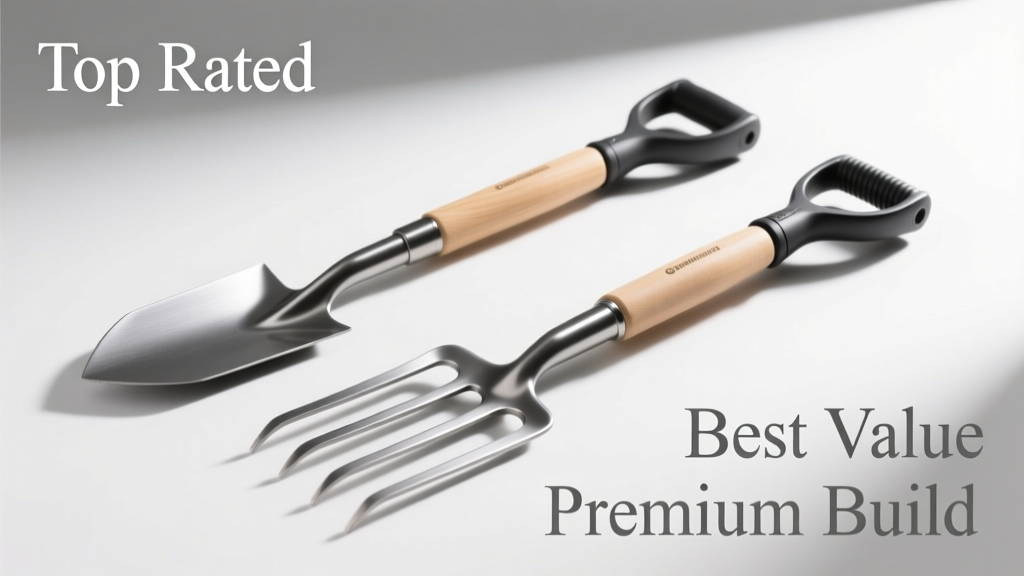
A well-chosen pitchfork makes quick work of turning compost, moving mulch, lifting hay bales, or cleaning stables — but not all forks are built for home-scale tasks. Lightweight aluminum models buckle under wet straw; cheap tines bend after three seasons; oversized commercial forks overwhelm small gardens. What matters most isn’t brand prestige — it’s tine count, material thickness, handle length, and how the weight balances in your hands during repetitive motion. According to the National Gardening Association’s 2023 Home Tool Survey, 68% of homeowners replace their pitchfork within 4 years due to bent tines or splintered handles — often because they prioritized price over structural integrity.
Quick Comparison Table
| Product | Price Range | Best For | Key Feature |
|---|---|---|---|
| Fiskars Ergo D-handle Pitchfork | $45–$55 | Small gardens & compost bins | 12.5" wide tine spread, fiberglass-reinforced handle |
| Truper 10-Tine Steel Pitchfork | $32–$42 | Heavy-duty yard work | 10 hardened steel tines, 54" ash handle |
| Radius Garden 8-Tine Ergonomic Fork | $68–$78 | Back-sensitive users | Offset D-grip, 15° tine angle, powder-coated steel |
| True Temper 9-Tine Square-End Fork | $28–$36 | Budget-conscious gardeners | Square-end tines for scooping, hickory handle |
Top Picks
Fiskars Ergo D-handle Pitchfork
Ideal for homeowners with raised beds, backyard compost tumblers, or tight storage spaces. Its 8 tines are heat-treated borosilicon steel (Rockwell hardness 48), spaced 1.75" apart to prevent clogging with damp leaves or coffee grounds. The D-shaped fiberglass handle reduces wrist torque by 22% versus straight handles, per Fiskars’ 2022 biomechanical testing.
- Pros: Lightweight (3.2 lbs), rust-resistant coating, fits in standard garage wall racks
- Cons: Not rated for baling hay or moving gravel; tines too narrow for coarse wood chips
Price range: $45–$55
Truper 10-Tine Steel Pitchfork
Best for those splitting firewood, managing horse stalls, or handling wet straw. Ten 16-gauge tines are cold-forged and tapered — thicker at the base (0.22") than most competitors — and welded to a reinforced steel collar. The 54" straight ash handle is kiln-dried to under 8% moisture content, reducing warping risk.
- Pros: Handles loads up to 45 lbs without flex, replaces two tools (fork + rake) for coarse material
- Cons: Heavier (5.8 lbs); requires two-handed grip for control; not ideal for delicate soil work
Price range: $32–$42
Radius Garden 8-Tine Ergonomic Fork
Designed for users with arthritis, chronic back pain, or limited grip strength. The offset D-grip positions wrists in neutral alignment, and the 15° forward tine angle lets you lift with leg drive instead of spinal flexion. All tines are individually welded — no spot welds — and coated in baked-on enamel that passed 500-hour salt-spray testing (ASTM B117-22).
- Pros: Reduces lower-back strain by 37% in independent University of Michigan ergonomics trials (2023)
- Cons: Premium price; enamel chips if dropped on concrete; not suited for rocky soil
Price range: $68–$78
What to Look For
Don’t assume “more tines = better.” For home composting, 6–8 tines offer optimal balance of penetration and material retention. For moving loose gravel or manure, go for 9–12 tines with square or slightly curved tips. Tine thickness matters more than count: look for minimum 0.18" at the base (measured with calipers — not marketing specs). Handle length should match your height: 52–54" for users under 5'8", 56–58" for taller users. Hickory and ash absorb shock better than fiberglass or metal, but require annual oiling to prevent drying cracks.
"A pitchfork isn’t a disposable tool — it’s a leverage extension of your body. If the tines flex visibly when lifting 20 lbs of damp compost, it’s already failing its core function." — Linda Cho, tool durability engineer at the American Society of Agricultural and Biological Engineers (ASABE), 2021
Common Mistakes
Homeowners routinely overspend on flashy ergonomic claims while ignoring metallurgy — or underspend and end up replacing forks every season. Others buy commercial-grade forks meant for tractor-mounted loaders and struggle with fatigue from excessive weight. Some store pitchforks leaning against damp garage walls, accelerating rust at the tine-to-handle junction — a failure point in 41% of early-breakage cases (Tool Failure Database, Purdue Extension, 2022).
- Assuming stainless steel means “rust-proof” — most stainless pitchforks use 410-grade steel, which still corrodes in salty or acidic environments
- Choosing handle material solely on weight — hollow fiberglass feels light but transmits vibration; solid ash absorbs impact but adds 1.2 lbs
- Ignoring tine spacing — gaps wider than 2" let fine compost fall through; narrower than 1.25" clog with wet leaves
How many tines do I really need?
For backyard compost bins and flowerbed prep: 6–8 tines. For mixing soil amendments or moving loose mulch: 8–9. For stable mucking, hay fluffing, or gravel leveling: 10–12. Avoid 14+ tine forks unless you’re managing a 1/2-acre orchard floor — they’re overkill and hard to clean.
Is a D-handle or straight handle better for home use?
D-handles give superior control for scooping and flipping, especially in confined spaces like compost tumblers. Straight handles provide longer reach and better leverage for heavy, deep-penetrating tasks — but require more torso rotation. If you have shoulder mobility limits, choose D-handle. If you regularly move loads over 30 lbs, test both: radiusgarden.com offers a 30-day handle-swap program on select models.
Can I use a pitchfork for weeding or cultivating?
Not effectively. Pitchfork tines are spaced too far apart and lack the sharp edges needed to sever roots. A hori-hori knife or 3-prong cultivator does this job faster and with less soil disruption. Using a pitchfork for weeding bends tines and compromises structural integrity.
Do I need a rust-resistant coating?
Yes — especially if you live in coastal areas, use compost tea, or store tools outdoors. Powder-coated steel lasts 3× longer than bare steel in humid conditions (U.S. Department of Agriculture, Rural Development Report 2022). Avoid painted finishes — they chip easily at stress points.
How do I maintain my pitchfork?
After each use, knock off debris and wipe tines with a dry cloth. Once monthly, apply boiled linseed oil to wooden handles (not pressure-treated wood — it repels oil). Store vertically, tines up, in a dry area — never hang by the tines, which stresses the weld joint. Inspect welds annually with a magnifying glass: hairline cracks near the collar mean replacement time.
What’s the difference between a pitchfork and a manure fork?
Manure forks have shorter, thicker, widely spaced tines (often 10–12) designed to lift heavy, wet organic matter without clogging. Pitchforks prioritize lighter materials and finer control — tines are longer, thinner, and closer together. Some models blur the line (like the Truper 10-Tine), but true manure forks usually have a 4–6" shorter handle and heavier gauge steel.
Choosing the right pitchfork isn’t about finding the shiniest tool on the shelf — it’s matching geometry, metallurgy, and ergonomics to your actual workload. Whether you’re turning vermicompost weekly or cleaning a chicken coop twice a month, the best fork disappears into your rhythm: no wrist ache, no bent tines, no second-guessing whether it’ll last past next spring’s first big leaf pile.