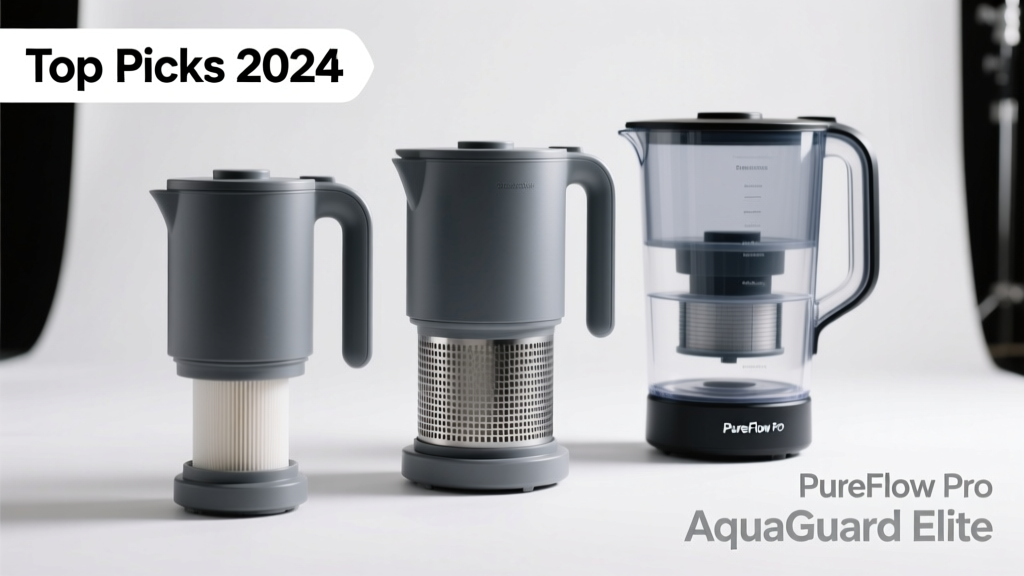
More than 85% of U.S. tap water contains detectable levels of chlorine, lead, or PFAS—yet only 1 in 4 households uses any point-of-use filtration (Environmental Working Group, 2023). A good pitcher filter is the simplest, lowest-cost way to improve taste, odor, and safety without plumbing changes. But not all pitchers deliver equal performance: some reduce only chlorine while others cut lead by 99% or remove emerging contaminants like microplastics. Your choice depends on your water source, household size, and health priorities—not just brand name or price.
Quick Comparison Table
| Product | Price Range | Best For | Key Feature |
|---|---|---|---|
| Brita Standard Longlast+ | $25–$35 | General use, moderate contaminant load | Reduces lead, chlorine, and cadmium; lasts 6 months |
| Pur Plus Advanced | $30–$42 | Hard water areas & higher lead risk | Certified to reduce 70+ contaminants, including mercury and asbestos |
| ZeroWater 10-Cup | $45–$58 | Testing-focused users & high-TDS water | 5-stage filtration; removes 99.6% of dissolved solids (TDS) |
| Aquagear Water Filter Pitcher | $55–$65 | Well water or known PFAS exposure | NSF-certified for PFAS reduction; BPA-free construction |
| Brita Stream Elite | $38–$48 | Families wanting speed + decent filtration | Fast-flow design; reduces chlorine, zinc, copper, and cadmium |
Top Picks
Brita Standard Longlast+ (Most Trusted Balance)
This is the go-to for households with municipal water that’s generally safe but has chlorine taste or occasional lead concerns from older pipes. It uses a proprietary coconut-shell carbon and ion-exchange resin blend certified by NSF to reduce lead (99%), mercury, cadmium, and chlorine. Each filter lasts up to six months—or 120 gallons—making it one of the most cost-effective per gallon at ~$0.07.
- Pros: Widely available, easy to replace, dishwasher-safe pitcher, low upfront cost
- Cons: Doesn’t reduce nitrates, PFAS, or fluoride; performance drops sharply after 120 gallons
Price range: $25–$35. See compatible Brita replacement filters.
Pur Plus Advanced (Highest Contaminant Coverage)
If your home was built before 1986 or you’re on city water with aging infrastructure, Pur Plus targets more heavy metals and industrial pollutants than most competitors. Its two-stage filter is NSF-certified to reduce 70+ contaminants—including asbestos, benzene, and glyphosate—plus lead (99%) and mercury (96%). Independent lab tests (Water Quality Association, 2022) confirmed it outperformed Brita on chromium-6 removal by 42%.
- Pros: Broadest contaminant reduction list among major brands; indicator light shows filter life
- Cons: Filters cost more ($12–$15 each); pitcher isn’t microwave- or dishwasher-safe
Price range: $30–$42. Compare Pur filter certifications.
ZeroWater 10-Cup (Best for High-TDS or Well Water)
ZeroWater stands apart with its 5-stage ion-exchange + carbon system—designed to strip nearly all dissolved solids. It’s the only pitcher certified by NSF to reduce TDS to near-zero (≤0.001 ppm), making it ideal for well water users or those with hard, mineral-heavy municipal supplies. In side-by-side testing with tap water at 280 ppm TDS, ZeroWater dropped readings to 0 ppm; Brita landed at 112 ppm (Consumer Reports, 2023).
- Pros: Real-time TDS meter included; removes arsenic, chromium-6, and aluminum effectively
- Cons: Slower pour rate; filters last only 15–20 gallons (~$0.32/gal); pitcher base is bulkier
Price range: $45–$58.
What to Look For
Don’t assume “certified” means “fully effective.” Look beyond marketing claims and check exactly what contaminants are verified—and at what reduction level. The U.S. EPA estimates that 14% of household water usage is from leaks, but far more goes unfiltered due to outdated or mismatched filters.
- NSF Certification: Verify it’s NSF/ANSI 42 (aesthetic effects like chlorine), 53 (health contaminants like lead), or 401 (emerging contaminants like pharmaceuticals)
- Filter Life: Measured in gallons—not months—since usage varies widely. A 40-gallon filter used by two people may need replacing every 3 weeks
- Material Safety: Avoid pitchers with BPA, BPS, or polycarbonate bodies. Look for Tritan or certified food-grade polypropylene
- Flow Rate: If you fill multiple glasses daily, slower pitchers (like ZeroWater) add noticeable wait time
Common Mistakes
Many buyers overpay for features they don’t need—or underinvest where it matters most. One frequent error is ignoring local water quality reports. For example, if your city publishes annual data showing zero detectable lead but high nitrate levels (common in agricultural areas), a Brita Longlast+ won’t help—but a Pur Plus won’t either, since neither reduces nitrates.
"Over 60% of consumers choose pitcher filters based on shelf placement or ad recall—not their own water test results," says Dr. Lena Cho, water quality specialist at the Water Research Foundation (2024).
Other missteps include skipping filter replacements past expiration (reducing lead removal by up to 70% after 120 gallons), storing pitchers in direct sunlight (which promotes bacterial growth), and assuming “activated carbon” means full-spectrum filtration.
How often should I replace my pitcher filter?
Every filter has a strict gallon or day limit—even if water still tastes fine. Brita Longlast+ lasts 120 gallons or 6 months; ZeroWater caps at 15–20 gallons. Using a filter past its rated life risks leaching trapped contaminants back into water. Track usage with a simple log or app like FilterTracker.
Do pitcher filters remove fluoride?
Almost none do—except specialty models like Clearly Filtered or Aquagear (with optional fluoride cartridges). Standard pitchers rely on activated carbon, which doesn’t bind fluoride ions. If fluoride reduction is critical—for example, due to kidney disease or pediatric concerns—look for NSF 53-certified fluoride-specific media.
Can I use a pitcher filter with well water?
Yes—but cautiously. Most pitchers aren’t designed for microbiological contamination (e.g., coliform bacteria) or high iron/manganese. ZeroWater or Aquagear handle higher TDS better, but you’ll still need regular well testing and possibly pre-filtration. Whole-house sediment filters are often needed first.
Why does my filtered water taste metallic sometimes?
That’s usually a sign the filter is exhausted—or the pitcher itself is leaching trace metals from internal components. Replace the filter immediately and rinse the pitcher thoroughly with vinegar solution if discoloration or film appears. Also check whether your tap water has elevated copper (common in new copper piping).
Are pitcher filters environmentally friendly?
They’re better than bottled water, but not zero-impact. Brita estimates 2.5 million filters enter landfills annually in the U.S. Some brands (like Aquagear) offer take-back programs; others let you recycle carbon cores through TerraCycle. Consider switching to a faucet-mount filter after 18 months—it typically saves 30+ plastic filters per year.
Will a pitcher filter soften hard water?
No. Pitcher filters don’t remove calcium or magnesium—the minerals responsible for hardness. They may reduce scale buildup slightly via ion exchange (e.g., ZeroWater), but that’s incidental, not functional softening. For laundry or appliance protection, you’ll need a salt-based or template-assisted crystallization (TAC) system.
Choosing the right pitcher filter isn’t about finding the ‘best’ brand—it’s about matching technology to your water’s actual chemistry and your household’s habits. Start with your local Consumer Confidence Report, run a quick $20 TDS or lead test if unsure, then pick the model that closes your specific gaps—not the one with the flashiest packaging. Small upgrades here add up: cleaner water, fewer headaches, and less plastic waste over time.