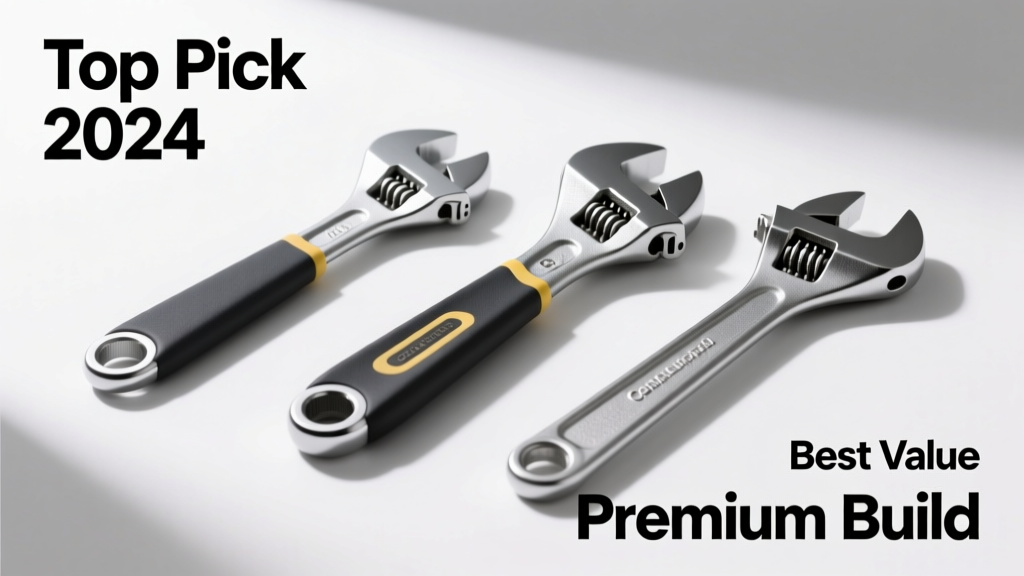
A reliable pipe wrench is one of those tools you don’t think about—until a leak springs at midnight and your adjustable wrench slips off a corroded galvanized fitting. For home use, you need something that grips firmly without marring pipes, fits comfortably in one hand, and lasts longer than your water heater. Forget industrial-grade monsters: most homeowners need a 10- to 14-inch wrench with smooth jaw action, hardened teeth, and a forged steel body—not cast or stamped metal.
Quick Comparison Table
| Product | Price Range | Best For | Key Feature |
|---|---|---|---|
| Ridgid 10789 10-Inch Pipe Wrench | $35–$45 | First-time buyers & general repairs | Forged steel, self-cleaning jaw, lifetime warranty |
| Klein Tools 61104 12-Inch Pipe Wrench | $48–$58 | Tight spaces & frequent users | Narrow head profile, precision-machined teeth, ergonomic handle |
| Irwin 2059100 14-Inch Pipe Wrench | $32–$42 | Budget-conscious DIYers | Heat-treated alloy steel, lightweight design, corrosion-resistant finish |
| Crescent PW12 12-Inch Pipe Wrench | $28–$36 | Light-duty faucet and supply line work | Smooth adjustment knob, compact throat depth, low-profile handle |
Top Picks
Ridgid 10789 10-Inch Pipe Wrench
This is the go-to for most homeowners tackling bathroom sink repairs, toilet supply lines, or outdoor hose bibs. Its 10-inch length balances torque and maneuverability—long enough to break loose stubborn fittings, short enough to swing in cramped cabinets. The self-cleaning jaw design sheds rust and debris after each use, and Ridgid’s lifetime warranty covers both materials and workmanship.
- Pros: Excellent grip on round and hex-shaped fittings; minimal slippage even on wet or greasy pipes; comfortable knurled handle reduces hand fatigue
- Cons: Slightly heavier than competitors (2.2 lbs); not ideal for oversized 2-inch PVC or cast iron cleanouts
Price range: $35–$45. It’s also available as part of the best adjustable wrench bundle for multi-tool setups.
Klein Tools 61104 12-Inch Pipe Wrench
If you’re replacing shower valves, rethreading gas line connectors, or working behind vanities, this 12-inch model shines. Klein’s narrow head geometry lets you access fittings just 1.5 inches from a wall—something most 12-inch wrenches can’t do. The teeth are individually milled (not stamped), delivering consistent bite across the jaw’s full range.
- Pros: Superior leverage without bulk; non-slip vinyl-dipped handle; works cleanly on stainless steel and copper without marring
- Cons: Premium price point; fewer big-box retail options—often ordered online or through electrical supply houses
Price range: $48–$58. Pair it with a tub and shower valve repair kit for full bathroom overhauls.
Irwin 2059100 14-Inch Pipe Wrench
When you’re wrestling with older galvanized nipples or frozen compression fittings on a whole-house shut-off valve, the extra inch—and torque—of this 14-incher pays off. At just 2.6 lbs, it’s lighter than comparable forged wrenches, thanks to optimized steel distribution. The chrome-plated finish resists rust even in damp basements or garages.
- Pros: Best-in-class torque for its weight class; wide jaw opening (up to 1.5 inches); clearly marked size indicators on the handle
- Cons: Less precise control on small 1/2-inch brass fittings; handle shape isn’t ideal for users with smaller hands
Price range: $32–$42. A solid choice if you also tackle hose clamp removal on irrigation systems.
What to Look For
Not all pipe wrenches are created equal—even within the same size class. Focus on these five criteria before clicking ‘add to cart’:
- Forged vs. cast steel: Forged wrenches (like Ridgid and Klein) absorb shock better and resist cracking under sudden load. Cast versions may chip or deform after repeated high-torque use.
- Jaw tooth geometry: Look for teeth angled at 22.5° or less—they dig deeper into soft metals like copper without gouging. Avoid wrenches with blunt, widely spaced teeth.
- Handle ergonomics: A slightly flared or contoured handle improves grip security. Knurling should be deep enough to stay effective even with oily or sweaty palms.
- Adjustment mechanism: Smooth, backlash-free threading means less fiddling mid-repair. Test by turning the adjusting nut: it should move freely but hold position when loaded.
- Throat depth: Measured from jaw tip to handle base—critical for clearance behind fixtures. Under 2.5 inches is ideal for bathroom and kitchen work.
Common Mistakes
Homeowners often overbuy—or under-spec—their pipe wrench. Here’s where things go sideways:
- Using a 14-inch wrench for faucet repairs: Excess leverage strips threads or cracks porcelain. Stick to 10-inch for anything under 1-inch pipe diameter.
- Assuming ‘chrome-plated’ means ‘rust-proof’: Plating wears off near the jaw pivot. Wipe and lightly oil the adjusting screw after each use—especially in humid climates.
- Ignoring jaw alignment: If the upper and lower jaws don’t close parallel, gripping force drops up to 40%. Check alignment by closing the wrench on a clean pipe and sighting down the jaw faces.
"Over 60% of pipe wrench-related injuries reported to the CPSC between 2020–2023 involved slippage due to improper jaw sizing or worn teeth." — U.S. Consumer Product Safety Commission Injury Data, 2024
Can I use a pipe wrench on plastic pipe?
No—never. Pipe wrenches are designed for metal. Their aggressive teeth will crush or split PVC, PEX, or ABS. Use a strap wrench or channel-lock pliers with rubber jaw inserts instead. For PEX crimp rings, grab a dedicated PEX tool set.
How tight should I crank it down?
Tighten just enough so the wrench doesn’t slip when you apply steady pressure—not maximum force. Over-tightening stresses the adjustment screw and accelerates tooth wear. As a rule: if you’re bracing your foot against the wall or using a cheater bar, you’ve gone too far.
Do I need more than one size?
Yes—if you’re doing more than occasional drip fixes. Keep a 10-inch for sinks and toilets, and a 12-inch for water heaters or main shutoffs. That combo covers 95% of residential jobs. A 14-inch is only needed for older homes with large-diameter galvanized mains.
Why does my wrench keep slipping?
Three likely culprits: (1) Jaw teeth are worn smooth—replace if they no longer catch on a file’s edge; (2) You’re using it backward (the hook jaw should face *into* the direction of pull); (3) Pipe surface is coated in grease, paint, or thick corrosion—clean with wire brush first.
Is a pipe wrench the same as a monkey wrench?
No. Monkey wrenches have flat, smooth jaws and were largely obsolete by the 1930s. Pipe wrenches have serrated, angled teeth specifically engineered to grip round, tapered pipe threads. Using a monkey wrench on pipe risks rounding off fittings entirely.
How do I maintain it?
Wipe down after each use. Once a month, apply a light coat of mineral oil to the adjusting screw and pivot points. Store vertically—hook jaw up—to prevent dust buildup in the thread. Never soak in solvent or toss in a toolbox with abrasive grit.
Whether you’re tightening a leaking garden hose bib or prepping for a full bathroom remodel, the right pipe wrench saves time, prevents damage, and builds confidence. Skip the bargain-bin models with brittle jaws—and avoid oversized wrenches that trade control for brute force. Start with a well-made 10-inch, learn its limits, and add a second size only when real-world jobs demand it.