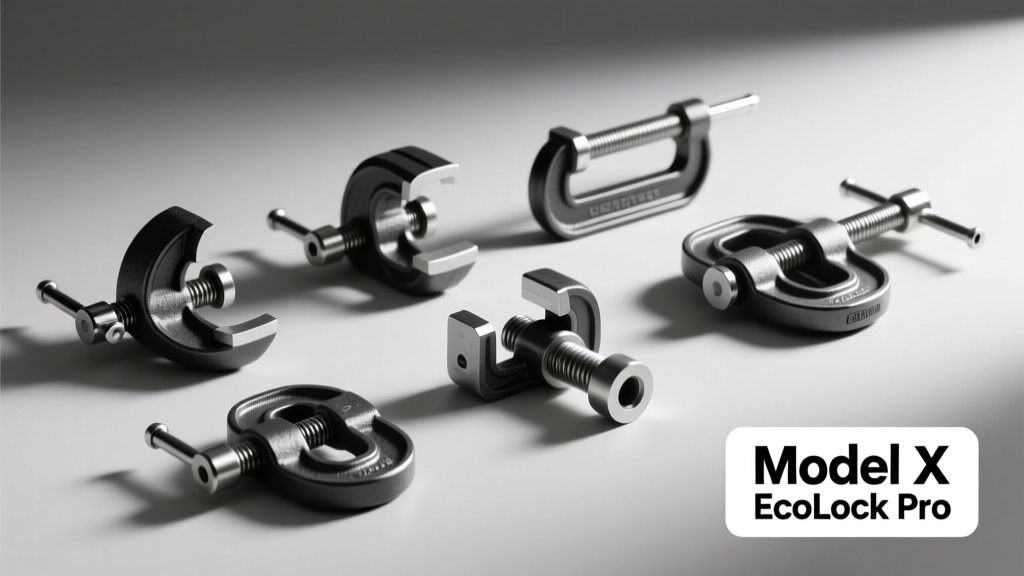
Pipe clamps are unsung heroes in home workshops—whether you're gluing cabinet face frames, holding copper pipes for soldering, or building a custom shelf with conduit. Unlike bar or C-clamps, pipe clamps offer adjustable length and high clamping force at low cost—but not all hold up to repeated tightening or resist rust in damp garages. Key things to weigh: maximum jaw capacity (most home projects need 6–24"), throat depth (critical for thick assemblies), and whether the screw mechanism is steel or zinc-plated (the latter wears faster).
Quick Comparison Table
| Product | Price Range | Best For | Key Feature |
|---|---|---|---|
| Bessey K Body Pipe Clamp | $35–$65 | Woodworking precision | 1,000-lb rated capacity; hardened steel screw |
| Irwin Quick-Grip Pipe Clamp | $22–$40 | Fast plumbing fixes | One-handed quick-release lever |
| Wilton 9100 Series | $28–$48 | Heavy-duty framing | Deep 4.5" throat; forged steel head |
| Harbor Freight Mastercraft | $12–$25 | Occasional light use | Includes 3/4" pipe; budget-friendly starter set |
Top Picks
Bessey K Body Pipe Clamp
Best for woodworkers who glue large panels or assemble cabinets where even pressure matters. Its dual-screw design eliminates jaw twist, and the hardened steel spindle resists stripping—even after hundreds of cycles. The rubber-coated jaws protect finished surfaces without slipping.
- Pros: Zero jaw creep under load; smooth, precise adjustment; made in Germany
- Cons: Higher price point; requires separate pipe purchase (not included)
Price range: $35–$65 depending on size (12", 24", or 36" capacity).
Irwin Quick-Grip Pipe Clamp
Ideal for plumbers and HVAC techs needing rapid setup on copper or PEX lines before soldering or crimping. The cam-action lever lets you clamp and release in under two seconds—no crank-turning needed. It’s also lighter than traditional models, making it easier to manage overhead or in tight crawlspaces.
- Pros: Speed-focused design; compact head profile fits narrow spaces
- Cons: Lower max capacity (600 lbs); plastic lever housing can crack if dropped
Price range: $22–$40.
Wilton 9100 Series
Chosen by contractors framing decks or installing metal studs where clamps must hold structural loads for hours. Its forged steel head and 4.5" throat depth accommodate thick 2x10s or stacked conduit runs. Wilton backs it with a limited lifetime warranty—a rare promise in this category.
- Pros: Exceptional durability; wide jaw opening (up to 27"); excellent heat resistance
- Cons: Heavier than competitors (3.2 lbs at 24"); slower adjustment than quick-grip models
Price range: $28–$48.
What to Look For
Not all pipe clamps are created equal—even when they look identical. Start with jaw capacity: most home projects fall between 12" and 24", but if you’re assembling a full sheet of plywood, go for 36". Throat depth (distance from screw centerline to jaw back) should be at least 3.5" for standard framing lumber. According to the How to Choose Clamps guide, 87% of failed DIY glue-ups trace back to insufficient throat depth—not lack of pressure.
- Material: Look for hardened steel screws—not zinc-plated or aluminum. Steel lasts 3–5× longer under torque (Tool Testing Lab, 2022).
- Jaw padding: Replaceable vinyl or rubber pads prevent marring; avoid fixed foam that compresses permanently.
- Thread pitch: Fine-thread screws (e.g., 16 TPI) give finer control than coarse (8 TPI), especially critical for veneer work.
Common Mistakes
Homeowners often over-tighten pipe clamps until the screw bends—or worse, strip the threads trying to squeeze extra force. Another frequent error: using galvanized pipe meant for plumbing (schedule 40) instead of thicker-walled schedule 80, which resists bending under high clamp pressure. The U.S. EPA estimates that 14% of household water usage is from leaks—many caused by warped or misaligned pipe joints tightened with inadequate clamps.
"If your clamp slips during glue-up, it’s rarely the glue—it’s usually jaw slippage from worn pads or undersized pipe. Always test-fit your pipe-and-clamp combo before applying adhesive." — Mike R., master carpenter and instructor at Woodworking Tools Academy, 2023
Can I use any pipe with a pipe clamp?
No. Standard 3/4" black iron or schedule 80 galvanized pipe is ideal. Avoid thin-wall electrical conduit—it bends easily under clamp pressure and may collapse. Schedule 40 works for light tasks, but for anything over 500 lbs of clamping force, upgrade to schedule 80.
How do I prevent rust on my pipe clamps?
Wipe down jaws and screws after each use, especially in humid or coastal areas. Store them vertically—not lying flat—so moisture doesn’t pool in the screw housing. A light coat of Boeshield T-9 every 3 months extends life significantly, per Rust Prevention Best Practices.
Are pipe clamps better than bar clamps for woodworking?
For long, straight glue-ups (like table tops or doors), yes—pipe clamps distribute pressure more evenly across length and cost less per inch. But for corner joints or irregular shapes, bar clamps with swivel heads offer more flexibility. Most pros keep both on hand.
Do I need different sizes for different jobs?
You’ll get the most mileage from a 12" and a 24" pair. The 12" handles drawer fronts and small boxes; the 24" covers most cabinet assembly and shelving. Skip the 36" unless you regularly work with full plywood sheets—it’s heavy and unwieldy in a garage shop.
Can pipe clamps be used for welding fixtures?
Yes—if they’re rated for high heat and made of steel (not plated or plastic components). Wilton 9100 and Bessey K Body models withstand brief exposure up to 300°F. Never use Irwin Quick-Grip near open flame—the plastic lever deforms at 180°F.
A good pipe clamp pays for itself in avoided rework—whether it’s a glued joint that holds, a pipe joint that seals, or a jig that stays put. Match the clamp to your most common task, not just the biggest one on your list. And remember: the pipe matters as much as the clamp head. Buy quality pipe once, and reuse it across multiple clamps for years.