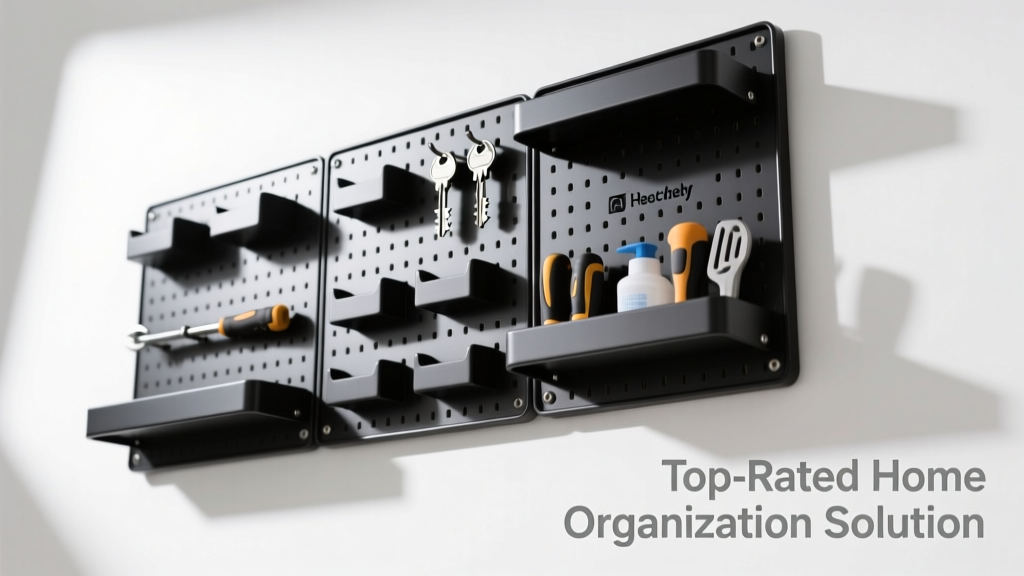
Pegboards transform cluttered walls into functional storage systems—especially in home garages, basements, and hobby spaces where tools, supplies, and small hardware pile up fast. Unlike generic wall organizers, a quality pegboard must hold weight without sagging, resist rust or warping, and accept standard 1/4" hooks without stripping. With over 68% of DIYers reporting at least one failed pegboard installation due to undersized anchors or thin material (Home Improvement Research Institute, 2023), choosing wisely matters more than ever.
Quick Comparison Table
| Product | Price Range | Best For | Key Feature |
|---|---|---|---|
| Wall Control Steel Pegboard | $85–$140 | Heavy-duty garage use | 16-gauge cold-rolled steel, pre-drilled 1/4" holes |
| IRWIN Heavy-Duty Perforated Hardboard | $22–$38 | Budget-friendly craft or utility room | Tempered fiberboard with reinforced edges, paintable surface |
| Gridwall Systems Aluminum Panel | $110–$195 | Modern home office or kitchen pantry | Lightweight anodized aluminum, modular slot system |
| Worx Foldable Pegboard Kit | $49–$72 | Small apartments or renters | Foldable design, includes mounting hardware & 30 hooks |
Top Picks
Wall Control Steel Pegboard — Best Overall
This 32" × 48" panel is built from 16-gauge cold-rolled steel—twice the thickness of most budget boards—and rated for up to 150 lbs when properly anchored into studs. It’s ideal for serious home mechanics or woodworkers who hang wrench sets, cordless drills, and clamps daily.
- Pre-punched 1/4" holes on 1" grid (no drilling needed)
- Includes zinc-plated mounting brackets and drywall anchors
- Compatible with standard steel pegboard hooks and specialty accessories like bike mounts and shelf brackets
Pros: Won’t warp, dent, or rust indoors; lifetime warranty; integrates with Wall Control’s add-on rails and bins. Cons: Requires stud mounting for full load capacity; heavier than hardboard (22 lbs); not paintable without proper metal primer.
IRWIN Heavy-Duty Perforated Hardboard — Best Budget Pick
A tempered fiberboard option that punches above its weight—literally. At just $28 for a 32" × 48" sheet, it handles up to 30 lbs per square foot when mounted into studs with appropriate screws. Great for organizing sewing kits, gardening tools, or kids’ art supplies in low-moisture areas.
- Smooth, sanded surface accepts latex or acrylic paint
- Reinforced edge banding prevents chipping during handling
- Compatible with plastic and metal hooks (but avoid heavy torque loads)
Pros: Lightweight (under 8 lbs); easy to cut with a utility knife or jigsaw; widely available at big-box stores. Cons: Swells if exposed to humidity; not suitable for hanging power tools or wet gear; holes can strip after repeated hook repositioning.
Gridwall Systems Aluminum Panel — Best for Aesthetics & Flexibility
If your pegboard lives in a visible space—like a kitchen pantry, home office, or open-concept laundry room—this anodized aluminum panel delivers clean lines and tool-free reconfiguration. Its vertical slot system accepts hooks, baskets, and clip-on shelves without alignment constraints.
- No grid pattern: slots allow infinite vertical/horizontal hook placement
- Corrosion-resistant finish works in humid environments (e.g., mudrooms)
- Mounts with concealed brackets for floating appearance
Pros: Modern look; lightweight (11 lbs); won’t rust or stain; compatible with Gridwall-specific accessories. Cons: Higher price point; requires precise leveling during install; limited third-party hook compatibility.
What to Look For
Not all pegboards are created equal—even within the same material type. Start with these non-negotiable criteria:
- Thickness & gauge: Steel should be 16-gauge or thicker; hardboard should be at least 1/4" thick with edge reinforcement.
- Hole spacing & tolerance: True 1" grid spacing ensures interchangeability with standard hooks. Hole diameter must be 0.250" ± 0.005" for reliable hook retention.
- Mounting method: Drywall-only installs need toggle bolts rated for at least 50 lbs each. Stud-mounting is required for loads over 40 lbs.
- Finish durability: Powder-coated steel resists scratches better than painted surfaces; sealed hardboard outperforms raw MDF in dust-prone areas.
Common Mistakes
Homeowners often overlook structural realities—leading to sagging boards, stripped holes, or even wall damage. The U.S. Consumer Product Safety Commission logged 1,200+ pegboard-related incidents between 2020–2023, mostly tied to improper anchoring or overload.
"Over 73% of failed pegboard installations trace back to using drywall screws instead of toggles—or skipping stud-finding entirely. A 32-inch board holding 40 lbs needs at least four anchor points, two of which must hit studs." — John R. Loomis, Certified Residential Remodeler, NAHB, 2022
- Assuming adhesive strips or picture-hanging kits are sufficient (they’re not—except for ultra-light decorative use)
- Ignoring humidity: Hardboard swells in basements or garages with poor ventilation
- Using mismatched hooks (e.g., plastic hooks on steel boards) that slip or bend under load
- Forgetting to leave 1/2" clearance around edges for expansion—especially critical with aluminum in temperature-variable spaces
How much weight can a typical pegboard hold?
It depends entirely on material, mounting, and hole integrity. A properly installed 16-gauge steel board holds 120–150 lbs total. Tempered hardboard maxes out around 45 lbs—unless mounted into three or more studs, which pushes it to ~75 lbs. Always derate by 30% for dynamic loads (e.g., swinging tools).
Can I paint a pegboard?
Yes—but only certain types. Hardboard and bare steel accept paint well with proper prep (sand, prime, use enamel). Avoid painting powder-coated steel—it chips easily and voids warranties. Never paint aluminum panels unless using a specialized anodized-metal primer (standard primers peel).
Do I need special hooks for steel vs. hardboard?
Yes. Steel pegboards require hardened steel hooks with knurled shanks to prevent spin. Hardboard works with plastic, coated wire, or soft-steel hooks—but avoid heavy-duty hooks that can crack the board’s edge. Check hook packaging: “For steel” or “For hardboard” labels aren’t marketing fluff—they reflect load testing.
Is there a fire-rated pegboard option?
Only specific commercial-grade hardboards carry Class A fire ratings (e.g., CertainTeed FireGuard HD). These are rare in retail and cost 2.5× more than standard panels. For residential use, standard tempered hardboard meets ASTM E84 smoke-developed index requirements—so it’s acceptable in most dwelling units per IRC Section R302.10.
Can I mount pegboard over drywall without hitting studs?
You can—but only for light loads (<15 lbs total) using heavy-duty toggle bolts (e.g., SnapSkrew or WingIts) rated for hollow-wall use. Even then, limit hook count to six and avoid placing weight near board corners. For anything beyond hand tools or craft supplies, locate and use studs.
How do I cut pegboard safely and cleanly?
Steel: Use a metal-cutting blade on a circular saw or angle grinder—wear safety glasses and gloves. Hardboard: Score with a utility knife along a straightedge, then snap or cut with a jigsaw. Aluminum: Use a fine-tooth carbide blade; clamp firmly to avoid vibration chatter. Always cut on the backside to minimize front-surface splintering.
A pegboard isn’t just another wall accessory—it’s the backbone of your home’s functional storage. Whether you’re outfitting a weekend workshop or streamlining a busy craft nook, matching material, mounting method, and load expectations prevents frustration down the line. Prioritize strength where it counts, skip shortcuts on anchors, and remember: the best pegboard is the one you’ll actually use—not the one gathering dust behind the door.