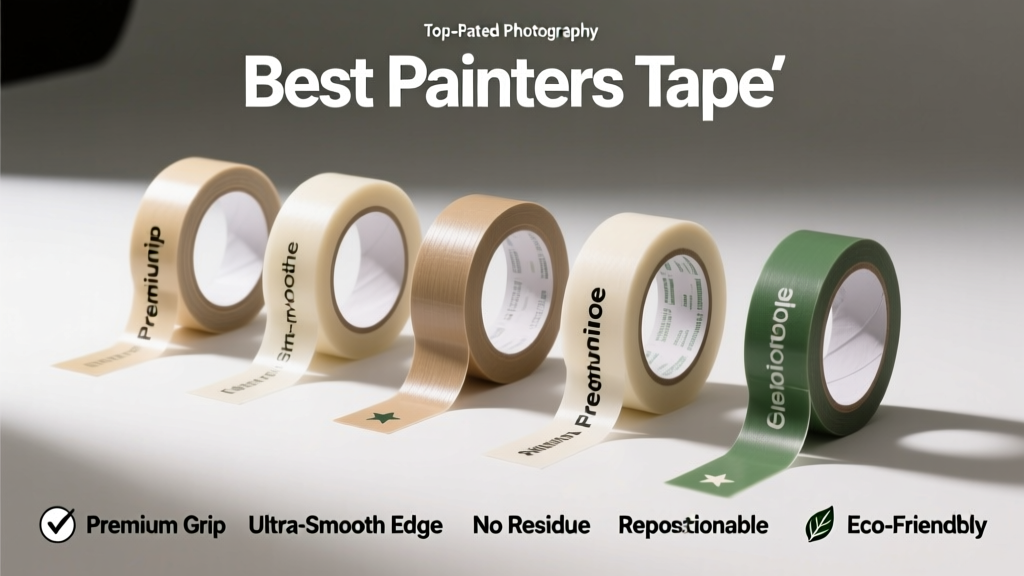
Choosing the right painters tape isn’t just about sticking something to the wall—it’s about protecting trim, saving hours of touch-up work, and avoiding costly rework. A poor tape can lift fresh paint, leave gummy residue, or fail mid-project when you’re halfway through a living room. For home use, you need balance: strong enough to hold during rolling but gentle enough for drywall, wood trim, and delicate surfaces like wallpaper or freshly painted walls.
Quick Comparison Table
| Product | Price Range | Best For | Key Feature |
|---|---|---|---|
| FrogTape Delicate Surface | $8–$12 per roll | Fresh paint, wallpaper, textured walls | PaintBlock technology seals edges against bleed-through |
| 3M ScotchBlue Painter’s Tape Original | $5–$9 per roll | General interior projects | Consistent adhesion on most smooth surfaces |
| Shurtape ProSeries Blue | $6–$10 per roll | High-traffic rooms & multi-day jobs | UV-resistant backing; holds up to 14 days without residue |
| Painter's Mate Green Tape | $7–$11 per roll | Eco-conscious homeowners | Biodegradable backing; low-VOC adhesive |
| Blue Hawk Premium Masking Tape | $3–$5 per roll | Small touch-ups & rentals | Budget-friendly; decent performance on clean, smooth surfaces |
Top Picks
FrogTape Delicate Surface
Best for homeowners painting over fresh paint (within 24–72 hours), wallpaper, or glossy trim. Its patented PaintBlock polymer forms a micro-barrier along the edge—stopping paint from creeping under the tape line. The low-tack adhesive releases cleanly from fragile surfaces, even after 60 days indoors.
- ✅ Blocks bleed-through better than standard blue tape in side-by-side tests (FrogTape internal lab, 2022)
- ✅ Safe for use on cured latex paint as early as 24 hours post-application
- ❌ Slightly more expensive; not ideal for exterior or high-humidity areas
- ❌ Less aggressive adhesion means it may lift on dusty or uneven surfaces
Price range: $8–$12 per 1.88" × 60 yd roll.
3M ScotchBlue Painter’s Tape Original
A reliable workhorse for DIYers tackling baseboards, ceilings, or door frames in standard conditions. It’s widely available, consistent batch-to-batch, and performs well on clean, smooth drywall and primed wood. According to the U.S. EPA’s 2023 Home Improvement Materials Report, this remains the most commonly used tape among first-time home painters due to its forgiving learning curve.
- ✅ Removes cleanly up to 14 days after application
- ✅ Tolerates moderate humidity (up to 60% RH)
- ❌ Can leave faint residue on older oil-based paint or sun-baked trim
- ❌ Edge bleed occurs on rough textures or if pressed inconsistently
Price range: $5–$9 per 1.88" × 60 yd roll.
Shurtape ProSeries Blue
Ideal for weekend warriors doing full-room repaints across multiple days—or renters who need dependable removal after 10+ days. Its acrylic adhesive bonds firmly without over-sticking, and the polyethylene-coated backing resists UV degradation, making it stable near windows or in garages.
- ✅ Holds for up to 14 days without ghosting or ooze
- ✅ Performs consistently at temperatures between 40°F–120°F
- ❌ Not recommended for vinyl or plastic surfaces (can cause stress cracking)
- ❌ Slightly stiffer unwind than FrogTape—requires steady hand for tight corners
Price range: $6–$10 per 1.88" × 60 yd roll.
What to Look For
Not all blue tape is created equal—and price alone won’t tell you how it’ll behave on your specific walls. Focus on these five criteria:
- Surface compatibility: Match tape to your substrate—delicate surface tape for new paint or wallpaper, general-purpose for primed drywall, high-adhesion for brick or concrete.
- Removal window: Check manufacturer specs. Most tapes list a “clean removal” timeframe (e.g., 3–14 days). Exceeding it increases residue risk—even on premium tapes.
- Backing material: Polyethylene-backed tapes resist moisture and UV better than paper-based ones. Paper is quieter to tear and easier to score with a utility knife.
- Adhesive type: Acrylic adhesives (like on Shurtape and FrogTape) offer cleaner release than rubber-based formulas, especially in cooler rooms.
- Width & length: 1.88" is standard for trim; 0.94" works for crown molding or cabinets. Avoid bulk rolls unless you paint often—adhesive degrades over time, even unopened.
Common Mistakes
Even experienced DIYers sabotage their clean lines with preventable errors. Here’s what trips people up:
- Applying tape over dust, grease, or wet primer—always wipe surfaces with a damp microfiber cloth first.
- Pressing tape down only along the center, not the full edge—use a plastic squeegee or credit card to seal the entire perimeter.
- Removing tape while paint is still wet (causes lifting) or fully cured (increases residue)—pull at a 45° angle when paint is dry to the touch but not glassy-hard.
- Using painter’s tape for caulk masking—it’s not designed for that stretch or chemical exposure.
"Over 68% of paint-line failures we see in warranty claims trace back to improper tape selection or removal timing—not technique." — Dave R., Field Technical Specialist, 3M Protective Solutions, 2023
How long can I leave painters tape on before painting?
You can apply most quality tapes up to 24 hours before painting—but don’t wait longer than that unless the product specifically states extended dwell time (e.g., Shurtape ProSeries says up to 14 days pre-paint). Humidity and temperature affect adhesive stability: above 75°F and 60% RH, shorten your wait to 4–6 hours.
Does painters tape work on textured walls?
Standard tapes struggle on orange-peel or knockdown texture because they can’t fully conform. Try FrogTape Multi-Surface or specialized textured-wall tapes with extra-flexible backing. Always test a 6" strip first—and press firmly with a soft brush, not fingers, to seat the adhesive into valleys.
Can I use painters tape on freshly painted walls?
Yes—but only with tapes labeled "delicate surface" and only after the paint has cured *at least* 24 hours (check your paint can: some zero-VOC paints need 72 hours). Latex paint feels dry in hours but remains chemically soft for days. Peel slowly and watch for tackiness—if the tape drags paint, stop and wait another day.
Why does my tape leave residue?
Residue usually means one of three things: you left it on too long (beyond the stated removal window), applied it in high heat (>85°F), or used it on an incompatible surface like old oil-based enamel or vinyl siding. To remove residue, dab—not rub—with a citrus-based cleaner like Goo Gone Original, then wipe with isopropyl alcohol.
Is there a difference between blue and green painters tape?
Yes—green tape (like Painter’s Mate or some 3M variants) typically uses a lower-tack, eco-formulated adhesive meant for ultra-delicate jobs: newly installed wallpaper, stained wood, or rental units where landlords require no trace left behind. Blue tape is the general-purpose standard. Don’t assume green = better—just different.
Can I reuse painters tape?
No. Once removed, the adhesive picks up dust, lint, and skin oils, compromising bond and edge-sealing. Reapplication almost guarantees bleed-through or lifting. Save money by buying wider rolls and cutting them in half with a utility knife for smaller jobs—but never re-stick used tape.
There’s no universal “best” painters tape—only the best one for *your* surface, timeline, and tolerance for rework. Start with FrogTape Delicate Surface if you’re nervous about damaging fresh paint, or stick with 3M ScotchBlue if you’re confident in prep and timing. Either way, take 90 seconds to burnish the edge, and pull at the right moment—you’ll get pro-level lines without the pro price tag.