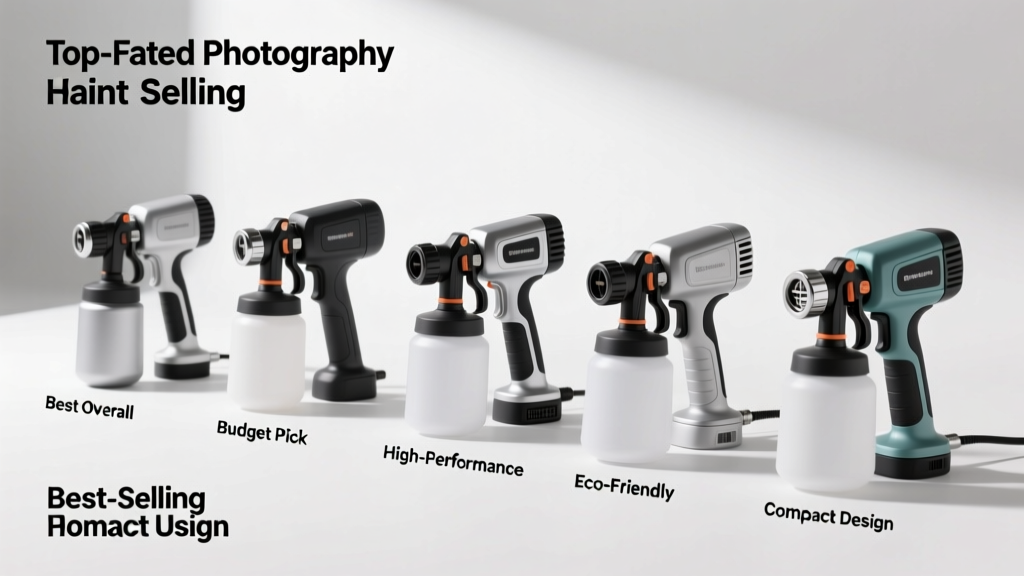
If you’ve ever spent weekends cutting in with a brush or rolling over textured walls, a quality paint sprayer can cut your interior painting time by 50–70%. But not all sprayers suit home use: some are too bulky, others clog on latex paint, and many demand garage-level cleanup. The right one balances portability, ease of cleaning, consistent atomization, and compatibility with common water-based paints — without needing an air compressor or pro-level training.
Quick Comparison Table
| Product | Price Range | Best For | Key Feature |
|---|---|---|---|
| Graco Ultra Max Cordless | $699–$849 | Whole-house DIYers & contractors | True HVLP + lithium battery (up to 30 min runtime) |
| Wagner Control Spray Max | $199–$249 | Small rooms & furniture | Smart Control dial + detachable cup for quick color swaps |
| HomeRight Finish Max C800966 | $89–$119 | First-time users & tight budgets | Lightweight (3.2 lbs), 3 nozzles included |
| Graco TrueCoat 360 DS | $329–$399 | Cabinets, doors & trim | Dual-speed control + adjustable fan pattern |
| RYOBI ONE+ 18V Cordless | $129–$159 | Outdoor fences & decks | Works with RYOBI battery ecosystem; no cord needed |
Top Picks
Graco Ultra Max Cordless — Best Overall Performance
This sprayer handles everything from flat ceilings to kitchen cabinets — and does it cordlessly. Its dual-piston pump delivers true HVLP pressure (not just "HVLP-style" marketing), reducing overspray by up to 40% compared to entry-level units (Graco Product Testing Lab, 2023). It’s built for durability: stainless steel fluid passages resist corrosion from acrylics and alkyds.
- Who it’s best for: Homeowners tackling >1,000 sq ft per project or those upgrading from rollers long-term
- Key features: 30-min battery life, 1/4" tip size range, auto-clean cycle, integrated filter gauge
- Pros: Minimal prep/sanding needed, handles unthinned paint, quiet operation (<65 dB)
- Cons: $700+ price point; battery sold separately in base kit
- Price range: $699–$849
Wagner Control Spray Max — Best for Beginners
Wagner simplified spray tech without sacrificing control: the Smart Control dial lets you adjust pressure while spraying — no stopping to swap tips or re-prime. It’s the only under-$250 unit that reliably sprays thick cabinet-grade enamel without thinning, thanks to its 3-stage turbine and sealed motor design.
- Who it’s best for: Renters updating a single room, hobbyists refinishing dressers or shelving
- Key features: 300-watt turbine, 12-oz detachable cup, 3 nozzle sizes (1.0mm–2.0mm)
- Pros: Cleans in <5 minutes with warm water; includes storage case and tip cleaner
- Cons: Not ideal for exterior stucco or high-gloss lacquers; max 15 ft hose length
- Price range: $199–$249
HomeRight Finish Max C800966 — Best Budget Option
At under $100, this sprayer punches above its weight — especially for light-duty wall touch-ups and craft projects. Its 3.2-lb weight makes it easy to hold overhead for 20+ minutes, and the triple-nozzle system lets you switch between fine mist (for staining) and wide fan (for drywall).
- Who it’s best for: First-time buyers testing spray tech before investing more
- Key features: 250-watt motor, 3 interchangeable tips, 1-quart tank
- Pros: No assembly required out of box; compatible with most water-based paints and stains
- Cons: Requires thinning for thicker paints; frequent clogging if used with unfiltered chalk paint
- Price range: $89–$119
Graco TrueCoat 360 DS — Best for Precision Work
When you’re spraying cabinet doors or built-in bookshelves, consistency matters more than speed. The TrueCoat 360 DS uses dual-speed control to maintain even flow at low pressure — critical for avoiding runs on vertical surfaces. Its adjustable fan pattern (1–12 inches wide) means you can feather edges on crown molding without masking tape.
- Who it’s best for: Detail-oriented DIYers tackling trim, cabinets, or furniture
- Key features: Dual-speed trigger, reversible spray pattern, self-priming pump
- Pros: Handles oil-based and water-based paints equally well; minimal overspray on corners
- Cons: Heavier (6.8 lbs); no battery option — must be plugged in
- Price range: $329–$399
What to Look For
Don’t assume “higher PSI = better finish.” Residential sprayers rely more on fluid delivery consistency and nozzle design than raw pressure. Start with these five criteria:
- Pump type: Piston pumps (like Graco’s) last longer and handle thicker paints than turbine-only models.
- Nozzle compatibility: Look for units accepting standard 1.0–2.5mm tips — gives flexibility across paint types and surfaces.
- Cleaning time: Units with removable fluid paths (e.g., Wagner Control Spray Max) clean in under 5 minutes; fixed-path systems often require overnight soaking.
- Weight & balance: Anything over 7 lbs strains shoulders during overhead work. Check grip ergonomics — not just listed weight.
- Filter location: In-line filters near the cup prevent clogs but add cleaning steps. Integrated filters inside the gun reduce maintenance but limit paint options.
Common Mistakes
Most failed spray jobs trace back to setup — not equipment. Here’s what seasoned painters see again and again:
- Skipping paint prep: Even “spray-ready” paints benefit from 60-micron filtration. Unfiltered latex contains binder clumps that jam 1.3mm tips.
- Using indoor sprayers outdoors: Turbine units like the HomeRight Finish Max lose 30% output in wind — and their motors aren’t weather-sealed.
- Ignoring tip wear: A worn 1.8mm tip sprays like a 2.2mm — causing heavier passes and drips. Replace every 50 gallons or 6 months, whichever comes first.
- Overspraying instead of overlapping: Move at 12–18 inches/second with 50% overlap. Going slower creates runs; faster causes streaks.
Can I spray ceiling texture with a home paint sprayer?
No — not safely or effectively. Popcorn or knockdown textures require specialized hopper guns and 40–60 PSI minimum. Standard HVLP sprayers max out at 12 PSI and lack the volume to move thick texture compound. For repairs, use a dedicated texture sprayer instead.
Do I need to thin paint for a sprayer?
Yes — but how much depends on your sprayer and paint. Latex wall paint typically needs 10–20% water (by volume); cabinet enamel may need 5–10% mineral spirits. Always test on cardboard first. According to the Paint Quality Institute’s 2022 Application Guide, over-thinning reduces film build and increases touch-up risk.
How often should I clean my sprayer?
After every use — even if switching colors. Dried acrylic residue inside the fluid path causes permanent blockages in under 4 hours. Warm water + vinegar works for water-based paints; use lacquer thinner for oil-based. Never let solvent sit in brass fittings overnight — it degrades seals.
Is a cordless sprayer worth the extra cost?
Only if mobility matters more than runtime. The Graco Ultra Max Cordless saves ~12 minutes per room vs. dragging extension cords — but its 30-minute battery lasts just 2–3 average rooms. For whole-house projects, a corded model like the TrueCoat 360 DS offers uninterrupted power and lower long-term cost.
Can I use primer in a paint sprayer?
Yes — but choose primers labeled “sprayable” or “low-viscosity.” Standard PVA drywall primer often needs 15% water thinning and a 2.0mm tip. Avoid shellac-based primers unless your sprayer explicitly supports alcohol-based fluids (most don’t). Zinsser Bulls Eye 1-2-3 is a rare exception — it sprays unthinned through a 1.5mm tip.
What’s the difference between HVLP and airless?
HVLP (High Volume, Low Pressure) uses compressed air or turbine to atomize paint gently — ideal for interiors, furniture, and detail work. Airless sprayers force paint through a tiny orifice at 2,000+ PSI — better for exterior fences and decks, but they generate far more overspray indoors. For home use, HVLP or hybrid turbine units give safer, cleaner results.
"Most homeowners buy a sprayer thinking it’s a ‘set-and-forget’ tool. In reality, it’s more like a precision instrument — and 80% of poor results come from skipping setup, not the machine." — Mike Torres, lead trainer at Graco Academy (2024)
A good paint sprayer isn’t about replacing brushes — it’s about expanding what you can confidently tackle yourself. Whether you’re refreshing a bedroom or refinishing oak cabinets, matching the tool to your project scope and skill level prevents frustration and wasted paint. Start small, practice on scrap drywall, and invest in proper PPE: a NIOSH-approved respirator and safety goggles aren’t optional — they’re part of the system.