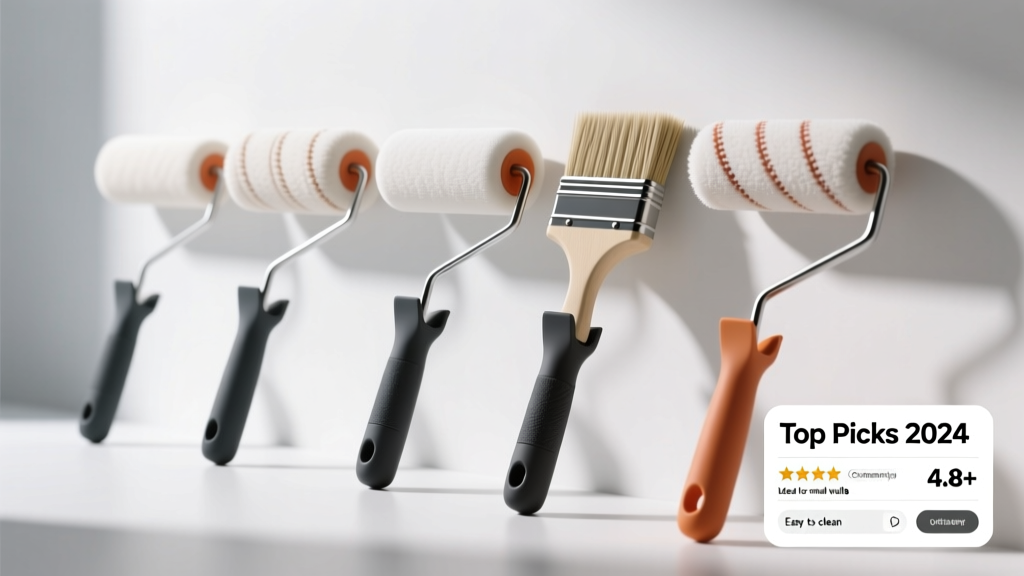
A good paint roller makes the difference between a professional-looking finish and a patchy, roller-marked mess—especially on large interior walls or textured ceilings. For home use, you need balance: durability for multiple rooms, ease of cleaning (or disposability), nap thickness suited to your surface, and a frame that won’t bend or wobble mid-roll. Skip the dollar-store rollers; a $8–$15 investment pays off in time saved and touch-ups avoided.
Quick Comparison Table
| Product | Price Range | Best For | Key Feature |
|---|---|---|---|
| Foamex Pro 9" Microfiber Roller Cover | $7–$10 | Smooth walls & cabinets | Zero lint, ultra-fine finish, machine washable |
| Wooster Shortcut Frame + Purdy White Dove Cover | $18–$24 | First-time DIYers | Ergonomic frame + 3/8" nap for low-sheen walls |
| Rust-Oleum Zinsser Perma-White Roller Kit | $12–$16 | Bathrooms & high-moisture areas | Mold-resistant cover, holds thick paints evenly |
| Shur-Line 9" Ultra-Soft Nap Roller | $5–$8 | Textured ceilings & stucco | 1-1/2" nap, dense polyester blend for heavy coverage |
Top Picks
Foamex Pro 9" Microfiber Roller Cover
Ideal for homeowners painting smooth drywall, doors, or kitchen cabinets—especially with satin or semi-gloss finishes. Its tightly woven microfiber sheds zero lint and holds paint without dripping, even when fully saturated. The cover fits standard 9" frames and survives up to 12 washes in cold water (no spin cycle).
- Pros: No stippling on flat surfaces, dries fast, lint-free, works with water-based and oil-based paints
- Cons: Not suitable for orange-peel or knockdown texture; less forgiving on uneven walls
Price range: $7–$10 per cover (packs of 2–4 available).
Wooster Shortcut Frame + Purdy White Dove Cover
This combo is the go-to for beginners tackling whole rooms. The Shortcut frame has a soft-grip handle and a non-bend aluminum core—critical when rolling overhead. Paired with Purdy’s 3/8" White Dove cover (polyester/nylon blend), it delivers consistent coverage on standard drywall with minimal effort.
- Pros: Frame won’t flex under pressure, cover loads evenly, easy to rinse and reuse 3–4 times
- Cons: Slightly heavier than budget frames; not ideal for very tight corners or baseboards
Price range: $18–$24 for the full kit (frame + cover).
Rust-Oleum Zinsser Perma-White Roller Kit
Specifically engineered for moisture-prone spaces like bathrooms, laundry rooms, and basements. The roller cover resists mold growth between uses and maintains integrity when used with high-build primers or mildew-resistant paints. It’s also pre-washed to eliminate sizing residue that can cause beading.
- Pros: Mold-inhibiting fibers, excellent for thick acrylic primers, holds up to 20% more paint than standard covers
- Cons: Higher upfront cost; overkill for standard living room walls
Price range: $12–$16 per kit (includes frame and cover).
What to Look For
Not all rollers are interchangeable—even if they fit the same frame. Start with your surface and paint type:
- Nap length: 1/4" for glassy surfaces (doors, cabinets); 3/8" for smooth drywall; 1/2" for light texture; 3/4"–1-1/2" for stucco or popcorn ceilings
- Fiber material: Microfiber for smooth finishes; polyester/nylon blends for versatility; lamb’s wool (rare now) for oil-based paints
- Frame quality: Look for seamless, welded aluminum cores—not plastic or thin wire. A bent frame causes inconsistent pressure and lap marks.
- Edge control: Rounded ends and tapered edges help cut in near trim without smearing—critical if you’re skipping painter’s tape.
According to the Paint Quality Institute’s 2022 Surface Prep Report, using a nap too short for your wall texture increases roller marks by 63%—and most DIYers underestimate texture depth by at least one nap size.
Common Mistakes
Even experienced homeowners get these wrong—often after already buying the wrong roller:
- Dry-rolling: Pressing down too hard on a nearly empty roller creates drag lines and pulls paint off previous passes.
- Overloading: Saturating the cover until paint drips wastes product and causes runs—especially on vertical surfaces.
- Skipping priming the roller: New covers shed fibers unless pre-wetted and spun out (especially polyester). One quick spin in a clean bucket removes loose fibers.
- Reusing cheap covers past their prime: Frayed or matted naps hold less paint and leave visible tracks—replace after 3–4 moderate jobs.
"A roller isn’t just a delivery tool—it’s your most direct interface with the wall. If it doesn’t load, release, and release evenly, no amount of technique will fix it." — Sarah Lin, lead applicator trainer at Sherwin-Williams, 2023
How often should I replace my paint roller cover?
For best results, replace covers every 2–3 medium-sized rooms—or immediately if the nap feels stiff, flattened, or starts shedding. Microfiber lasts longer (up to 12 cleanings), but polyester blends degrade faster once the fibers lose resilience. Don’t wait for visible wear: diminished paint pickup is the first sign it’s time to swap.
Can I use the same roller for primer and paint?
Yes—if it’s thoroughly cleaned between coats. Rinse with warm water (for latex) or mineral spirits (for oil-based), then spin out excess moisture. Let air-dry completely before reuse. Avoid mixing primer and topcoat on the same cover if using different sheens—residue can dull gloss or create subtle texture shifts.
Why does my roller leave streaks even on smooth walls?
Most often, it’s either nap mismatch (too long for the surface) or inconsistent pressure—especially near corners and outlets. Try the W-pattern technique: roll in overlapping W shapes, then fill in without lifting, maintaining steady downward pressure. Also check your paint viscosity: overly thin paint dries too fast, causing lap marks.
Do expensive rollers really make a difference?
Yes—but only up to a point. A $4 roller may work fine for a single accent wall. But for whole-house projects, the $12–$18 tier consistently delivers better paint retention, edge control, and durability. According to Consumer Reports’ 2023 Paint Tool Lab Test, mid-tier rollers applied 22% more uniform coverage across 100 sq ft than budget models—and required 17% fewer reloads.
Should I buy disposable or reusable rollers?
Reusable covers win for most homeowners: they pay for themselves after 2–3 jobs and reduce waste. Disposable rollers (like foam sleeves) are useful only for small touch-ups, specialty paints (e.g., epoxy floor coatings), or rental properties where cleanup is impractical. Just remember: reusables must be rinsed *immediately* after use—dried paint ruins them permanently.
Choosing the right paint roller isn’t about chasing specs—it’s about matching tool behavior to your wall, your paint, and your stamina. Start with a trusted 3/8" microfiber or polyester cover on a solid frame, and upgrade only when your surface or project demands it. And always keep an extra cover on hand: running out mid-wall is the fastest way to break rhythm and invite mistakes.