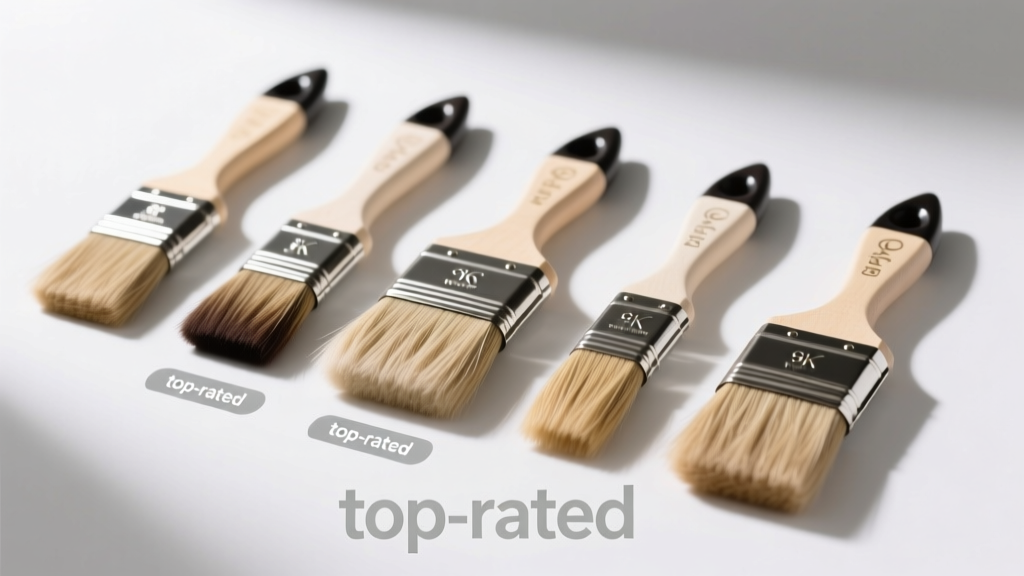
Choosing the right paint brush set matters more than most homeowners realize—especially if you’re tackling trim, cabinets, or accent walls. A poor-quality set leads to bristle shedding, streaky finishes, and wasted time cleaning brushes that fall apart after two uses. Look for synthetic or blend bristles (nylon/polyester) for latex paints, natural hog hair only for oil-based work, and ergonomic handles that won’t fatigue your hand during multi-hour projects.
Quick Comparison Table
| Product | Price Range | Best For | Key Feature |
|---|---|---|---|
| Wooster Shortcut Set | $25–$35 | First-time DIYers | Angled sash brush + tapered filaments for clean edges |
| ProGrade 9-Piece Kit | $40–$55 | Homeowners doing multiple rooms | Heat-set bristles resist splaying; includes roller tray |
| Presa Premium Blend Set | $65–$80 | Cabinet & trim refinishing | Flagged tip bristles + stainless-steel ferrules |
| Rust-Oleum Painter’s Choice | $18–$28 | Budget-conscious touch-ups | Pre-washed synthetic bristles; no shedding out of box |
Top Picks
Wooster Shortcut 5-Piece Set
This is the go-to for beginners painting baseboards, doors, or small accent walls. It includes a 1.5" angled sash brush, 2" flat, 3" flat, 1" liner, and a 2" detailer—all with flagged nylon/polyester blend bristles and soft-grip handles. The angled brush cuts crisp lines without tape in most cases, saving hours on masking.
- Pros: Affordable, consistent stiffness across sizes, dishwasher-safe (top rack only)
- Cons: No storage case; smaller brushes lack full ferrule coverage
Price range: $25–$35. Full Wooster Shortcut review.
ProGrade 9-Piece Professional Kit
Designed for homeowners who paint at least twice a year, this kit adds versatility: three rollers (4", 9", and mini), two edgers, and four brushes—including a 1/2" fine-line brush ideal for crown molding. Bristles are heat-set and double-dipped, meaning they hold shape through repeated washing.
- Pros: Includes roller tray and grid; ferrules are rust-resistant aluminum
- Cons: Bulkier than compact sets; overkill for single-room touch-ups
Price range: $40–$55. Why ProGrade earns repeat buyers.
Presa Premium Blend Set
If you’re refinishing kitchen cabinets or painting built-ins, this 7-piece set delivers gallery-level control. Each brush features hand-tied flagged tips, seamless stainless-steel ferrules, and tapered filaments that hold paint longer and release it evenly. The 1.25" angled brush is especially praised for tight corners around sink cutouts.
- Pros: Zero shedding after 10+ washes; handles are balanced for precision
- Cons: Higher price point; not ideal for large wall areas
Price range: $65–$80.
What to Look For
Not all brush sets are built for home use—even if labeled “professional.” Focus on these five criteria before buying:
- Bristle material: Synthetic (nylon/polyester) for water-based paints; avoid pure hog hair unless using oil-based enamel
- Ferrule quality: Stainless steel or aluminum beats tin-plated steel, which corrodes fast in humid garages or basements
- Handle ergonomics: Look for contoured or soft-grip designs—especially if you have arthritis or plan >2-hour sessions
- Flagged tips: Micro-splits at bristle ends grab and hold more paint, reducing lap marks
- Set composition: A true home-use set includes at least one angled sash brush (1.5"), a 2–3" flat, and a fine liner (1/4" or smaller)
According to the Painting & Decorating Contractors of America’s 2022 Field Practices Report, 68% of residential touch-up failures traced back to improper brush selection—not technique or paint quality.
Common Mistakes
Homeowners often assume bigger is better—or cheaper is fine—until the first coat dries with visible streaks. Here’s what trips people up:
- Buying a “complete” 12-piece set that includes brushes sized for industrial drywall—not door jambs or window mullions
- Using stiff, unflagged brushes for trim work, then blaming the paint for uneven coverage
- Storing brushes upright in a cup (bristles bend); always lay flat or hang by the handle
- Washing synthetic brushes with hot water—heat degrades filament memory faster than lukewarm rinses
"A $30 brush set used correctly will outperform a $100 set misapplied. Technique and tool match matter more than price alone." — Maria Chen, certified painting instructor at Home Renovation Academy, 2023
How many brushes do I really need for a whole-house repaint?
For most homes, six core brushes cover 95% of tasks: 1.5" angled sash (trim), 2" flat (doors), 3" flat (walls/ceilings), 1" liner (corners), 1/2" fine detail (grilles, hardware), and a 1" chisel-edge for tight spots. Skip the 6" wall brush—it’s too wide for control and rarely used outside commercial jobs.
Can I use the same brush for primer and topcoat?
Yes—if you clean it thoroughly between coats. Latex primer swells bristles slightly; if residue remains, it stiffens the tip and causes skipping. Rinse under warm water, work mild soap into the base, then rinse until water runs clear. Never let primer dry in the ferrule.
Do expensive brushes last longer?
They can—but only if maintained. A $70 Presa brush lasts 5+ years with proper cleaning and storage; a $20 Wooster lasts 2–3 years under similar care. The real longevity gap opens when users skip cleaning: cheap brushes fail in weeks, premium ones degrade slower but still suffer.
Are foam brushes worth including in a set?
Only for specific tasks: applying polyurethane on flat wood surfaces or dabbing stain into grooves. They don’t hold enough paint for broad coverage and leave visible texture on walls or trim. Skip foam unless your project involves sealing raw wood or cabinet interiors.
Should I buy separate brushes for interior vs. exterior work?
Not necessarily—but consider climate. Exterior brushes need UV-resistant handles (no untreated wood) and corrosion-proof ferrules. Interior sets prioritize comfort and fine-tip control. If you paint both, choose a set rated for all-weather use like the Rust-Oleum Outdoor Pro line.
A good paint brush set isn’t about owning every size—it’s about having the right three tools that feel natural in your hand and deliver consistent results. Start with an angled sash, a mid-width flat, and a fine liner. Add more as your confidence (and projects) grow. And always test brushes on scrap drywall before committing to a full room—they’ll tell you everything you need to know in the first 30 seconds of loading and release.