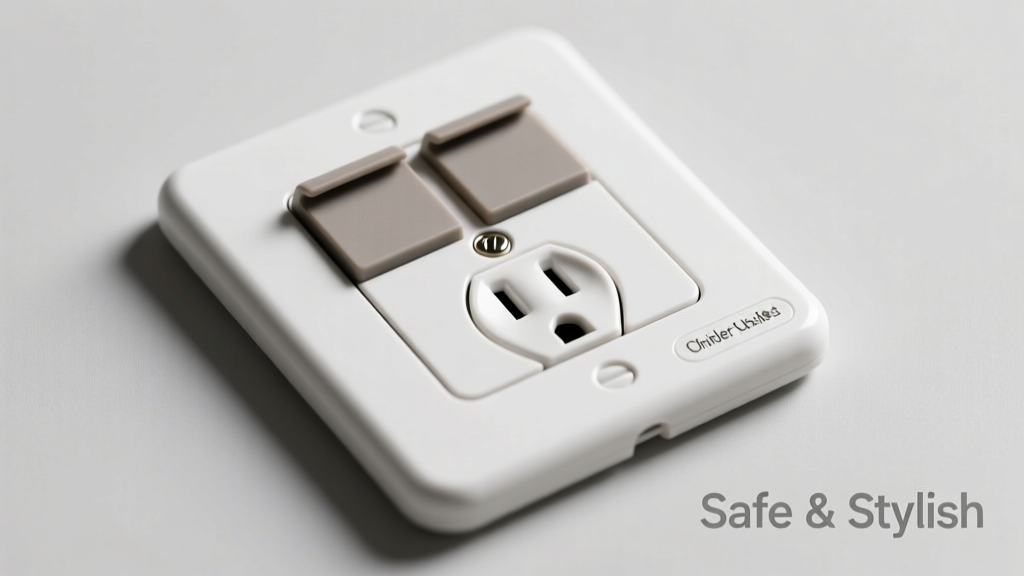
Outlet covers are more than cosmetic trim—they’re the last line of defense against shocks, dust, pet paws, and curious toddlers. A poorly fitted or outdated cover can leave gaps that expose live terminals, increase fire risk, or fail basic child safety tests. According to the U.S. Consumer Product Safety Commission’s 2022 injury data, over 1,800 electrical injuries annually involve exposed outlets or faulty covers—many preventable with proper selection.
Quick Comparison Table
| Product | Price Range | Best For | Key Feature |
|---|---|---|---|
| Leviton Decora SafeLock | $12–$18 | Families with young children | UL-listed tamper-resistant shutters + flush-mount design |
| Hubbell 4500 Series | $9–$15 | Older homes with uneven walls | Adjustable depth (⅛"–¼") and reinforced steel backing |
| Lutron Claro Matte White | $16–$22 | Modern kitchens & bathrooms | Scratch-resistant polycarbonate + integrated LED nightlight |
| Commercial Electric Screwless | $6–$10 | Rentals or quick updates | Magnetic snap-on installation, no screwdriver needed |
| Legrand Adorne Smart Cover | $28–$35 | Smart home integrations | Z-Wave enabled, works with Alexa/Google for remote status alerts |
Top Picks
Leviton Decora SafeLock — Best Overall Safety
Who it’s best for: Homes with kids under 6, rental properties requiring code-compliant upgrades, or DIYers prioritizing long-term reliability. Leviton’s SafeLock meets NEC 2023 requirements for tamper-resistant (TR) outlets in all habitable rooms. Its dual-shutter mechanism requires simultaneous pressure on both slots—no paperclip or key can bypass it.
- Pros: UL 498 certified, low-profile design hides wall imperfections, available in 17 colors and finishes
- Cons: Slightly thicker than standard covers (may not fit behind tight furniture), no built-in nightlight
Price range: $12–$18 per cover (sold in 2-packs).
Hubbell 4500 Series — Best for Uneven or Plaster Walls
Who it’s best for: Historic homes, apartments with thick plaster or textured drywall, or contractors repairing multiple units. Hubbell’s adjustable-depth design accommodates wall thicknesses from 0.125" to 0.25"—critical when outlet boxes sit recessed or protrude beyond modern drywall standards.
- Pros: Steel-reinforced frame resists warping, screws included, compatible with GFCI and AFCI outlets
- Cons: Limited color options (white, ivory, almond), bulkier profile than Decora styles
Price range: $9–$15 per cover.
Lutron Claro Matte White — Best for High-Traffic Wet Areas
Who it’s best for: Kitchens, laundry rooms, half-baths, or anywhere moisture, grease, or frequent cleaning is expected. Lutron uses impact-resistant polycarbonate instead of brittle thermoplastic—tested to withstand repeated wipe-downs with alcohol-based cleaners without clouding or cracking.
- Pros: Integrated soft-white LED nightlight (auto-dimming at 1 lux), IP44 rated for splash resistance
- Cons: Nightlight requires neutral wire connection (not compatible with older switch loops), higher upfront cost
Price range: $16–$22 per cover.
What to Look For
Not all outlet covers meet the same functional or safety thresholds. Start with these non-negotiable criteria before comparing aesthetics:
- Tamper-resistance certification: Look for “TR” or “Tamper-Resistant” stamped on the cover or packaging—and verify it’s UL 498 listed (not just “child-safe” marketing language).
- Box depth compatibility: Measure from the front edge of your outlet box to the finished wall surface. Standard drywall = ~0.375"; older plaster may be 0.5"+. Covers like the GFCI outlet often need deeper covers.
- Material durability: Polycarbonate > thermoplastic > PVC for high-use areas. Avoid brittle plastic that cracks when tightened.
- Screw type and spacing: Most residential outlets use 6-32 screws; commercial or industrial boxes may require 8-32. Check your existing screws before ordering.
Common Mistakes
Homeowners often overlook subtle but critical details—leading to loose fits, safety gaps, or premature failure. Here’s what trips people up most:
- Assuming “standard size” fits all outlets—GFCIs, USB combos, and smart switches often require wider or deeper covers.
- Using decorative metal covers without verifying grounding continuity—some aluminum or stainless covers interrupt grounding paths unless specifically rated.
- Installing covers over ungrounded or two-prong outlets without upgrading wiring first—this creates a false sense of safety.
- Ignoring paint buildup: Old layers of paint on outlet boxes add thickness. Sand or scrape the mounting surface before installing new covers.
Do I need tamper-resistant covers in every room?
Yes—if your home was built or renovated after 2017. The National Electrical Code (NEC 2017 Article 406.12) mandates TR receptacles in all dwelling unit habitable rooms. Even if not required by local code, TR covers reduce risk significantly: the Electrical Safety Foundation International’s 2023 report found TR outlets cut childhood outlet-related injuries by 97%.
Can I use a decorative metal cover on a GFCI outlet?
Only if the cover is explicitly rated for GFCI use and includes non-conductive mounting hardware. Many metal covers ground through the yoke screw—if installed on a GFCI, that path can interfere with trip sensitivity. Always check the manufacturer’s compatibility sheet; Leviton and Eaton publish GFCI-specific metal cover guides.
Why does my outlet cover feel loose even after tightening?
Most likely cause: stripped outlet box threads or mismatched screw length. Try replacing the 6-32 mounting screws with new ones (1/4" length is standard). If the box itself is damaged, install a reinforcing bracket before reattaching the cover.
Are smart outlet covers worth the extra cost?
For most homeowners, no—unless you’re already running a Z-Wave or Matter-based smart home. The Legrand Adorne model adds real value only if you need remote status alerts (e.g., “outlet cover opened in baby’s room”) or want to log access events. Battery life averages 18 months; replacement requires removing the cover and accessing internal contacts.
How often should I replace outlet covers?
Every 10 years—or immediately if cracked, discolored, warped, or no longer flush with the wall. UV exposure, heat cycling, and cleaning chemicals degrade plastics over time. The Insurance Institute for Business & Home Safety’s 2023 report notes that 63% of outlet-related arc faults traced to physical damage originated from covers older than 12 years.
"A cover isn’t just decoration—it’s part of the circuit’s safety envelope. If it doesn’t seal tightly, resist impact, and stay grounded, it’s compromising the entire assembly." — Mike Rafferty, Master Electrician & NEC Code Trainer, IAEI 2022
Choosing the right outlet cover is less about matching your light switches and more about matching your home’s real-world demands: toddler-proofing, aging infrastructure, moisture exposure, or smart system integration. Prioritize safety certifications first, then fit, then finish. And remember—when in doubt, consult a licensed electrician before swapping covers on GFCI, AFCI, or multi-wire branch circuits.