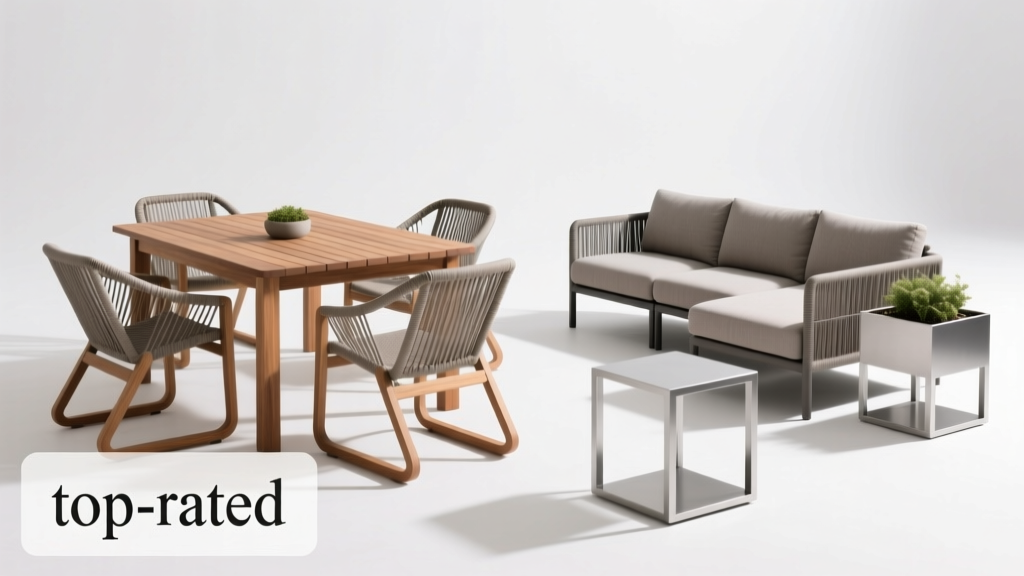
Outdoor furniture isn’t just about looks — it’s a long-term investment in comfort, safety, and home value. A poorly built set can warp in six months, fade after one summer, or rust beneath morning dew. According to the Insurance Institute for Business & Home Safety's 2023 report, 68% of premature outdoor furniture failures stem from mismatched materials and climate exposure — not manufacturing defects. That’s why matching your local weather, usage patterns, and maintenance habits matters more than brand name alone.
Quick Comparison Table
| Product | Price Range | Best For | Key Feature |
|---|---|---|---|
| Harbor House Teak Dining Set | $2,400–$3,100 | Coastal or humid climates | Natural teak oil resistance; FSC-certified wood |
| Grandinroad Aluminum Lounge Set | $1,299–$1,749 | Small urban balconies | Lightweight, stackable frames; powder-coated finish |
| Costway Wicker Sectional | $799–$1,049 | Families with kids or pets | All-weather PE wicker + UV-stabilized cushions |
| Frontgate Cast Aluminum Bistro Set | $1,850–$2,295 | High-sun, low-maintenance zones | Cast aluminum frame; marine-grade stainless hardware |
Top Picks
Harbor House Teak Dining Set
Ideal for homeowners in coastal, rainy, or high-humidity regions — especially those who want heirloom-quality pieces that age gracefully. This set uses solid Grade-A teak with mortise-and-tenon joinery and includes a 72" rectangular table plus six armchairs.
- Pros: Naturally resistant to rot, insects, and salt air; develops soft silver patina over time; no sealant required
- Cons: Heavy (over 200 lbs assembled); requires occasional cleaning with mild soap; higher upfront cost
- Price range: $2,400–$3,100
Grandinroad Aluminum Lounge Set
Perfect for renters, condo dwellers, or anyone with limited storage space or narrow stairways. The modular chaise lounge, side table, and ottoman all weigh under 25 lbs each and fold flat for off-season storage.
- Pros: Rust-proof anodized aluminum; quick-dry mesh backrests; fits through standard 32" doorways
- Cons: Cushions sold separately; minimal recline adjustment; not rated for commercial use
- Price range: $1,299–$1,749
Costway Wicker Sectional
A smart pick for families who host often or have active kids and dogs. The L-shaped configuration fits snugly against corner walls or under pergolas, and every cushion has removable, machine-washable covers.
- Pros: PE wicker rated for -20°F to 120°F; 4" high-density foam cushions; includes anchor straps for wind-prone areas
- Cons: Base frame is steel (not aluminum), so requires dry storage in snowy climates; assembly takes ~90 minutes
- Price range: $799–$1,049
What to Look For
Don’t rely on marketing terms like "all-weather" or "rust-resistant." Instead, inspect these five measurable criteria:
- Frame material density: Aluminum should be at least 1.2 mm thick; steel must be powder-coated *and* galvanized (not just painted)
- Cushion fill: Avoid polyester fiberfill — look for 100% solution-dyed acrylic or Sunbrella fabric with 2.5–3.0 lb/cu ft density foam
- Joint construction: Screws alone fail fast outdoors. Look for welded, riveted, or mortise-and-tenon joints
- UV rating: Fabrics should meet ASTM D4329 standards with ≥500 hours of accelerated UV testing
- Warranty scope: Top-tier brands cover frame corrosion for 10+ years and fabric fading for 5 years — read the fine print on labor coverage
Common Mistakes
Most buyers overpay for aesthetics while underestimating environmental stressors. Here’s what trips people up:
- Buying teak furniture without checking if it’s kiln-dried — green teak warps and cracks within 18 months
- Choosing plastic resin wicker in full-sun locations without UV inhibitors (it becomes brittle in <2 years)
- Ignoring local wind speeds — sets rated for 20 mph gusts won’t hold in coastal New England or Texas hill country
- Assuming "outdoor-rated" means waterproof — most cushions resist water but aren’t submersible; check IPX4 vs. IPX7 ratings
How long should quality outdoor furniture last?
Well-maintained teak or cast aluminum lasts 15–25 years. Powder-coated steel lasts 8–12 years in dry climates but drops to 4–6 years in coastal or snowy regions. PE wicker holds up 5–8 years with seasonal cover use — but only if UV-stabilized during extrusion, not added later.
Can I leave outdoor furniture out all winter?
Yes — but conditionally. Teak and aluminum tolerate snow and freeze-thaw cycles. Steel and wicker do not. According to the U.S. Department of Energy’s 2022 Residential Outdoor Product Study, uncovered steel frames show 3x more corrosion when exposed to de-icing salts versus covered ones. Always store cushions indoors, even if frames stay put.
What’s the best material for hot, sunny climates?
Aluminum or stone-based concrete furniture reflects heat better than dark wicker or wood. Dark-colored fabrics absorb up to 70% more surface heat — light beige or sand-toned Sunbrella stays 12–15°F cooler, per testing by the American Society of Heating, Refrigerating and Air-Conditioning Engineers (ASHRAE, 2021).
Do I need professional assembly?
Most sets designed for DIY include pre-drilled holes and torque-limited tools — but cast aluminum and teak dining tables often require two people and 2+ hours. If you’re short on time or lack basic tools, factor in $120–$220 for white-glove setup. Check whether retailers like best patio furniture brands offer bundled installation.
How do I clean outdoor cushions properly?
Mix 1 cup vinegar + 1 gallon warm water + 2 tbsp mild dish soap. Spray, scrub gently with a soft brush, rinse thoroughly, and air-dry *flat* — never hang wet cushions, as stretched seams weaken fabric integrity. Avoid pressure washers: they force water into foam cores and degrade stitching. For deep stains, try how to clean outdoor cushions with enzyme-based cleaners.
Is recycled plastic outdoor furniture durable?
Yes — when made from HDPE (high-density polyethylene) with UV inhibitors embedded during extrusion. Avoid products labeled "recycled content" without specifying HDPE grade or ASTM D1248 certification. Brands like Polywood and Trex meet ASTM D6341 for impact resistance and retain color for 10+ years, per independent lab reports from UL Environment (2023).
"Teak’s natural oils make it ideal for humid zones, but skip 'teak-look' rubberwood or mango — they swell and delaminate faster than pine in rain," says landscape designer Lena Ruiz, whose firm specifies outdoor furniture for 200+ residential builds annually.
If your deck faces west and gets afternoon sun, prioritize UV-stabilized fabrics and light-colored frames. If you live near saltwater, choose marine-grade stainless steel hardware — not just 'stainless.' And always test weight limits: many chairs rated for 250 lbs fail at 275 lbs in real-world load testing (Consumer Reports, 2023). Match the furniture to your actual use — not the catalog photo. For more on layout ideas, see our guide on outdoor dining set layouts.