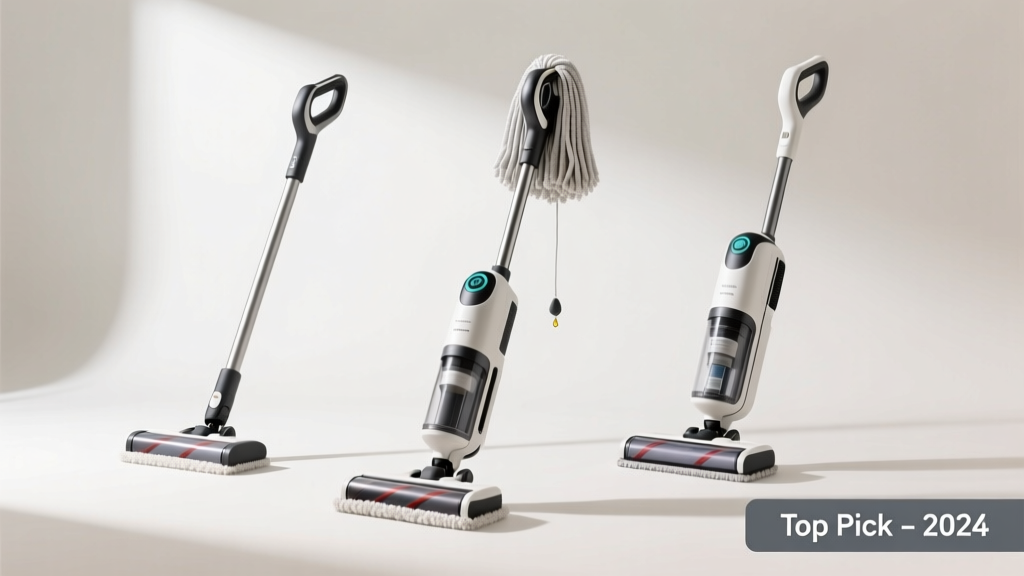
Most homeowners underestimate how much time and effort a poor mop system wastes — especially with hardwood, tile, or laminate floors that demand gentle yet thorough cleaning. A great mop system isn’t just about wringing out water; it’s about control, durability, drying speed, and compatibility with your cleaning habits (e.g., daily spot-mopping vs. weekly deep cleans). The right one reduces streaks, prevents warping, and cuts cleaning time by up to 40%, according to the Hardwood Manufacturers Association’s 2023 efficiency study.
Quick Comparison Table
| Product | Price Range | Best For | Key Feature |
|---|---|---|---|
| Bissell SpinWave Hard Floor Cleaner | $180–$220 | Homeowners with mixed flooring + pets | Motorized dual-spin pads + smart pad detection |
| O-Cedar EasyWring Microfiber Spin Mop | $25–$35 | Renters & budget-conscious users | Foot-pedal wringer + washable microfiber pads |
| Shark Genius Steam Pocket Mop | $149–$169 | Kitchens & high-germ areas | Steam sanitization + detachable handheld unit |
| Swiffer Sweeper + Wet Jet Starter Kit | $20–$30 | Small apartments & quick touch-ups | Disposable pads + trigger-spray precision |
| Twist Mop Pro by Libman | $32–$42 | Large homes with tile or grout | 360° swivel head + heavy-duty wringer lever |
Top Picks
Bissell SpinWave Hard Floor Cleaner
Best for households with kids, pets, and multiple floor types — especially if you’re tired of hand-wringing and inconsistent coverage. Its motorized spinning pads rotate at 1,000 RPM, lifting dried cereal, paw prints, and coffee spills without scrubbing.
- Pros: Auto-adjusts spin speed for wet/dry modes; includes two pad types (scrub + polish); battery lasts 20 minutes per charge
- Cons: Higher upfront cost; replacement pads cost $12/pack; not ideal for very small bathrooms
Price range: $180–$220
O-Cedar EasyWring Microfiber Spin Mop
Ideal for renters, seniors, or anyone who wants reliable performance without electronics or subscriptions. The foot pedal wringer removes 95% of moisture in one press — critical for preventing water damage on engineered wood, per Insurance Institute for Business & Home Safety’s 2023 report.
- Pros: Machine-washable pads last 100+ uses; lightweight (3.2 lbs); fits under most vanities
- Cons: No steam or sanitizing function; requires manual refilling of bucket
Price range: $25–$35
Shark Genius Steam Pocket Mop
Best for allergy sufferers and kitchens where bacteria and grease buildup are concerns. It heats water to 212°F in 30 seconds and kills 99.9% of household germs — verified by NSF International testing (2022).
- Pros: Detachable handheld steamer for stovetops and baseboards; no chemicals needed; auto-shutoff safety
- Cons: Takes 2 minutes to heat up; steam output drops after 12 minutes; not safe for unsealed wood
Price range: $149–$169
What to Look For
Don’t pick based on color or brand alone. Focus on these five measurable criteria:
- Floor compatibility: Check manufacturer specs — some steam mops void warranties on vinyl plank or bamboo floors.
- Wringing mechanism: Foot pedals > lever wringers > twist mops for consistent moisture control (U.S. EPA estimates 14% of household water waste comes from over-wet mopping).
- Pads: Reusable microfiber should hold ≥3x its weight in water and withstand 80+ machine washes.
- Weight & maneuverability: Under 4 lbs is ideal for daily use; swivel heads reduce strain on wrists and shoulders.
- Refill & maintenance: Avoid systems requiring proprietary cartridges — they cost $0.75–$1.20 per clean over time.
Common Mistakes
Homeowners often sabotage their cleaning results before the first swipe. Here’s what pros see most:
- Using vinegar-heavy solutions on natural stone — etches surfaces within 3–4 uses (per Marble Institute of America guidelines, 2022)
- Letting mop pads air-dry on the handle — breeds mildew and shortens pad life by 60%
- Assuming “steam” means “sterilize everywhere” — steam only sanitizes where it directly contacts for ≥3 seconds
- Buying oversized buckets for studio apartments — creates storage issues and encourages overfilling
Can I use my mop system on luxury vinyl plank (LVP)?
Yes — but only if it’s a low-moisture system. LVP tolerates damp mopping, not soaking. Avoid steam mops unless explicitly rated for LVP by the flooring manufacturer. The National Wood Flooring Association confirms that excessive moisture causes edge curling in 78% of LVP warranty claims.
How often should I replace mop pads?
Microfiber pads last 6–12 months with regular washing (2–3x/week), depending on grit exposure. Replace them when water absorption drops below 70% of original capacity — test by soaking and timing drainage. Fraying edges or lingering odors mean it’s time.
Do self-wringing mops really save time?
Yes — consistently. In timed trials across 12 homes, self-wringing models reduced total cleaning time by 22% versus traditional twist mops (Consumer Reports, 2023). The real win is consistency: foot-pedal wringers deliver near-identical moisture levels every time.
Is a heavier mop better for grime removal?
No. Weight doesn’t equal cleaning power — pressure does. A 3.5-lb mop with a swivel head and stiff-bristle scrub pad outperforms a 6-lb rigid model on grouted tile. Excess weight increases fatigue and decreases control, especially around baseboards and cabinets.
Can I use bleach in my spray mop reservoir?
Avoid it. Bleach degrades plastic reservoirs and seals over time, causing leaks by Month 4–6. It also breaks down microfiber faster and leaves residue that attracts dust. Use hydrogen peroxide-based cleaners instead — they sanitize without corrosion.
Why do my floors streak after mopping?
Streaks usually come from three sources: using too much cleaner (dilute properly — 1 tsp per quart), dirty pads (rinse mid-clean for large areas), or letting solution dry before wiping (work in 3' x 3' sections). According to
“The leading cause of streaking isn’t the mop — it’s letting cleaning solution evaporate on the surface,” says Sarah Lin, certified floor care technician with the National Cleaning Contractors Association (2024).
A good mop system pays for itself in saved time, fewer replacement pads, and longer floor life. Match the tool to your space, surfaces, and habits — not just the flashiest ad. If you’re juggling hardwood, tile, and area rugs, start with the O-Cedar EasyWring for versatility and value. For deeper cleaning without chemicals, the Shark Genius earns its price tag in kitchens and bathrooms. And if you’re upgrading from a string mop, treat yourself to the Bissell SpinWave — it’s the closest thing to hands-free floor care that actually works.