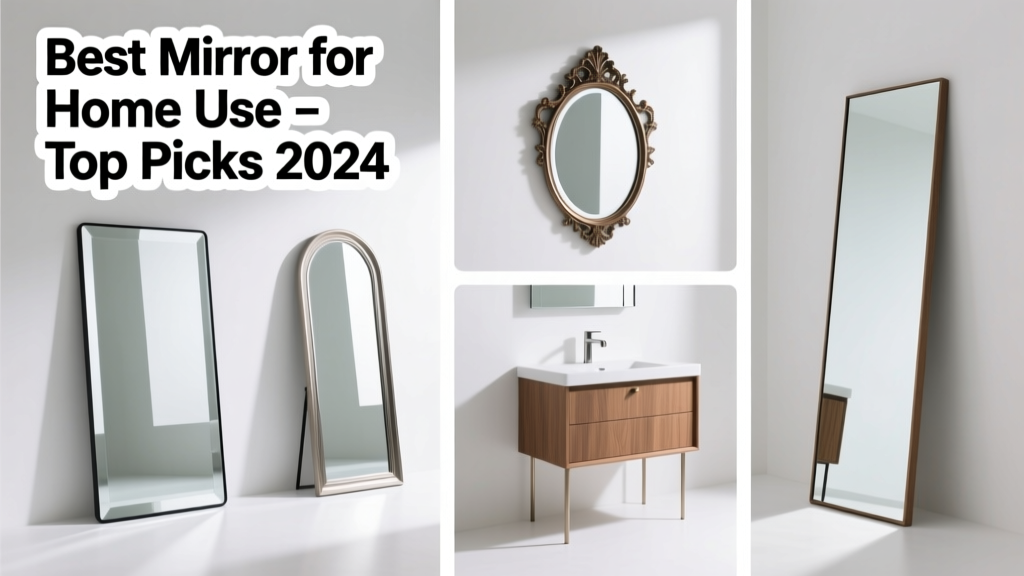
Mirrors do far more than reflect—they shape light, expand perception, and anchor room design. A poorly chosen mirror can distort proportions, create glare, or even become a safety hazard in high-traffic areas like hallways or bathrooms. According to the U.S. Consumer Product Safety Commission’s 2022 injury report, improperly mounted full-length mirrors account for nearly 3% of home-related laceration incidents among adults aged 45–64.
Quick Comparison Table
| Product | Price Range | Best For | Key Feature |
|---|---|---|---|
| Kohler Verdera Smart Mirror | $499–$749 | Bathroom vanity with tech needs | Integrated defogger + Bluetooth speaker + LED lighting |
| Umbra Trino Full-Length | $129–$189 | Bedroom or entryway | Tempered glass, anti-slip floor pads, adjustable tilt |
| Home Depot Everbilt Framed Wall Mirror | $45–$85 | DIY renters or budget-conscious buyers | Pre-drilled holes, lightweight MDF frame, easy wall-mount |
| West Elm Arlo Oversized | $299–$429 | Living room focal point | Beveled edge, solid wood frame, wall-safe D-rings |
| Simple Houseware Stainless Steel | $24–$39 | Gym or laundry room | Rust-resistant, shatterproof acrylic, non-slip backing |
Top Picks
Kohler Verdera Smart Mirror
Ideal for modern bathrooms where function meets form—especially if humidity and fogging are daily frustrations. Its built-in defogger activates automatically when steam hits the sensor, and the adjustable 4,000K LED lighting mimics natural daylight for accurate makeup or shaving application.
- Pros: Touchless controls, IP44-rated for wet zones, app-synced brightness presets
- Cons: Requires hardwiring (not plug-and-play), limited to 24"–36" widths
- Price range: $499–$749
Umbra Trino Full-Length Mirror
Perfect for apartments or homes with narrow hallways—its slim 1.5" depth and 72" height maximize vertical space without crowding. The tempered glass is ASTM F1265-compliant, meaning it won’t splinter into sharp shards if impacted.
- Pros: Floor-standing stability, reversible black/white frame, no tools needed for assembly
- Cons: No wall-mount option included; base adds 4" to footprint
- Price range: $129–$189
Home Depot Everbilt Framed Wall Mirror
A go-to for first-time homeowners tackling their first bathroom refresh. At just 18 lbs, it’s light enough for one person to hang—and the pre-aligned D-ring hardware eliminates guesswork during leveling.
- Pros: Includes drywall anchors and screws, frame resists chipping, 1-year warranty
- Cons: Glass is standard float—not tempered; frame finish shows scuffs after 6+ months
- Price range: $45–$85
What to Look For
Not all mirrors perform equally—even within the same size class. Prioritize these five criteria before clicking 'add to cart':
- Glass type: Tempered glass is non-negotiable for bathrooms, kids’ rooms, or anywhere impact risk exists. It’s required by IRC R308.3 for mirrors installed below 60" from finished floor.
- Mounting system: Look for dual-point hanging (D-rings or French cleats) over single hooks—especially for mirrors over 24" wide.
- Frame material: Solid wood or aluminum holds up better than MDF in humid environments. Avoid particleboard frames in bathrooms.
- Edge treatment: Beveled or polished edges resist chipping and add visual weight; raw-cut edges suggest cost-cutting on quality control.
- Lighting integration: If choosing a backlit or smart mirror, verify color temperature (2700K–4000K ideal) and CRI >90 for true-color rendering.
Common Mistakes
Many shoppers overspend on aesthetics while skipping foundational checks. Here’s what trips people up most often:
- Assuming “anti-fog” means permanent—most coatings wear off after 6–12 months unless paired with heat or ventilation.
- Hanging large mirrors directly into drywall without toggle bolts—causing sagging or sudden detachment.
- Choosing oversized mirrors for small rooms without verifying sightlines: a 36"-wide mirror centered on a 30" vanity creates awkward framing and wasted wall space.
- Overlooking lighting placement: side-mounted sconces at eye level reduce shadows better than overhead fixtures for grooming tasks.
How high should I hang a bathroom mirror?
Center the mirror at 57–60 inches above the floor—the average eye level for seated and standing users. If pairing with a vanity, leave 2–3 inches between the countertop and mirror’s bottom edge. This aligns with ADA guidelines and prevents constant head-tilting.
Are acrylic mirrors safe for kids’ rooms?
Yes—if they’re ASTM F963-certified for toy safety. Acrylic reflects ~90% of light vs. glass’s 95%, but it won’t shatter on impact. Just avoid thin-gauge acrylic (<1/8") which warps over time. For durability, consider acrylic mirrors rated for wall mounting.
Do LED-backlit mirrors need an electrician?
Hardwired models do—but many newer options (like the Kohler Verdera) include plug-in kits with UL-listed transformers. Always check local code: California Title 24 requires GFCI protection for any bathroom outlet within 6 feet of water sources.
Can I hang a heavy mirror on plaster walls?
Yes—but only with masonry anchors or toggle bolts rated for plaster’s hollow cavity behind lath. Standard plastic anchors will spin out. Pro tip: Tap the wall first—if it sounds hollow and gives slightly, it’s likely plaster-over-lath, not drywall.
What’s the best way to clean a mirrored surface without streaks?
Mix 1 part white vinegar with 4 parts distilled water in a spray bottle. Apply with a microfiber cloth—not paper towels—to avoid lint and scratching. Never use ammonia-based cleaners on silvered backing—they degrade the reflective layer over time. For stubborn adhesive residue, try rubbing alcohol on a cotton swab.
Is a beveled mirror worth the extra cost?
For spaces where light reflection matters—entryways, dining rooms, or studios—yes. A 1" bevel adds depth and diffuses glare, especially under recessed lighting. But in tight bathrooms or utility closets, the premium ($40–$120 more) rarely delivers functional ROI.
"A mirror isn’t just decorative—it’s a structural lighting tool. In our residential lighting audits, properly placed mirrors increased usable foot-candles by up to 30% in windowless powder rooms." — Sarah Lin, Lighting Designer, Illuminex Studio, 2023
Whether you’re refreshing a rental bathroom or designing a primary suite, the right mirror balances safety, clarity, and intentionality. Start with your room’s primary function—grooming, spatial illusion, or style statement—then lock in specs that support it. Skip the flashy extras unless they solve a real problem. And always double-check mounting hardware against your wall type before unpacking the box.