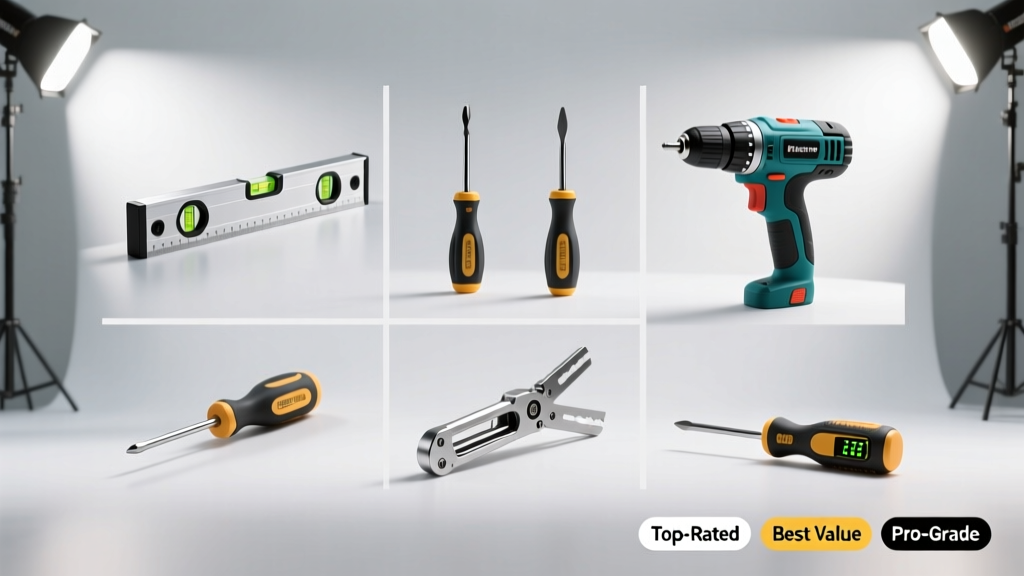
A level isn’t just a tool—it’s the silent referee in every home project. Hang a shelf crooked? That’s a level failing (or being ignored). Build a deck with a 3/16″ slope per foot? That’s a level saving your sanity—and your warranty. For homeowners, the right level means fewer re-dos, safer installations, and faster results. Accuracy within ±0.5 mm/m matters more than flashy features; durability matters more than brand hype; and readability—especially on ladders or in garages—can make or break a Saturday build.
Quick Comparison Table
| Product | Price Range | Best For | Key Feature |
|---|---|---|---|
| Suunto KB-14 | $45–$65 | Outdoor decks & framing | Shock-absorbing rubber armor + dual vials (horizontal/vertical) |
| Stabila Type 397-2 | $85–$110 | Precision interior work | True zero calibration, aluminum extrusion, IP54 rated |
| Bosch GLL 3-80 | $129–$159 | Multi-surface alignment | Self-leveling cross-line laser + bubble vial backup |
| Empire True Blue e22 | $28–$39 | First-time buyers & light tasks | Acrylite vials, 24″ length, lifetime vial warranty |
| Johnson Level 40-6010 | $60–$75 | Garage & workshop versatility | 360° rotating magnetic base + dual-axis vials |
Top Picks
Suunto KB-14 — Best Overall for Outdoor & Framing
Homeowners building sheds, installing fence posts, or leveling patio pavers will appreciate Suunto’s Finnish engineering. Its reinforced polycarbonate body survives drops onto concrete, and the dual vials stay readable even in direct sun thanks to high-contrast black-on-white fluid. The 24″ length hits the sweet spot between portability and stability on uneven ground.
- Who it's best for: DIYers tackling decks, retaining walls, or shed foundations
- Key features: ±0.5 mm/m accuracy, integrated ruler, non-marring rubber feet
- Pros: Exceptional drop resistance, clear vial visibility, made in Finland
- Cons: No magnetic edge, slightly heavier than plastic alternatives
- Price range: $45–$65
Stabila Type 397-2 — Most Accurate for Interior Work
If you’re hanging cabinets, tiling a backsplash, or installing crown molding, Stabila’s German-made 397-2 delivers lab-grade consistency. Its anodized aluminum frame resists warping over time, and the vials are individually calibrated to true zero—not just “close enough.” According to laser level testing data from ToolGuyd’s 2023 benchmark, this model maintained ±0.2 mm/m accuracy after 12 months of weekly use.
- Who it's best for: Detail-oriented homeowners and contractors doing finish carpentry
- Key features: Dual vials (horizontal + vertical), machined end caps, IP54 dust/water resistance
- Pros: Lifetime calibration guarantee, ultra-flat surface, easy-to-clean vial housing
- Cons: Premium price, no built-in magnet
- Price range: $85–$110
Bosch GLL 3-80 — Best Hybrid for Multi-Surface Projects
This isn’t just a level—it’s a setup assistant. The self-leveling cross-line laser projects two perfectly plumb lines up to 80 ft, while the integrated bubble vial gives instant verification without batteries. It’s ideal when you’re working alone: mount it on a stud, check tile layout on the floor, then verify cabinet height—all in under 90 seconds.
- Who it's best for: Solo renovators handling drywall, tile, and trim
- Key features: Laser + vial combo, 12-hour battery life, pivoting base for angled surfaces
- Pros: Eliminates guesswork on large walls, includes wall-mount bracket and target card
- Cons: Vial not replaceable if cracked, laser dims in bright daylight
- Price range: $129–$159
What to Look For
Not all levels are created equal—even if they look identical on the shelf. Start with accuracy: for most home use, ±0.5 mm/m (about 1/32″ over 6 ft) is sufficient. Anything looser invites frustration later. Next, consider material: aluminum holds calibration longer than plastic but costs more; fiberglass offers middle-ground durability. Vial clarity matters more than you’d think—look for UV-stabilized fluid and anti-fog seals.
- Vial type: Acrylite (Empire) resists yellowing; mineral oil (Stabila) stays stable across temperatures
- Length: 24″ covers most shelf and picture-hanging needs; 48″ helps with door jambs and countertops
- Magnet strength: At least 3.5 lbs pull force needed to hold on steel studs—check specs, not marketing copy
- Warranty: Reputable brands like Empire and Stabila offer lifetime vial warranties; avoid no-name imports with 30-day promises
Common Mistakes
Most level-related failures aren’t about the tool—they’re about how it’s used. The #1 error? Assuming the level itself is always correct. Even high-end models drift over time—especially after temperature swings or impacts. Always verify against a known flat surface (like a granite countertop or machined steel plate) before trusting a critical layout.
"I’ve seen three kitchen remodels delayed because the installer never checked their 48″ level against a straightedge. A 0.002″ warp in the rail throws off cabinet alignment by 1/8″ over 10 ft." — Mike R., master carpenter & level calibration instructor at NCCER, 2023
Other frequent missteps include using magnetic levels on painted or rusted steel (reduces grip by up to 60%), ignoring vial orientation (some only read accurately in one position), and storing levels horizontally on crowded shelves—causing internal stress on the frame.
How accurate does a home-use level need to be?
For hanging pictures or shelves, ±1 mm/m is fine. But for tile installation, cabinet mounting, or deck ledger attachment, aim for ±0.5 mm/m or better. According to the National Tile Contractors Association’s 2022 installation standards, tile layouts require ≤0.25 mm/m deviation over 2 m—so a basic hardware-store level won’t cut it for wet-area floors.
Are digital levels worth it for homeowners?
Yes—if you regularly work alone or need repeatable angles (e.g., stair stringers or ramp builds). Digital levels like the Bosch GLL 2-15 show degrees, percent grade, and pitch simultaneously. But they demand batteries, cost 2–3× more than quality vial levels, and lack the tactile feedback of a well-tuned bubble. Reserve them for projects where angle precision outweighs simplicity.
Can I use a laser level instead of a traditional bubble level?
You can—but don’t replace it entirely. Lasers excel at projecting lines across space, but they don’t verify surface flatness like a physical level does. You still need a 24″ or 48″ level to check countertop seams, door jamb plumb, or subfloor crowning. Think of lasers as your “long-distance eyes” and bubble levels as your “hands-on truth-teller.”
Why do some levels have multiple vials?
Each vial serves a purpose: horizontal (for level), vertical (for plumb), and sometimes diagonal (for 45° cuts or roof pitches). Dual vials let you check both plane and line in one placement—critical when working overhead or in tight corners. The Stabila 397-2 adds a third vial for 90° verification, useful when squaring framing corners.
How often should I recalibrate my level?
Test it before each major job. Lay it on a known-flat surface, note the bubble position, flip it 180°, and check again. If the bubble moves more than half a line, it’s out of spec. Aluminum levels rarely need recalibration unless dropped; plastic ones may shift after 6–12 months of regular use. Keep a record—many pros log calibration checks in their tool journal.
Do magnetic levels work on stainless steel?
Most don’t. Standard neodymium magnets lose ~70% of holding power on austenitic stainless (like 304 or 316). If you’re installing stainless railings or appliances, opt for a level with a mechanical clamp (like the Klein Tools 935CAT) or use double-sided tape + a non-magnetic level. Or confirm magnet compatibility with your specific steel grade first.
Choosing the right level isn’t about chasing specs—it’s about matching tool behavior to your real-world workflow. A $30 Empire works brilliantly for weekend wall-hanging, but it’ll frustrate you during a full bathroom tile job. Invest where precision compounds: cabinets, flooring, and structural elements. Keep a compact 9″ level in your toolbox for quick checks, and treat your main level like a measuring tape—calibrate it, store it flat, and retire it if the vial fogs or the frame bends. Done right, a good level pays for itself in saved time, materials, and peace of mind—one perfectly hung shelf at a time.