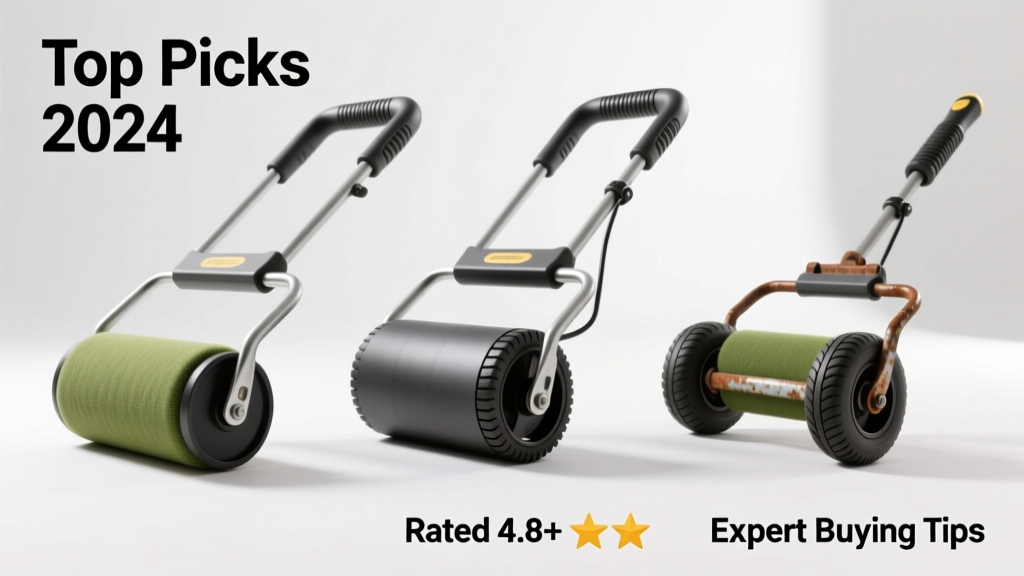
A lawn roller isn’t just for golf courses or sod installers — it’s a practical tool for homeowners tackling bumps, bare spots, or uneven seedbeds. Used correctly (and sparingly), it helps firm soil, press down sod, or smooth newly seeded areas. But overuse compacts soil, harms roots, and wastes time — so choosing the right one matters more than you think. Weight, material, fill options, and maneuverability all affect real-world performance on your yard.
Quick Comparison Table
| Product | Price Range | Best For | Key Feature |
|---|---|---|---|
| Agri-Fab 45-0473 | $120–$150 | Medium to large lawns with sod or overseeding | 180-lb capacity with water-fill system and pneumatic tires |
| Brinly-Hardy PR-24BH | $90–$115 | Small yards and light-duty leveling | Steel drum, 160-lb max fill, compact 24" width |
| Scotts Turf Builder 24 in. | $55–$75 | First-time users & tight budgets | Lightweight poly drum, no-fill design (35 lbs empty) |
| Earthwise LW1001 | $85–$105 | Eco-conscious buyers | BPA-free poly drum, 120-lb water capacity, rust-proof frame |
Top Picks
Agri-Fab 45-0473 — Best Overall Performance
This 36-inch steel drum roller handles everything from post-sodding compaction to spring prep on half-acre lots. Its dual-chamber water-fill system lets you dial in weight precisely — up to 180 lbs — and the 10-inch pneumatic tires roll smoothly over gravel driveways and rough edges without digging in.
- Who it’s best for: Homeowners with 5,000+ sq ft lawns who lay sod, reseed, or battle persistent low spots
- Key features: Reinforced steel frame, quick-drain valve, adjustable handle height, 3-year limited warranty
- Pros: Excellent weight distribution, durable finish, easy to drain and store
- Cons: Heavier when full (requires two people to lift onto a trailer), pricier than entry models
Price range: $120–$150
Brinly-Hardy PR-24BH — Best for Small Yards & Precision Work
At 24 inches wide and built with a seamless steel drum, this roller excels where space is tight — think narrow side yards, raised beds, or patching around patios. It holds up to 160 lbs of sand or water and has a simple, bolt-tightened axle that stays aligned season after season.
- Who it’s best for: Urban gardeners, townhouse owners, and those maintaining under 3,000 sq ft
- Key features: Powder-coated steel drum, 1.25" axle, flat-free wheels, made in the USA
- Pros: Compact footprint, rust-resistant coating, reliable build quality
- Cons: No quick-release valve; draining requires tipping or siphoning
Price range: $90–$115
Scotts Turf Builder 24 in. — Best Budget Option
If you’re rolling once a year to flatten mole hills or tamp down grass seed, this lightweight poly roller gets the job done without breaking the bank. At just 35 lbs empty and only 24 inches wide, it’s easy to store in a garage corner or shed shelf — and it won’t dent asphalt or pavers like heavier models can.
- Who it’s best for: First-time buyers, renters, or those with minimal grading needs
- Key features: UV-stabilized poly drum, molded-in handles, no-fill design
- Pros: Extremely portable, zero maintenance, safe on delicate surfaces
- Cons: Limited effectiveness on clay soils or deep ruts; no weight adjustment
Price range: $55–$75
What to Look For
Not all rollers are created equal — and many fail where it counts: durability, control, and soil health impact. Here’s what actually matters, backed by turf science and landscape contractor feedback.
- Weight adjustability: Look for water- or sand-fill systems (not fixed-weight units) so you can match pressure to soil type — e.g., 70–100 lbs for seeding, 120–160 lbs for sod
- Drum material: Steel lasts longer but adds weight; high-density poly resists rust and won’t stain concrete — critical if you store it outside
- Tire type: Pneumatic tires absorb shock and prevent gouging; solid rubber wheels work fine on pavement but skip over soft soil
- Width vs. yard size: Under 3,000 sq ft? Stick with 24"–30". Over 5,000 sq ft? Go 36" to cut passes in half — but verify your gate clearance first
According to the University of Minnesota Extension’s Turfgrass Management Guide (2022), “Rolling should never exceed one pass per season on established lawns — excessive compaction reduces oxygen diffusion by up to 40% in topsoil.”
Common Mistakes
Homeowners often treat lawn rollers like magic wands — dragging them across wet clay, using them weekly, or assuming heavier is always better. These habits do more harm than good.
- Rolling when soil is wet: Creates hardpan layers that repel water and stunt root growth — wait until soil is moist but crumbly, not sticky
- Using on mature lawns regularly: Compaction builds up over time; most healthy lawns need rolling only during installation or major renovation
- Ignoring gate or pathway width: A 36" roller won’t fit through a standard 32" backyard gate — measure before ordering
- Filling with sand instead of water: Sand doesn’t drain and can corrode steel drums from the inside — water is safer and easier to manage
When is the best time to roll my lawn?
Early spring (after frost but before heavy rains) or early fall (6–8 weeks before first frost) are ideal. Soil temperature should be above 50°F and moisture content moderate — test by squeezing a handful: it should hold shape briefly, then crumble.
Can I use a lawn roller to fix a bumpy yard long-term?
No — rolling only addresses surface irregularities temporarily. For lasting results, combine rolling with core aeration, topdressing, and overseeding. Persistent bumps often stem from poor drainage or buried debris, not just loose soil.
Do I need to rent or buy a lawn roller?
If you’ll use it more than twice in three years, buying pays off. Rental units ($35–$55/day) often lack maintenance — worn bearings or bent axles cause uneven pressure. Plus, owning means you can roll at the optimal window, not when the rental shop is open.
Is there a difference between a lawn roller and a cultipacker?
Yes. A lawn roller compresses soil uniformly with a smooth drum; a cultipacker has ridged or grooved rollers designed specifically for seed-to-soil contact in agricultural settings. Cultipackers tear up residential turf — avoid unless you’re planting native grasses on bare subsoil.
How do I store my lawn roller properly?
Drain completely, wipe dry, and store upright or suspended — never on its drum. Steel units left filled risk internal rust; poly drums left in direct sun degrade faster. Hang it on wall brackets like these heavy-duty garage storage racks to save floor space and protect the axle.
Can I attach a lawn roller to my riding mower?
Some models (like the Agri-Fab 45-0473) offer hitch kits, but only if your mower’s rear hitch is rated for dynamic loads over 200 lbs. Most residential mowers aren’t engineered for pulling — check your owner’s manual. Better yet, push it manually: you’ll feel resistance changes and avoid over-compacting.
Choosing the right lawn roller isn’t about heft or brand hype — it’s about matching tool capability to your yard’s real conditions and your actual usage pattern. Skip the impulse buy. Measure your gates, assess your soil, and pick a model that supports healthy turf — not just instant flatness. For related tools, see our guides on best core aerators and best topdressing rakes.