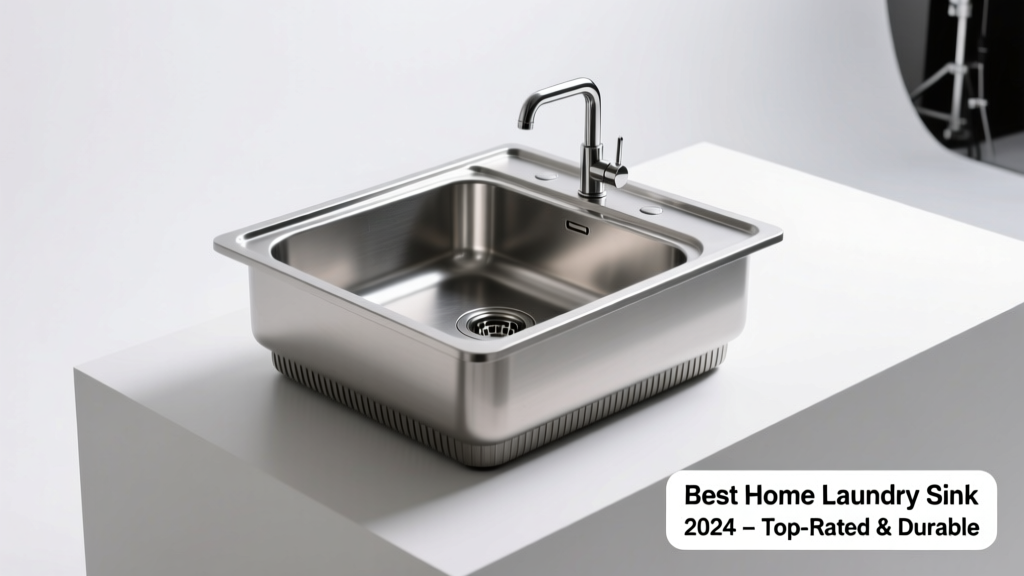
A dedicated laundry sink isn’t just a convenience — it’s a workhorse that handles stain pre-treatment, pet baths, muddy boots, and overflow from front-load washers. With 68% of U.S. households reporting at least one major plumbing issue tied to undersized or poorly installed utility sinks (Plumbing Manufacturers Institute, 2022), choosing the right model matters more than ever. Look beyond aesthetics: depth, material integrity, drain placement, and compatibility with your faucet and floor framing are non-negotiables.
Quick Comparison Table
| Product | Price Range | Best For | Key Feature |
|---|---|---|---|
| Elkay LKAD332210 | $295–$375 | DIY installers & tight spaces | Stainless steel, 10" depth, rear-drain design |
| Moen 30202 | $420–$510 | Heavy-duty home laundries | Commercial-grade 16-gauge steel, integrated faucet deck |
| Swanstone QL-3322 | $380–$460 | Wet-dry vacuum + laundry combo | Non-porous solid surface, 12" depth, ADA-compliant slope |
| Horizon HLN-3022 | $175–$230 | Budget-conscious remodels | Heavy-duty polypropylene, reinforced rim, 9" depth |
Top Picks
Elkay LKAD332210 — Best Overall Value
This 33" × 22" stainless steel sink strikes the rare balance between commercial durability and residential ease of installation. Its rear-drain configuration avoids interference with base cabinets, and the 10" depth prevents splashing during vigorous scrubbing or bucket-filling.
- Ideal for homeowners installing in existing laundry rooms with standard 24" deep base cabinets
- Includes mounting clips and template; no specialty tools required
- Compatible with both wall-mounted and deck-mounted faucets
Pros: Rust-resistant finish, NSF-certified for food-safe cleaning tasks, lifetime limited warranty. Cons: No built-in shelf or soap dispenser; faucet sold separately. Price range: $295–$375.
Moen 30202 — Best for Heavy-Duty Use
If you’re washing hunting gear, sports uniforms, or managing a multi-pet household, this 16-gauge stainless model is engineered for impact resistance and long-term corrosion control. Its 11.5" depth and 36" × 23" footprint accommodate large buckets and wet vacuums without crowding.
- Faucet deck supports Moen’s 1200 series pull-down sprayers out of the box
- Reinforced rim accepts heavy-duty drain assemblies (e.g., heavy-duty pop-up drains)
- Pre-drilled holes match standard 8" centers for widespread faucets
Pros: Commercial-grade construction, smooth welded seams prevent grime buildup, meets ANSI A112.19.3/ASME A112.19.3 standards. Cons: Requires reinforced floor joists due to weight (~72 lbs empty); not recommended for mobile home installations. Price range: $420–$510.
Swanstone QL-3322 — Best for Multi-Function Spaces
This solid-surface sink blends seamlessly into mudrooms, garage workshops, or accessible laundry areas. Its non-porous, seamless construction resists mold and staining — critical if you’re also using it for paint cleanup or gardening tool rinsing.
- ADA-compliant 30° basin slope aids drainage and wheelchair access
- Can be undermounted, top-mounted, or integrated into custom countertops
- Available in 12 colors — including matte gray and warm white — to match laundry room flooring palettes
Pros: Seamless repairability (scratches can be sanded out), zero maintenance sealing, 25-year warranty. Cons: Higher upfront cost; professional installation strongly advised. Price range: $380–$460.
Horizon HLN-3022 — Best Budget Pick
Don’t mistake affordability for compromise: this polypropylene sink delivers surprising rigidity thanks to its ribbed underside and 1.25" reinforced rim. At just 42 lbs, it’s ideal for second-floor laundry rooms where weight is a concern.
- Includes adjustable leveling feet for uneven subfloors
- Drain outlet accepts both 1.5" and 2" PVC adapters
- UV-stabilized resin prevents yellowing in sunlit utility rooms
Pros: Impact-resistant, chemical-resistant, easy to clean with vinegar/water. Cons: Not suitable for boiling water exposure; slight flex under extreme load. Price range: $175–$230.
What to Look For
Not all laundry sinks are built for the same job. Prioritize these five criteria before measuring your space or opening your wallet:
- Depth: Minimum 9" — 10"–12" is optimal for soaking and bucket use without splashback
- Material: Stainless steel (16–18 gauge), solid surface, or reinforced polypropylene — avoid thin-gauge enameled steel
- Drain location: Rear-drain models maximize cabinet storage; center-drain suits island setups
- Faucet compatibility: Verify hole pattern (e.g., 4" centers vs. 8" widespread) matches your chosen fixture
- Load rating: Check manufacturer specs — some sinks list max static load (e.g., “150 lbs evenly distributed”)
Common Mistakes
Homeowners often overlook structural and functional realities until after installation. Here’s what trips people up most:
- Assuming any “utility sink” will handle laundry duties — many are designed only for light janitorial use
- Skipping joist reinforcement for steel sinks over second-floor subfloors (leading to sagging or cracked grout)
- Ignoring local code requirements for trap primers or air gaps when connecting to washer discharge lines
- Choosing a sink too wide for your door frame — standard 33" models won’t fit through many 30" interior doors without disassembly
"Over 40% of laundry sink returns stem from mismatched drain rough-ins or insufficient cabinet depth — not product defects." — National Kitchen & Bath Association, 2023 Remodeler Survey
How deep should a laundry sink be?
For true functionality — think soaking jeans, rinsing mop buckets, or filling a portable washer — aim for 10" to 12" of interior depth. Sinks under 9" cause frequent splashing and limit usable volume. The U.S. EPA estimates that deeper sinks reduce water waste by up to 18% per load by minimizing refill cycles during hand-washing tasks.
Can I install a laundry sink myself?
Yes — if you’re comfortable cutting drywall, securing framing, and making P-trap connections. Elkay and Horizon models include detailed DIY guides and video support. But solid surface or undermount sinks (like Swanstone) require precise countertop templating and adhesive bonding best left to licensed contractors. Always check your local plumbing code: some jurisdictions require permits for new drain lines or relocated vents.
Do I need a special faucet for a laundry sink?
You don’t *need* one — but you’ll want one. Standard bathroom faucets lack the reach and flow rate (minimum 2.2 GPM) needed for efficient bucket filling or spray-rinsing. Go for a high-arc, pull-down or gooseneck faucet with a 12"+ spout reach and ceramic disc valves. Models like the Delta RP11720 include dual-function sprayers and threaded shanks for secure deck mounting.
What’s the difference between a laundry sink and a utility sink?
Legally and functionally, they’re nearly identical — both fall under ASME A112.19.3 standards. But “laundry sink” implies features tailored to textile care: deeper basins, smoother radius corners (to prevent fabric snagging), and drain configurations that accommodate washer discharge hoses. Utility sinks may prioritize chemical resistance over ergonomics — useful in garages, less so in primary laundry rooms.
Are stainless steel laundry sinks noisy?
Uninsulated stainless sinks *can* echo — especially with hard-soled shoes or metal buckets. Mitigate this with factory-applied sound-deadening pads (standard on Moen and Elkay premium lines) or aftermarket rubberized undercoating kits. Solid surface and polypropylene models inherently dampen sound better than bare steel.
How do I clean and maintain a laundry sink?
Stainless: Use baking soda paste and a soft sponge weekly; avoid chlorine bleach, which pits the finish. Solid surface: Wipe with mild dish soap and water — never abrasive powders. Polypropylene: Rinse after chemical use (e.g., degreasers) to prevent micro-cracking. All types benefit from monthly vinegar-and-water flushes to dissolve mineral buildup in drains — especially important if you’re using detergents formulated for hard water.
A well-chosen laundry sink pays dividends for years — fewer clogs, safer handling of messy tasks, and quieter, more efficient workflows. Match the sink to how you actually use your laundry space, not just how it looks on paper. And remember: if your current setup has you balancing buckets on folded towels or dodging splash zones, it’s not a chore — it’s a sign your sink has outlived its purpose.