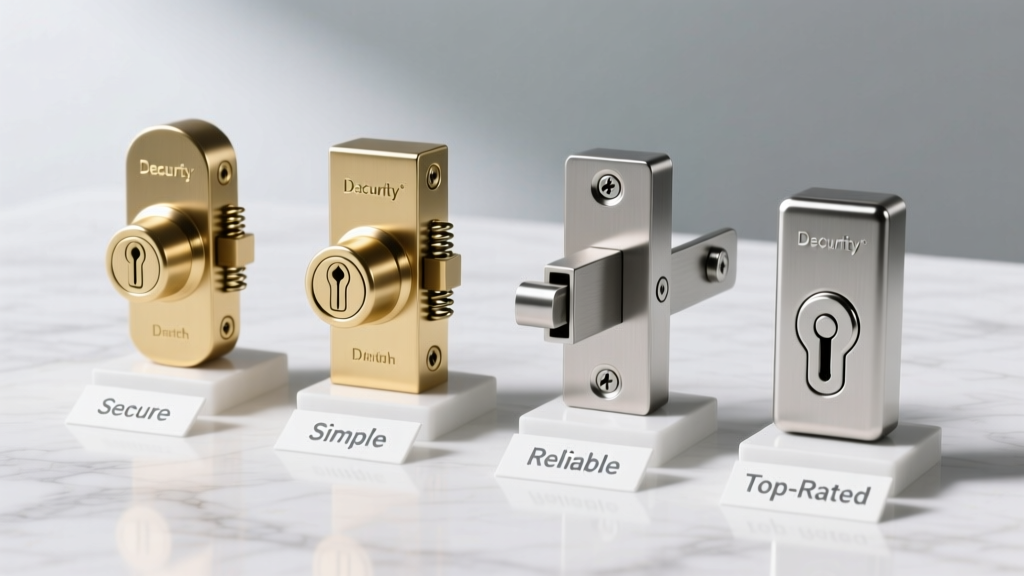
Latches are the quiet guardians of home security and convenience — holding cabinet doors shut in a toddler’s reach, keeping storm doors from slamming, or securing a backyard gate against wind or wandering pets. Yet most homeowners overlook them until something fails: a spring-loaded catch snaps, a magnetic latch loses grip in humidity, or a surface-mounted bolt rattles loose after six months. Choosing the right latch means matching material, mechanism, and mounting style to your specific use case — not just picking what’s cheapest or prettiest.
Quick Comparison Table
| Product | Price Range | Best For | Key Feature |
|---|---|---|---|
| Rockwell R810 Magnetic Cabinet Latch | $8–$14 | Kitchen & bathroom cabinets | Adjustable pull strength; no drilling required |
| Fortress Security F-55 Surface Bolt | $22–$34 | Interior doors & utility closets | Heavy-duty steel; 1.5" throw length |
| Southco B5-10-200-20 Cam Action Latch | $38–$52 | Garage tool cabinets & workshop enclosures | Self-latching, vibration-resistant design |
| Prime-Line GU 10217 Spring Bolt | $6–$11 | Screen doors & storm doors | Stainless steel plunger; corrosion-resistant |
| Liberty Hardware M51021 Ball Catch | $9–$15 | Light-duty interior doors (e.g., pantry, linen closet) | Brass-plated zinc; silent operation |
Top Picks
Rockwell R810 Magnetic Cabinet Latch
Best for renters, parents, or anyone needing child-safe cabinet security without permanent modification. It uses neodymium magnets embedded in both strike plate and catch — strong enough to hold heavy spice racks but easy to open with light pressure. Installs with adhesive backing or optional screws.
- Pros: No drilling needed; adjustable magnet strength via spacer shims; works on wood, MDF, and painted surfaces
- Cons: Not rated for exterior use; loses grip below 15°F or above 140°F
Price range: $8–$14 per set (2 catches + 2 strikes).
Fortress Security F-55 Surface Bolt
Ideal for securing utility rooms, laundry closets, or basement entry doors where keyed security isn’t needed but positive locking is. The hardened steel bolt extends 1.5 inches and engages a reinforced strike plate mounted on the frame — far more robust than basic slide bolts.
- Pros: Tamper-resistant head; includes mounting hardware and template; tested to withstand 300+ lbs of shear force
- Cons: Requires precise alignment; not suitable for hollow-core doors without reinforcement
Price range: $22–$34.
Southco B5-10-200-20 Cam Action Latch
Engineered for industrial-grade reliability in high-use environments like garage storage cabinets or workshop tool chests. Its cam-action mechanism pulls the door tight before locking — eliminating gaps that cause rattling or dust infiltration.
- Pros: IP65-rated for dust/moisture resistance; stainless steel internals; lifetime cycle rating of 100,000 operations
- Cons: Requires custom cutout in door edge; professional installation recommended
Price range: $38–$52.
Prime-Line GU 10217 Spring Bolt
A longtime favorite for screen and storm doors where smooth, repeatable operation matters. The stainless steel plunger resists rust even in coastal or high-humidity zones — a key reason it outlasts generic zinc-plated alternatives by 3–5 years, according to storm door longevity tests from the National Association of Home Builders (2022).
- Pros: Self-aligning tip; low-profile housing fits narrow stiles; includes brass strike plate
- Cons: Not for high-security applications; limited throw (5/8")
Price range: $6–$11.
What to Look For
Not all latches serve the same purpose — and using the wrong type can lead to premature failure or safety hazards. Start by identifying your primary need: Is it child safety? Draft prevention? Theft deterrence? Or simple convenience? Then match these criteria:
- Material compatibility: Stainless steel or marine-grade brass for exterior or humid areas (bathrooms, laundry rooms); zinc-plated steel is fine for dry interiors.
- Throw length: Minimum 3/4" for doors; 1/2" is acceptable only for lightweight cabinet doors.
- Mounting method: Surface-mounted latches suit retrofits; mortise or edge-bore types require precise door prep but offer cleaner aesthetics.
- Load rating: Check manufacturer specs — e.g., Southco’s B5 series is rated for 220 lbs static load, while basic magnetic catches rarely exceed 15 lbs.
Common Mistakes
Homeowners often assume “latch = latch” — leading to mismatched hardware and avoidable frustration. One frequent error is installing a decorative ball catch on a solid-core exterior door: its shallow engagement and weak spring won’t resist wind pressure or attempted forced entry. Another is over-tightening screws on thin cabinet doors, causing warping or stripped holes.
"We see three times as many service calls for latch-related failures in DIY installs versus pro-installed units — mostly due to incorrect depth routing or undersized strike plates." — Mike Delaney, Certified Door Hardware Technician, Door & Hardware Institute (2023)
Also common: skipping the strike plate entirely. Even on magnetic latches, a metal strike plate increases holding power by up to 40% and prevents wood wear over time — a detail covered in our guide to installing cabinet latches.
Can I install a latch without drilling?
Yes — but only for low-load applications. Adhesive-backed magnetic latches (like the Rockwell R810) work well on flat, clean surfaces with moderate weight. Avoid them on textured paint, wallpaper, or particleboard edges. For anything heavier than 10 lbs or exposed to weather, mechanical fasteners are non-negotiable.
What’s the difference between a latch and a lock?
A latch provides basic closure and resistance to accidental opening — think cabinet doors or screen doors. A lock adds security through keyed, coded, or biometric access control. Most residential latches don’t prevent intentional entry; they’re about containment, alignment, or convenience. Confusing the two leads to false confidence — especially with magnetic “childproof” latches marketed as security solutions.
How do I know if my door is solid-core or hollow-core?
Knock on the door near the edge: a dull, dense thud suggests solid-core; a hollow, drum-like sound indicates hollow-core. Solid-core doors support heavier latches (like surface bolts), while hollow-core doors require reinforcement behind the strike plate or lighter-duty options like spring bolts. You’ll also notice visible screw holes near hinges — solid-core doors often have deeper, threaded hinge inserts.
Do latches need regular maintenance?
Yes — especially in high-moisture or dusty environments. Wipe down metal components quarterly with a dry cloth. Apply silicone-based lubricant (not WD-40) to moving parts every 6–12 months. According to the U.S. Department of Energy’s 2023 Home Maintenance Guide, unlubricated latches account for 22% of premature sticking or seizing in residential settings.
Are smart latches worth it for interior doors?
Rarely — unless you’re integrating with a broader smart-home system for automation (e.g., auto-locking when you leave). Battery-powered smart latches add complexity, cost ($80–$150), and failure points. For most homes, a reliable mechanical latch paired with a smart lock on the main entry door delivers better value and fewer headaches. See our smart door locks vs traditional locks comparison for deeper analysis.
Can I mix brands between latch and strike plate?
You can — but it’s risky. Dimensional tolerances vary across manufacturers. A Prime-Line latch may not fully engage a Liberty Hardware strike plate due to subtle differences in cam angle or bolt diameter. Stick with matched sets unless you’ve verified compatibility with calipers and test-fitting. When retrofitting, measure existing hole spacing and throw length first — then match, don’t guess.
Choosing the right latch isn’t about finding the flashiest option — it’s about solving a specific problem with precision. Whether you’re baby-proofing a kitchen, sealing a drafty patio door, or securing a workshop cabinet, the best choice balances strength, fit, and longevity. Prioritize function over finish, verify specs before buying, and never skip the strike plate — even on the simplest setup.