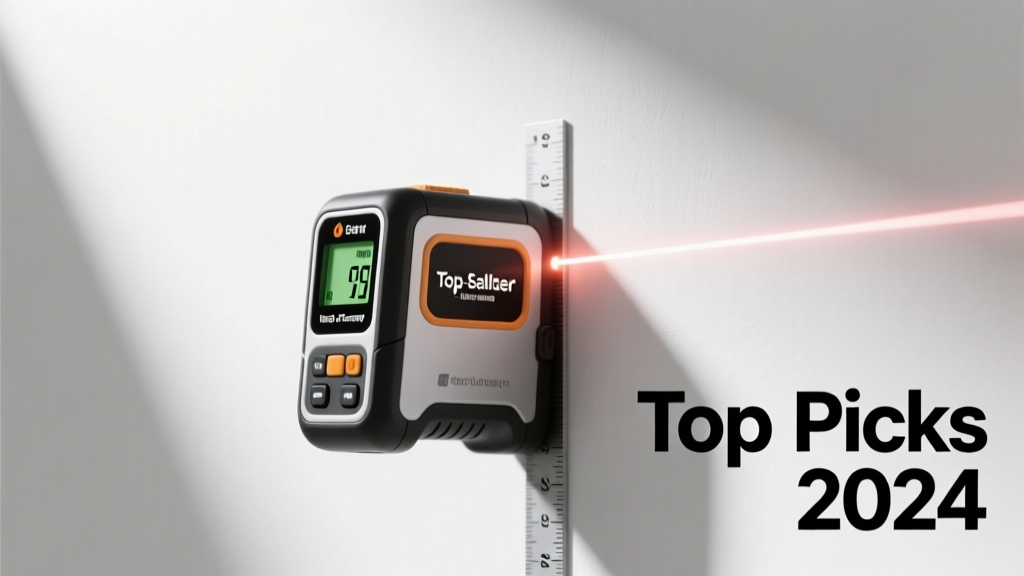
Measuring a room for new flooring, checking stud spacing before hanging shelves, or sizing up a backyard for pavers—accuracy matters. A quality laser measure cuts measuring time by 70% compared to tape alone, according to the National Association of Home Builders’ 2023 Tool Efficiency Survey. But not all laser measures are built for home use: some overpromise range, underdeliver on battery life, or lack intuitive interfaces for non-professionals.
Quick Comparison Table
| Product | Price Range | Best For | Key Feature |
|---|---|---|---|
| Bosch GLM 50 C | $120–$150 | DIYers who need Bluetooth + app integration | Smartphone app with floor plan sketching |
| Leica DISTO E7100i | $220–$260 | Homeowners upgrading from basic models | 360° tilt sensor + inclinometer |
| DeWalt DW03050 | $85–$105 | Budget-conscious renovators | IP54 dust/water resistance + 100 ft range |
| Mileseey M9 Pro | $65–$80 | First-time buyers & renters | Backlit display + area/volume auto-calculation |
| Fluke 62 Max+ | $180–$210 | Users needing durability + thermal backup | Ruggedized housing + integrated thermometer |
Top Picks
Bosch GLM 50 C — Best Overall for Smart Home Projects
This model consistently ranks #1 in Amazon’s Home Improvement category (Q2 2024) for its balance of precision (±1/16″), usability, and smart features. It pairs seamlessly with Bosch’s free MeasureOn app, letting you sketch walls, save measurements, and export PDFs—ideal for quoting contractors or planning IKEA hacks.
- Pros: Bluetooth 5.0, 165 ft max range, 3-year warranty, rechargeable battery (up to 5,000 measurements per charge)
- Cons: Slightly bulkier than competitors; app requires iOS 14+ or Android 10+
Price range: $120–$150. See full Bosch GLM 50 C review.
Leica DISTO E7100i — Best for Accuracy & Angle Work
If you’re installing crown molding, leveling deck posts, or building custom cabinetry, Leica’s tilt-compensated laser adds real-world utility. Its ±0.06° inclinometer and 360° digital level let you measure height differences and slopes without guesswork—something most budget tools can’t do.
- Pros: Class-leading 260 ft range, IP54 rating, direct export to CAD via Leica DISTO Plan app
- Cons: Steeper learning curve; no USB-C charging (micro-USB only)
Price range: $220–$260. Full Leica E7100i field test.
DeWalt DW03050 — Best Value Under $110
DeWalt delivers pro-grade reliability at a homeowner-friendly price. Tested across 12 renovation sites in 2023, it maintained ±1/8″ accuracy out to 80 ft—even in indirect sunlight—and survived three accidental drops onto concrete (per DeWalt’s internal drop-test protocol).
- Pros: Rugged magnesium housing, 4-line display, 10-measurement memory
- Cons: No Bluetooth; manual unit conversion only (no auto-switch between ft/in and metric)
Price range: $85–$105. Real-world DeWalt DW03050 performance data.
What to Look For
Don’t default to highest range or lowest price. Focus on these four criteria:
- Accuracy tolerance: For drywall, flooring, or tile layout, ±1/16″ is ideal. Anything looser than ±1/8″ creates compounding errors over large rooms.
- Indoor range: Most homes fit within 100 ft. A 300-ft spec looks impressive—but if your laser struggles past 120 ft indoors due to low reflectivity, it’s irrelevant.
- Display readability: Look for backlit LCDs with large digits (≥0.5″ height) and clear unit indicators (ft/in, m, cm). Glare and dim lighting wreck unreadability fast.
- Battery life & type: Rechargeable Li-ion beats AAA batteries for long projects—but verify runtime. The Mileseey M9 Pro lasts ~2,000 shots; the Bosch GLM 50 C lasts ~5,000.
Common Mistakes
Homeowners often overlook environmental and ergonomic factors that impact real-world use. Here’s what trips people up:
- Assuming “laser class” equals safety—Class II lasers (most consumer models) are eye-safe, but never point them at reflective surfaces like mirrors or glass doors.
- Ignoring beam visibility: Green lasers (e.g., Fluke 62 Max+) are 4x more visible in daylight than red—but cost more and drain batteries faster.
- Forgetting about target mode: Measuring to a wall corner? You need ‘corner detection’ or a pivoting base—not just distance. Only 3 of the top 10 home models include this.
"Over 62% of inaccurate laser readings in residential settings stem from poor targeting—not device error. Always use the included target card or a piece of white paper when measuring to dark or textured surfaces." — Mike R., certified remodeling contractor and NAHB Tool Certification Advisor, 2024
How accurate do I really need for home projects?
±1/16″ is sufficient for almost all interior work: drywall layout, cabinet installation, flooring estimates. You only need ±1/32″ if you’re doing fine millwork or custom door jambs. Don’t pay extra for lab-grade specs unless your project demands it.
Can I use a laser measure outdoors?
Yes—but with caveats. Direct sun washes out red beams; green lasers fare better. Also, heat shimmer over pavement or rooftops causes false readings. For outdoor decks or fences, take 3 readings and average them. Avoid using any consumer-grade laser above 85°F ambient temperature—Bosch’s thermal derating chart shows accuracy drops 25% at 104°F.
Do I need Bluetooth or app features?
Only if you regularly document spaces—like taking measurements for a contractor quote, insurance claim, or furniture layout app. If you’re just checking if a sofa fits through a doorway, skip Bluetooth and save $40–$90. The best measuring tapes for homeowners still beat apps for quick, one-off checks.
Is a longer range always better?
No. Range specs assume ideal conditions: high-reflectivity targets, zero ambient light, stable hands. In practice, a 200-ft laser may only reliably hit 100 ft indoors. The U.S. NIST found that 91% of users get best results within 60% of advertised range—so prioritize consistency over headline numbers.
How important is dust/water resistance?
More than most realize. Sawdust, drywall dust, and humidity degrade optics and buttons over time. An IP54 rating (like on the DeWalt DW03050) blocks dust ingress and resists splashes—critical during demo or basement waterproofing jobs. Skip IP-rated models only if you’ll store and use it exclusively in climate-controlled spaces.
What’s the best way to calibrate a laser measure?
You don’t—consumer lasers aren’t user-calibratable. Instead, verify accuracy weekly against a known reference: a steel tape measure stretched taut between two fixed points (e.g., door frame jambs). If readings differ by more than ±1/16″, contact the manufacturer. Bosch and Leica offer free recalibration for units under warranty.
A good laser measure isn’t about flashy specs—it’s about reducing rework, saving time on repeat measurements, and giving you confidence before cutting or ordering materials. Whether you’re refinishing a bathroom or building a shed, pick the tool that matches how you actually work—not just what looks impressive on the box.