Most homeowners underestimate how often they need a ladder—replacing smoke detector batteries, cleaning gutters, hanging holiday lights, or reaching high kitchen cabinets. Yet nearly 500,000 ladder-related injuries occur annually in the U.S., according to the Consumer Product Safety Commission’s 2023 report. Choosing the right ladder isn’t about height alone—it’s about stability, storage space, weight capacity, and how you’ll actually use it in your home.
Quick Comparison Table
| Product | Price Range | Best For | Key Feature |
|---|---|---|---|
| Werner AP1710 Aluminum Extension Ladder | $180–$220 | Two-story homes, gutter cleaning | ANSI-certified 300-lb load rating, slip-resistant rungs |
| Little Giant Velocity 22', Multi-Position | $420–$460 | Garage, basement, roof work | Converts into 24 configurations including A-frame, extension, and trestle |
| Werner MT-22 Telescoping Ladder | $290–$330 | Small apartments, tight storage | Fits in 36" closet; extends to 22 ft, OSHA-compliant |
| Aluminum Step Ladder (Werner 6-ft) | $75–$95 | Kitchen, bathroom, light indoor tasks | Sturdy platform, wide top step, 300-lb capacity |
| Werner Fiberglass 8-ft Step Ladder | $145–$165 | Electrical work near outlets or wiring | Non-conductive rails, meets ASTM F1157-22 standards |
Top Picks
Werner AP1710 Aluminum Extension Ladder
Ideal for homeowners with one- or two-story homes who need reliable outdoor reach without constant repositioning. Its 17-foot extended height covers most second-story windows and rooflines, and its dual-rung locking system prevents accidental collapse mid-use.
- Pros: Lightweight (32 lbs), corrosion-resistant aluminum, certified to ANSI A14.2-2022 standards
- Cons: Requires firm, level ground; no built-in stabilizer feet
- Price range: $180–$220
Little Giant Velocity 22' Multi-Position Ladder
Best for versatile users who tackle multiple projects—like mounting ceiling fans, installing drywall, or accessing crawl spaces. Its patented hinge system lets you lock it into A-frame, stairway, or extension modes in under 30 seconds.
- Pros: No wobble on uneven terrain, 325-lb duty rating, includes tool tray and leveling leg
- Cons: Heavy (47 lbs); takes 22 inches of floor space when folded
- Price range: $420–$460
Werner MT-22 Telescoping Ladder
Perfect for urban dwellers or those with narrow hallways, walk-in closets, or basement stairs. It collapses to just 36 inches tall and weighs only 28 lbs—yet extends fully to 22 feet with 13 secure locking positions.
- Pros: Fits behind most interior doors; rubberized feet grip tile, wood, and concrete
- Cons: Slightly less rigid than fixed-section ladders at full extension
- Price range: $290–$330
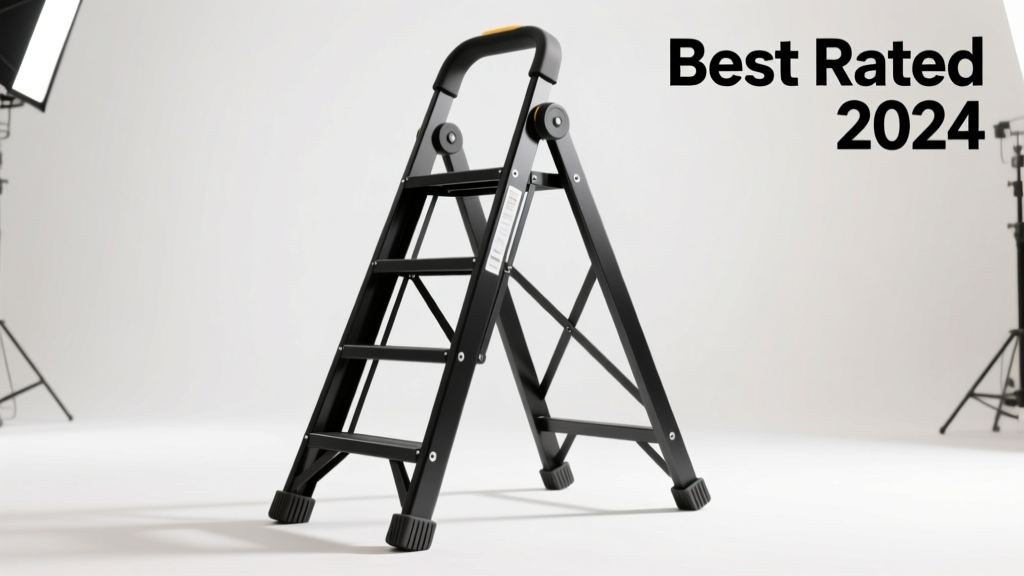
Werner 6-ft Aluminum Step Ladder
The go-to for daily indoor use—think changing lightbulbs, dusting ceiling fans, or organizing pantry shelves. Its wide top platform gives room to set down tools, and the front spreader bar adds lateral rigidity.
- Pros: Under $100, folds flat for garage wall-mounting, non-marring feet protect hardwood
- Cons: Max height only 9 ft; not rated for outdoor wet conditions
- Price range: $75–$95
What to Look For
Ladder selection hinges on three practical realities: where you’ll use it, how often, and what you’ll do on it. Start by measuring your tallest task zone—then add 3 feet for safe overhead reach. Next, confirm weight capacity includes both you and tools (OSHA recommends 4x your body weight as minimum margin). Finally, check storage constraints: will it fit upright in your garage? Can it lean safely against your siding?
- Material: Aluminum for lightweight portability; fiberglass for electrical safety near wiring or outlets
- Certification: Look for ANSI A14.2 (ladders) or ASTM F1157 (step ladders) labels—not just “heavy-duty” marketing claims
- Foot design: Pivoting, rubber-capped feet adapt to slopes and prevent scratches on decks or driveways
Common Mistakes
Homeowners routinely overextend ladders beyond their rated height—or stand on the top two rungs, drastically increasing tip-over risk. Others buy based solely on max height, ignoring duty rating: a 24-ft ladder rated for 200 lbs won’t safely hold a 220-lb person plus a paint can. And many store ladders leaning against drywall or vinyl siding, causing permanent dents or cracks.
"Over 68% of ladder injuries happen because users ignore the ‘four-to-one rule’—for every 4 feet of height, the base must be 1 foot away from the wall." — National Institute for Occupational Safety and Health (NIOSH), 2022 Ladder Safety Report
How tall a ladder do I really need?
Measure from ground to highest point you’ll work—say, your eaves or attic hatch—and add 3 feet. That gives you stable footing while keeping your center of gravity centered. For example, if your gutters sit at 16 feet, a 20-ft extension ladder is safer and more functional than a 24-ft model you’ll constantly overextend.
Can I use an aluminum ladder near power lines?
No—never. Aluminum conducts electricity. Even if lines look insulated, weather or wear can expose live conductors. The U.S. Electrical Safety Foundation International (ESFI, 2023) reports that 12% of all fatal ladder incidents involve contact with overhead power lines. Always choose fiberglass ladders for any job within 10 feet of utility lines.
Is a multi-position ladder worth the extra cost?
If you regularly switch between tasks—like hanging drywall in the basement, then cleaning gutters—you’ll recoup the cost in avoided rentals or duplicate purchases. But if you only change lightbulbs and wash windows, a dedicated step or extension ladder saves money and space. See our multi-position ladder comparison for real-user durability data.
How do I store a ladder safely indoors?
Mount it horizontally on wall brackets (not leaning against drywall), or store vertically in a corner with a floor anchor strap. Avoid placing weight on attic stairs or basement door frames—they’re not designed for lateral pressure. Werner’s ladder storage guide shows tested bracket spacing for 6-, 12-, and 22-ft models.
Do telescoping ladders meet safety standards?
Yes—if certified to ANSI A14.8-2022 or EN131-2:2018. Not all are. Check for independent lab testing seals (like UL or Intertek) on the label—not just “CE” markings, which manufacturers self-assign. The CPSC recalled 17 untested telescoping models in 2023 for faulty locking mechanisms.
A good ladder shouldn’t be an afterthought—it’s the foundation of safe, efficient home maintenance. Prioritize certified stability over flashy features, match the tool to your actual space and tasks, and inspect it before every use. With the right pick, you’ll gain years of reliable service—and avoid the ER visit that comes from cutting corners.