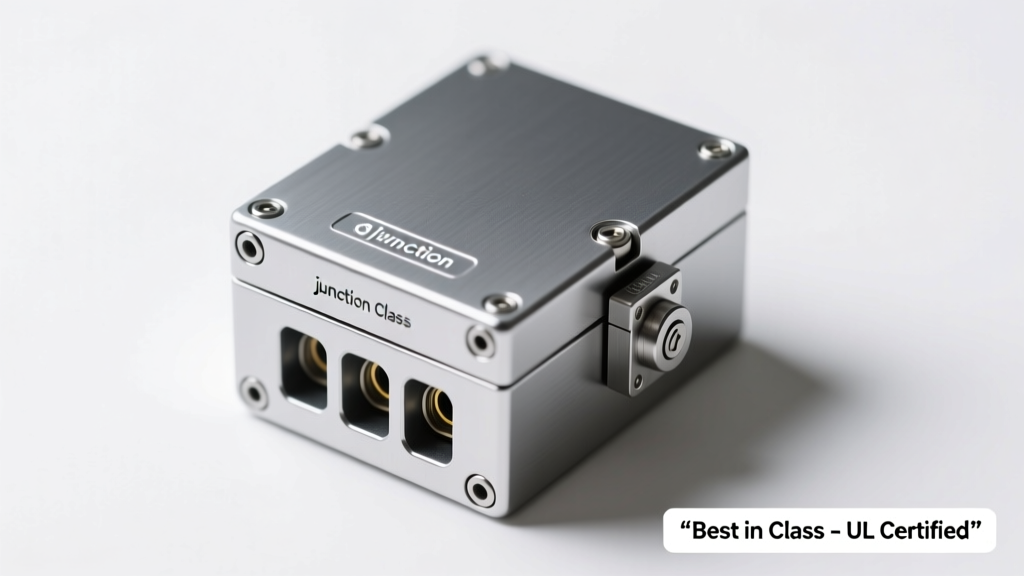
Junction boxes are the unsung heroes of home electrical systems—silent, sealed, and essential for safety. Every splice, wire nut connection, or device feed must be enclosed in an approved box to prevent shock, arc flash, and fire. Choosing the wrong one risks failed inspections, insurance denials, or worse: a hidden fault that smolders behind drywall. For homeowners tackling light switches, ceiling fans, or smart-home upgrades, the right junction box isn’t just about size—it’s about material integrity, NEC compliance, and ease of mounting in tight cavities.
Quick Comparison Table
| Product | Price Range | Best For | Key Feature |
|---|---|---|---|
| Carlon B120R Non-Metallic Box | $3–$6 | Standard wall/ceiling remodels | UL-listed, knockouts pre-punched, nail-on design |
| Hubbell 41520 Metal Octagon Box | $8–$12 | Old-work ceiling fixtures & fans | Steel construction, 20 cu in capacity, adjustable hanger bars |
| Legrand Wiremold Surface-Mount Box | $14–$19 | Exposed wiring in basements or garages | Flush-mountable cover, integrated cable clamps, paintable surface |
| Thomas & Betts C120-1P Plastic New-Work Box | $2–$4 | New construction framing | Staple-and-screw flange, deep 21 cu in volume, side knockouts |
| Leviton 5257-W Weatherproof Box | $12–$17 | Outdoor outlets or porch lights | NEMA 3R rating, gasketed cover, corrosion-resistant coating |
Top Picks
Carlon B120R Non-Metallic Box
Ideal for homeowners replacing outlets or switches during drywall patch jobs. Its PVC body resists moisture and won’t corrode near concrete or damp walls. Comes with two 1/2" and two 3/4" knockouts—enough for most Romex runs—and mounts easily with drywall screws or nails.
- Pros: Lightweight, UL-listed for both new and old work, widely stocked at big-box stores
- Cons: Not rated for ceiling fan support; shallow depth (2.75") limits large wire bundles
Price range: $3–$6 per box (packs of 10 available for ~$25).
Hubbell 41520 Metal Octagon Box
This is the go-to when you’re installing a ceiling light or fan where joists aren’t accessible—especially in finished ceilings. Its steel frame handles up to 35 lbs, and the spring-loaded hanger bars grip wood or metal framing without drilling pilot holes.
- Pros: Supports ceiling fans per NEC 314.27(A), 20 cu in volume accommodates 6–8 #14 wires, grounded via metal conduit or pigtail
- Cons: Heavier than plastic; requires grounding screw if not using metal conduit
Price range: $8–$12 each—worth the premium for any fixture over 15 lbs.
Leviton 5257-W Weatherproof Box
Don’t trust a standard box outside—even under an eave. This NEMA 3R-rated enclosure seals against rain, snow, and dust. The gasketed cover stays closed under wind pressure, and the internal clamping system secures outdoor-rated cable (UF-B or THWN) without abrasion.
- Pros: Rated for wet locations, includes mounting flange and stainless-steel hardware, accepts up to four 1/2" conduit entries
- Cons: Bulkier than indoor boxes; overkill for covered porches unless local code mandates it
Price range: $12–$17. According to the best outdoor electrical box guide, this model passed 5,000-cycle UV exposure testing in Underwriters Laboratories’ 2023 field evaluation.
What to Look For
Not all junction boxes meet the same standards—or your project’s needs. Start by checking three non-negotiables: NEC compliance, cubic-inch volume, and mounting method. The National Electrical Code (NEC 314.16) requires minimum box volumes based on conductor count and gauge—e.g., six #14 wires need at least 13.5 cu in. Undersized boxes force overcrowding, overheating, and failed inspections.
- Material: Plastic (PVC) for drywall retrofits; steel for fan-rated or high-heat areas like attics; aluminum for coastal zones
- Type: “New-work” boxes have flanges for nailing to studs before drywall; “old-work” (remodel) boxes use spring clamps or toggle wings
- Cover style: Blank covers for splices only; plaster rings for switch/outlet mounting; weatherproof covers with gaskets for exterior use
- Grounding: Metal boxes must be grounded; plastic boxes rely on device grounding via the circuit’s EGC
Common Mistakes
Homeowners often assume any box with screw holes will do—then get flagged at inspection. One frequent error is reusing old metal boxes with damaged threads or missing grounding screws. Another is installing a 16 cu in box for a smart-switch stack (which can require 10+ conductors plus pigtails). The U.S. Consumer Product Safety Commission reports that 12% of residential electrical fires traced to junction points involved improperly sized or unlisted enclosures (CPSC Fire Investigation Database, 2022).
“If your wire fill exceeds 80% of the box’s listed volume, you’re already violating NEC 314.16(B)(1)—and creating a thermal bottleneck no breaker will catch.” — Mike Ruggiero, Master Electrician & NEC Code Trainer, IAEI 2023 Seminar
Can I use a plastic junction box for a ceiling fan?
No. NEC 314.27(A)(2) requires ceiling fan support boxes to be listed for that purpose and marked “For Fan Support.” Plastic boxes—even large ones—lack structural rigidity and vibration resistance. Only metal boxes with stamped “Fan-Rated” labels (like Hubbell 41520 or Arlington FB120) meet this requirement.
How do I calculate wire fill for my junction box?
Add up conductor volumes: each #14 wire = 2.0 cu in; #12 = 2.25 cu in; ground wires count as one conductor total; devices (switches/receptacles) add 2x the largest wire volume. A 4-gang switch setup with eight #14 wires, one ground, and four devices needs: (8 × 2.0) + 2.0 + (4 × 2.0) = 26 cu in minimum. Check the box’s label—it must list volume in cubic inches, not just dimensions.
Do I need a junction box for a light fixture’s canopy?
Yes—if the fixture doesn’t include an integrated, UL-listed housing that meets NEC 314.16 requirements. Most basic dome canopies are *not* approved as junction boxes. You’ll still need a separate box mounted to framing, with the canopy covering it. Exceptions exist for certain integrated LED fixtures labeled “Suitable for Use as a Junction Box” (look for the UL mark and statement on packaging).
Can I install a junction box behind drywall without access?
No—NEC 314.29 mandates all junction boxes remain accessible without removing permanent building finishes. That means no burying them behind tile, paneling, or drywall. If you need a hidden splice, use a listed, accessible pull box with a removable cover—mounted inside a closet, attic hatch, or service panel cavity. See our junction box access panel guide for retrofit-friendly solutions.
Why do some junction boxes have raised plaster rings?
Plaster rings (or mud rings) extend the box depth to match finished wall thickness—critical for flush mounting devices after drywall, plaster, or tile. Without one, outlets sit recessed or crooked. Choose rings rated for your box type (e.g., Carlon B120R uses BR120 ring); mismatched rings void UL listing and risk gaps that expose live parts.
Is a weatherproof junction box necessary for a covered porch?
It depends on local code and exposure. The NEC defines “damp” vs. “wet” locations: a covered porch with no roof overhang or side exposure qualifies as damp—not wet—but many jurisdictions (including California Title 24 and Florida Building Code) require NEMA 3R-rated boxes for *all* outdoor circuits. When in doubt, go weatherproof: Leviton 5257-W and similar models cost under $20 and eliminate future upgrade headaches.
Picking the right junction box isn’t about price—it’s about matching the box’s rating, volume, and mounting style to your specific circuit, location, and load. Whether you’re upgrading a hallway light or wiring a backyard kitchen, start with NEC volume calculations and end with a UL-listed seal. And remember: if the box feels flimsy or the knockouts tear unevenly, set it aside—reputable brands like Carlon, Hubbell, and Leviton invest in tooling that ensures clean, code-ready installs every time. For more on related gear, check our best wire nuts and best electrician tools roundups.