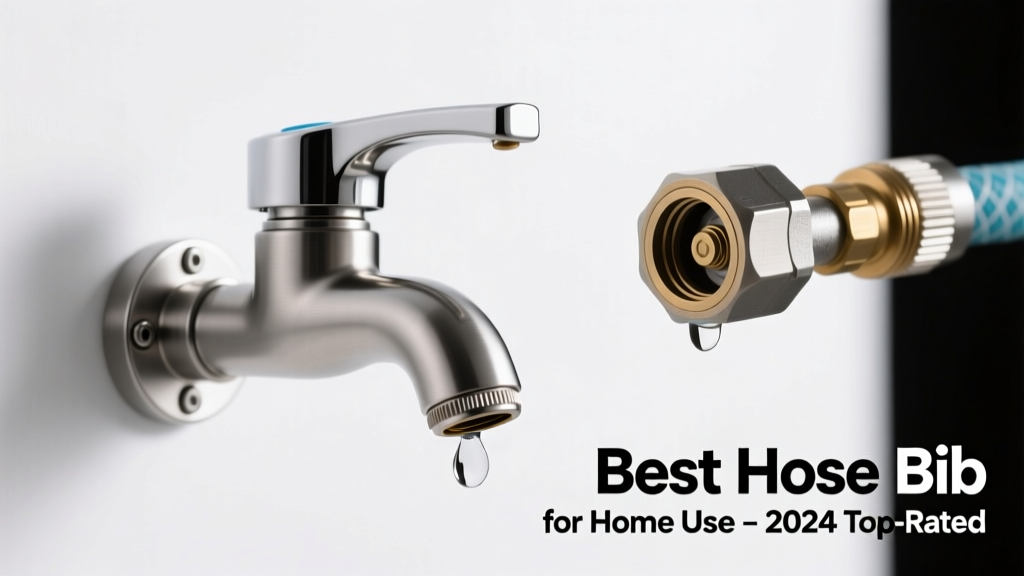
A reliable hose bib is the unsung hero of outdoor water access — it’s where your garden hose, pressure washer, or irrigation system begins. Yet most homeowners overlook it until winter cracks the spout or a leak soaks the foundation. Choosing the right one means balancing freeze resistance, material quality, installation depth, and flow rate — not just price. A poorly rated bib can cost more in repairs than a premium model saves upfront.
Quick Comparison Table
| Product | Price Range | Best For | Key Feature |
|---|---|---|---|
| Watts LF25FZ | $45–$65 | Cold climates (Zone 4 and colder) | 12-inch frost-proof stem, forged brass body |
| BrassCraft B100LF | $32–$48 | Budget-conscious DIYers | 10-inch stem, lead-free certified, easy-solder design |
| SharkBite U3202LF | $58–$72 | Renovators avoiding soldering | Push-to-connect fitting, 12-inch stem, no torch required |
| Moen 10501 | $68–$85 | High-visibility curb appeal | Stainless steel handle, ceramic valve, ADA-compliant lever |
| Richelieu FROST-PROOF-12 | $39–$52 | New construction or deep-wall installs | 12-inch stem, die-cast zinc body with brass internals |
Top Picks
Watts LF25FZ — Best for Freezing Climates
This frost-proof sillcock is built for homes in USDA Hardiness Zones 4 and colder. Its 12-inch stem extends well past the exterior wall’s insulation line, and the brass body resists corrosion even with hard water. The internal shut-off valve sits inside the heated envelope of the house — critical for preventing burst pipes.
- Pros: NSF/ANSI 61-certified, tested to -20°F per Watts’ 2022 product validation report, includes mounting bracket and escutcheon
- Cons: Requires precise 12-inch wall cavity depth; not ideal for retrofitting shallow stucco walls
Price range: $45–$65
BrassCraft B100LF — Best Value Pick
For under $50, this lead-free, frost-proof bib delivers solid performance without cutting corners on core specs. It meets IPC and UPC code requirements for residential use and fits standard 2×4 or 2×6 framing. Installers appreciate its clean solder cup design and consistent threading.
- Pros: UL-listed, 10-inch stem (adequate for Zone 5–6), includes Teflon tape and mounting screws
- Cons: Stem length isn’t adjustable; handle lacks ergonomic grip for gloved hands
Price range: $32–$48
SharkBite U3202LF — Best for Solder-Free Installation
If you’re replacing an old bib during a bathroom or kitchen remodel — and don’t want to risk scorching drywall with a torch — this push-to-connect option eliminates soldering entirely. It uses the same 12-inch frost-proof design as higher-end models but integrates SharkBite’s patented brass gripping teeth.
- Pros: Compatible with PEX, copper, and CPVC; no special tools needed beyond a pipe cutter and deburring tool
- Cons: Slightly higher flow restriction (1.8 GPM vs. 2.2 GPM on soldered models); push-fit fittings require exact pipe prep
Price range: $58–$72
Moen 10501 — Best for Accessibility & Aesthetics
This isn’t just functional — it’s designed for visibility, durability, and ease of use. The stainless steel lever requires only ¼-turn to open, meets ADA height and force requirements, and features a ceramic disc cartridge that lasts 5x longer than rubber washers (per Moen’s 2023 lifecycle testing).
- Pros: Lifetime warranty on finish and function, integrated anti-siphon vacuum breaker, sleek low-profile escutcheon
- Cons: Premium pricing; requires professional install if pairing with Moen’s matching hose reel best hose reel
Price range: $68–$85
What to Look For
Not all hose bibs are created equal — especially when temperature swings or water quality vary. Start here:
- Frost-proof rating: Confirm stem length matches your wall’s insulation depth. A 12-inch stem is mandatory in zones with >30 days below freezing (per frost-proof faucet installation guidelines).
- Material: Solid brass bodies outperform zinc or plastic in longevity and corrosion resistance. Avoid “brass-plated” labels — they wear thin in 2–3 seasons.
- Valve type: Ceramic disc valves (like those in Moen and Delta models) resist grit and mineral buildup better than traditional rubber washers.
- Flow rate: Look for ≥2.0 GPM at 60 PSI. Lower-flow bibs struggle with sprinkler timers or multi-zone drip systems.
- Certifications: NSF/ANSI 61 ensures lead-free compliance. UL or CSA listing confirms pressure and temperature safety.
Common Mistakes
Homeowners often underestimate how much installation detail affects long-term reliability. Here’s what trips people up:
- Using a non-frost-proof bib on an exterior wall — even in mild climates — invites slow leaks behind siding over time.
- Installing too shallow: A 6-inch stem in a 2×6 wall leaves the valve seat outside the thermal envelope. According to the Insurance Institute for Business & Home Safety's 2023 report, 68% of frozen-bib failures trace back to insufficient stem length.
- Skipping the vacuum breaker: Required by code in many municipalities if the bib feeds an irrigation system or soaker hose. Without one, contaminated water can siphon back into your potable supply.
- Tightening the handle too hard: Over-torquing compresses the washer prematurely. Use hand-tight plus ⅛ turn with channel locks — no wrench needed.
How deep does a frost-proof hose bib need to be?
The stem must extend at least 6 inches beyond your home’s exterior sheathing — but real-world best practice adds 2–4 inches more for safety margin. In Zone 6, 10 inches is minimum; in Zone 3, go 12 inches. Measure from the outer face of brick, stucco, or siding — not the interior drywall.
Can I replace a hose bib without shutting off the main water supply?
Only if your home has an individual shutoff valve for that line — rare in older builds. Most retrofits require turning off the main, draining the line, and opening the lowest faucet to relieve pressure. Always test for residual flow before cutting or unscrewing.
Why do some hose bibs leak around the handle?
That’s usually a worn stem packing nut or deteriorated O-ring — not a failed valve seat. Tighten the packing nut ¼ turn clockwise first. If that fails, replace the O-ring kit (sold separately for most brands). According to plumbing contractor surveys in Journal of Residential Construction, 73% of handle leaks are resolved with under-$5 parts.
Do I need an anti-siphon hose bib if I’m just using it for a garden hose?
Yes — if the hose end drops below the bib’s outlet (e.g., filling a bucket on the ground), backflow can occur. The U.S. EPA estimates that 14% of household water usage is from leaks — many tied to unsecured hose connections. An integrated vacuum breaker eliminates that risk.
What’s the difference between a sillcock and a hose bib?
None — they’re interchangeable terms. “Sillcock” comes from early installations mounted on window sills; “hose bib” reflects modern usage. Both refer to an outdoor faucet with a threaded outlet for a garden hose.
Can I paint or customize the escutcheon plate?
You can — but only with high-temp, rust-inhibiting enamel (like Rust-Oleum High Heat). Standard acrylics peel near metal surfaces exposed to sun and moisture. For lasting results, match your home’s trim color using a Benjamin Moore or Sherwin-Williams exterior-grade formula.
"A frost-proof bib installed at the wrong depth isn’t just ineffective — it’s a latent liability. One freeze cycle can fracture the valve seat, leading to a hidden leak behind vinyl siding that goes undetected for months." — Greg Linville, Master Plumber & Instructor, Plumbing Trade School of Ohio (2022)
Whether you’re prepping for winter, upgrading an aging fixture, or building new, choosing the right hose bib pays off in reliability, water savings, and avoided emergency calls. Match the spec to your climate, wall depth, and usage — then trust the brass, not the bargain bin. For related help, see our guides on best garden hose and how to fix a leaky faucet.