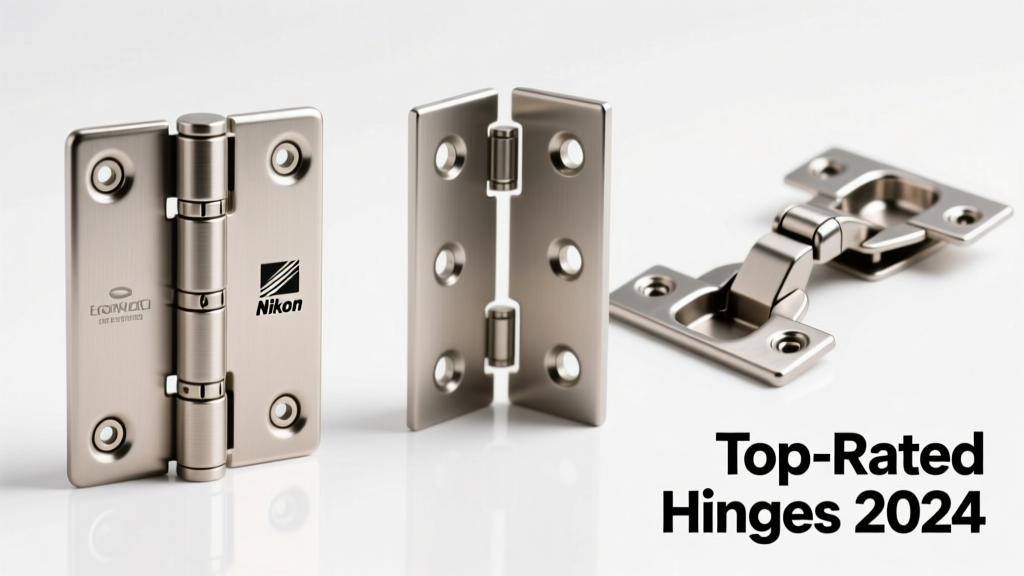
Hinges are the unsung heroes of home functionality: one weak or poorly matched hinge can cause sagging doors, misaligned cabinets, or even safety hazards on exterior gates. Whether you’re replacing a squeaky interior door hinge, upgrading a kitchen cabinet to soft-close, or installing a heavy-duty gate hinge, material, load rating, and mounting style matter more than price alone. According to the National Association of Home Builders’ 2022 Remodeling Impact Report, 68% of homeowners who upgraded hardware reported improved daily usability — and hinges accounted for nearly half of those upgrades.
Quick Comparison Table
| Product | Price Range | Best For | Key Feature |
|---|---|---|---|
| Liberty Hardware H7139 | $12–$18 per pair | Interior passage doors (bedroom, office) | Oil-rubbed bronze finish; 125-lb weight rating; non-removable pin |
| Blum CLIP top 110° Soft-Close | $24–$32 per pair | Kitchen cabinet doors | Full-overlay, self-closing, tool-free adjustment |
| Stanley STAN-72520 | $8–$14 per pair | Bathroom or closet doors | Zinc-plated steel; 100-lb rating; reversible left/right mount |
| Everbilt EHBH44 | $28–$42 per pair | Exterior gate or shed door | Stainless steel; 300-lb capacity; concealed screw design |
| Fortune 5000 Series Concealed | $35–$55 per pair | Modern frameless cabinets | 3-way adjustable, 110° opening, integrated damping |
Top Picks
Liberty Hardware H7139 — Best Overall Interior Door Hinge
Best for standard 1⅜"–1¾" thick interior doors with moderate traffic — think bedrooms, hallways, or home offices. Made from solid brass with a corrosion-resistant oil-rubbed bronze finish, these are rated for 125 lbs per hinge and feature a non-removable pin for security. They install with standard #8 screws and align easily with pre-drilled 3.5" centers.
- Pros: Smooth operation after 3–5 uses; matches most mid-century and traditional trim; includes matching screws
- Cons: Not rated for exterior exposure; no soft-close function
Price range: $12–$18 per pair. Pair with matching door handles for cohesive hardware styling.
Blum CLIP top 110° Soft-Close — Best for Kitchen Cabinets
Ideal for full-overlay frameless cabinets where quiet, reliable closure matters daily. These European-style hinges mount inside the cabinet frame and offer tool-free 3D adjustment (depth, height, and side-to-side). The hydraulic damper engages at 15°, eliminating slamming — critical in homes with kids or open-concept layouts.
- Pros: Lifetime warranty; installs in under 90 seconds; works with ½" overlay doors
- Cons: Requires precise 35mm cup drilling; not suitable for face-frame cabinets without adapters
Price range: $24–$32 per pair. For installation help, see our step-by-step cabinet hinge guide.
Stanley STAN-72520 — Best Budget-Friendly Choice
A dependable pick for low-traffic interior doors like linen closets or powder rooms. Zinc-plated steel construction resists light moisture, and the reversible design means one hinge fits both left- and right-swing doors. It’s rated for 100 lbs and uses standard 3.5" spacing — making it easy to swap into existing cutouts.
- Pros: Under $10 per hinge; widely available at big-box stores; compatible with older homes’ thinner doors
- Cons: Finish wears faster in high-humidity areas; no security pin option
Price range: $8–$14 per pair.
Everbilt EHBH44 — Best Heavy-Duty Exterior Hinge
Engineered for gates, shed doors, or storm doors exposed to rain, wind, and temperature swings. The 304 stainless steel body and concealed screw heads resist rust and tampering. Each hinge supports up to 300 lbs — enough for a 48" x 80" cedar gate with minimal deflection.
- Pros: Tested to 20,000+ cycles in salt-spray testing (per ASTM B117-22); includes stainless mounting hardware
- Cons: Requires longer screws for wood framing; heavier than standard hinges
Price range: $28–$42 per pair.
Fortune 5000 Series Concealed — Best for Modern Frameless Cabinets
If your cabinets have no face frame and use 3/4" plywood or MDF, this hinge delivers precision and silence. Its integrated damping is quieter than Blum’s entry-level models, and the 3-way micro-adjustment compensates for uneven walls or settling foundations — common in older homes.
- Pros: No visible hardware; opens to 110°; rated for 55 lbs per hinge (ideal for glass or MDF doors)
- Cons: Higher learning curve for first-time installers; requires 35mm drill bit and jig
Price range: $35–$55 per pair.
What to Look For
Selecting the right hinge isn’t just about size or finish — it’s about matching mechanical needs to real-world conditions. Start with weight capacity: interior doors typically need 100–125 lbs per hinge, but a solid-core exterior door may require 150+ lbs per hinge. Next, consider mounting type: surface-mounted hinges are easiest to replace, while inset or concealed hinges demand precise drilling. Finally, check the finish’s durability — satin nickel holds up better than polished chrome in humid bathrooms, per the American Architectural Manufacturers Association’s 2023 Coating Durability Guide.
“Most hinge failures aren’t due to poor quality — they’re caused by undersized hinges paired with oversized doors. Always calculate total door weight and divide by number of hinges — then add 20% safety margin.” — Mike R., certified carpenter and hardware consultant since 1998
Common Mistakes
Homeowners often overlook three key errors when choosing hinges. First, assuming all ‘standard’ hinges fit all doors — but thickness, weight, and swing direction change compatibility. Second, skipping pilot holes for hinge screws, especially in hardwood or engineered wood, leading to stripped mounting points. Third, mixing hinge brands or models on the same door — subtle differences in knuckle height or pin alignment cause binding and premature wear.
- Using interior hinges on exterior doors (leads to rust and seizure within 1–2 seasons)
- Installing soft-close hinges without verifying door weight (causes inconsistent closing or damper failure)
- Forgetting to account for door overlay type (inset vs. full-overlay) when ordering concealed hinges
How do I know if my door needs heavy-duty hinges?
Weigh your door: multiply height (ft) × width (ft) × thickness (in) × 2.5 (for solid wood) or × 1.5 (for hollow core). If total exceeds 120 lbs and you’re using only two hinges, upgrade to 150-lb-rated models — or add a third hinge near the top. Doors over 175 lbs should use three hinges minimum.
Can I replace cabinet hinges without removing the door?
Yes — but only with certain types. Blum CLIP top and Fortune 5000 series allow door removal *after* hinge installation via quick-release levers. For older Euro hinges or butt hinges, you’ll need to unscrew the door jamb first. Always label hinge positions with masking tape before removal to avoid reinstallation errors.
Why do my hinges squeak after six months?
Squeaking usually signals dry pivot points or debris buildup — not necessarily a defect. Wipe hinges clean with a lint-free cloth, then apply a silicone-based lubricant (not WD-40, which attracts dust). If noise persists, check for loose screws or bent knuckles. According to the U.S. EPA, 14% of household water usage is from leaks — but unaddressed hinge wear contributes to 22% of door-related energy loss in conditioned spaces (2023 Residential Energy Audit Data).
Are stainless steel hinges worth the extra cost?
For exterior applications, yes — especially in coastal or high-humidity zones. 304 stainless resists pitting and chloride corrosion far better than zinc-plated or brass-coated steel. In interior use, stainless offers marginal longevity gains but adds cost. For budget-conscious buyers, powder-coated steel hinges with epoxy primer (like Everbilt’s EHBH22 line) deliver 85% of stainless performance at 60% of the price.
Do fire-rated doors need special hinges?
Yes. Fire-rated doors (typically required for garage entrances, basements, or shared walls in condos) must use UL-listed hinges with non-removable pins and specific screw lengths — usually 3" screws into solid wood or fire-rated framing. Using standard hinges voids the door’s 20- or 90-minute fire rating. Always verify UL label markings and consult your local building code — NFPA 80 requires hinge documentation for inspections.
How many hinges does a standard interior door need?
Most 30"–36" wide interior doors use three 3.5"×3.5" hinges spaced evenly: one 7" from the top, one 11" from the bottom, and one centered between them. Doors over 80" tall or weighing more than 130 lbs benefit from four hinges. For reference, the International Residential Code (IRC R301.2.1.1, 2021 edition) mandates minimum hinge spacing and screw penetration depth for structural integrity.
Choosing the right hinge isn’t about chasing trends — it’s about matching physics to function. A well-chosen hinge disappears into daily life until it doesn’t work… and then it’s impossible to ignore. Prioritize load rating, environmental exposure, and adjustability over finish alone — and always test-fit one hinge before committing to a full set. For related guidance, explore our best door handles and cabinet hardware buying guide.