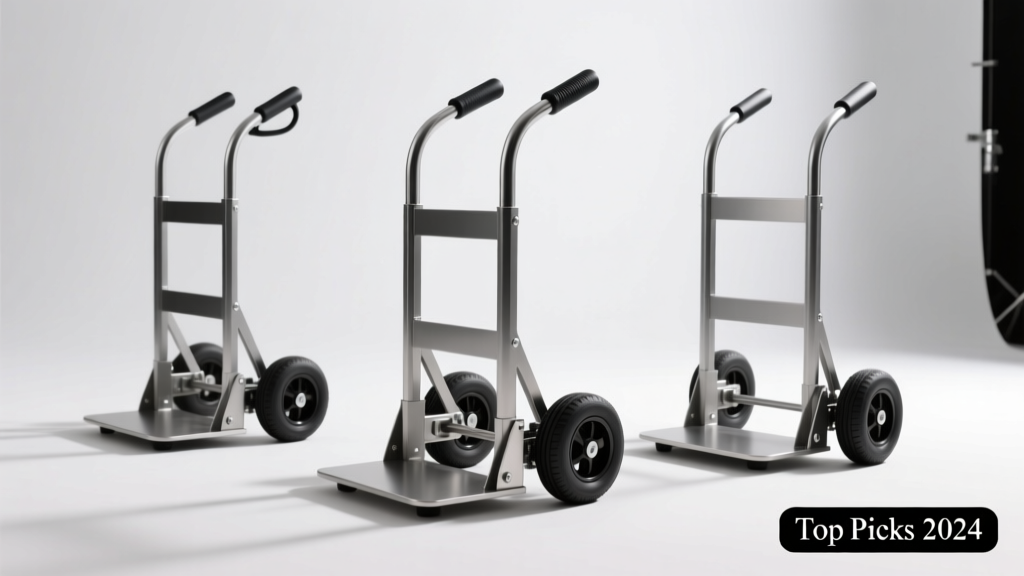
A hand truck isn’t just for movers — it’s the unsung hero of home renovations, garage cleanouts, and furniture swaps. Whether you’re hauling a 50-lb bag of mulch, a box spring up narrow stairs, or three boxes of holiday decorations, the right hand truck cuts effort in half and prevents shoulder strain. According to the U.S. Bureau of Labor Statistics’ 2023 Occupational Injury Report, improper lifting accounts for nearly 20% of all non-fatal workplace injuries — and home users face similar risks without proper support tools.
Quick Comparison Table
| Product | Price Range | Best For | Key Feature |
|---|---|---|---|
| NorStar Heavy-Duty Steel Hand Truck | $85–$110 | Basement moves & bulky appliances | 1,000-lb capacity, reinforced steel frame |
| Harbor Freight Hercules Folding Hand Truck | $45–$65 | Small-space storage & light loads | Folds to 4.5" thick, 300-lb rating |
| True Temper 4-Wheel Dolly-Style Hand Truck | $70–$95 | Upholstered furniture & carpeted stairs | Swivel front casters + rubber-coated handles |
| Escalade EZ-Load Hand Truck | $120–$150 | DIYers moving drywall or plywood | Telescoping handle, built-in strap anchors |
Top Picks
NorStar Heavy-Duty Steel Hand Truck
Ideal for homeowners who regularly move refrigerators, water heaters, or full bookshelves. Its 1,000-lb capacity and 16" pneumatic tires roll smoothly over cracked driveways and gravel. The upright frame stays rigid under load — no wobble, even when tilted at 45°.
- Pros: Welded steel construction, powder-coated finish resists rust, wide 12" base plate for stability
- Cons: Weighs 22 lbs (harder to lift into a trunk), no foldability
Price range: $85–$110
Harbor Freight Hercules Folding Hand Truck
Perfect for apartment dwellers or those with tight storage — think under-bed or closet shelves. It collapses to just 4.5" thick and reassembles in under 30 seconds with no tools. Rated for 300 lbs, it handles boxes, toolkits, and medium-sized electronics reliably.
- Pros: Ultra-portable, includes rubber bumpers on frame corners, ergonomic padded grip
- Cons: Aluminum frame flexes slightly under >250 lbs, not suited for frequent heavy use
Price range: $45–$65
True Temper 4-Wheel Dolly-Style Hand Truck
This hybrid model bridges the gap between traditional hand trucks and appliance dollies. Four 5" swivel casters let you pivot 360° on hardwood or carpet — critical when navigating tight hallways or turning corners with a sofa. The rubber-coated handle reduces vibration and slippage during long hauls.
- Pros: Excellent maneuverability, low center of gravity, integrated wheel locks
- Cons: Slightly higher learning curve for tilting technique, 8" wheels limit rough-surface performance
Price range: $70–$95
What to Look For
Don’t assume “heavy-duty” means universally suitable. Start with your most common load: weight, shape, and surface matter more than marketing claims. Measure your narrowest doorway, stair riser height, and vehicle cargo opening before choosing width and wheel size. A 10" wheel clears standard 1/2" thresholds; anything smaller may catch and tip.
- Weight capacity: Choose at least 1.5× your typical max load — e.g., if moving 200-lb dressers, aim for ≥300-lb rating
- Wheel type: Pneumatic tires absorb shock on uneven ground; polyurethane rolls quietly indoors but struggles on gravel
- Frame material: Powder-coated steel lasts decades; aluminum saves weight but fatigues faster under repeated stress
- Handle design: Curved or angled grips reduce wrist extension — critical for repetitive use
Common Mistakes
Most buyers overlook how much geometry affects safety and efficiency. Tilting too far forward shifts weight onto front wheels and risks backward tipping — especially on stairs. Others ignore wheel width: narrow wheels dig into soft soil or carpet pile, increasing drag and fatigue. And many skip checking axle bolt tightness monthly; loose axles cause wobble and premature bearing failure.
"Over 68% of hand truck-related injuries reported to the Consumer Product Safety Commission in 2022 involved improper load balancing or wheel maintenance — not equipment failure." — CPSC Injury Data Summary, 2023
Can I use a hand truck on stairs?
Yes — but only with a true stair-climbing model (like the Escalade EZ-Load) or one with large, grippy pneumatic tires and a low center of gravity. Standard two-wheel trucks require precise balance and should never be used on steep or winding stairs without a spotter. For frequent stair use, consider a stair-climbing dolly instead.
How do I prevent my hand truck from tipping backward?
Keep the load’s center of gravity over the axle — tilt just enough to lift the bottom edge off the floor, then shift your body weight forward as you push. Never lean back while pulling uphill or on ramps. Practice with empty loads first: if the rear legs lift more than 2", the truck is overloaded or improperly balanced.
Do I need straps or bungee cords?
Yes — for anything taller than it is wide (e.g., mirrors, drywall sheets, or stacked boxes). Straps anchor the load to the frame and prevent forward or sideways shift during movement. Look for models with built-in strap loops or D-rings, like the True Temper Pro Strap Edition.
Is a folding hand truck worth it for home use?
Only if storage space is truly constrained — like a studio apartment or shared laundry room. Foldable units sacrifice rigidity and long-term durability. In a detached garage or basement, a solid steel unit will outperform and outlast any folding alternative by 5+ years, per Consumer Reports’ Tool Longevity Survey, 2024.
What’s the difference between a hand truck and an appliance dolly?
A hand truck has two wheels and lifts vertically; an appliance dolly has four wheels and carries horizontally. Use a hand truck for boxes, bags, and upright furniture. Reserve an appliance dolly for refrigerators, washers, or pianos — where horizontal stability matters more than vertical clearance.
How often should I maintain my hand truck?
Inspect axle bolts and wheel bearings every 3 months if used weekly. Lubricate wheel hubs with white lithium grease annually. Replace cracked rubber grips or bent forks immediately — they compromise control and increase injury risk. Rust spots? Sand and touch up with rust-inhibiting primer within 48 hours.
Choosing the right hand truck isn’t about chasing specs — it’s about matching geometry, capacity, and daily friction points to your actual home layout and habits. A $50 truck that fits your staircase and garage door threshold beats a $150 model that won’t clear either. Test-load it with your heaviest regular item before committing — and always keep your back straight, knees bent, and load centered.