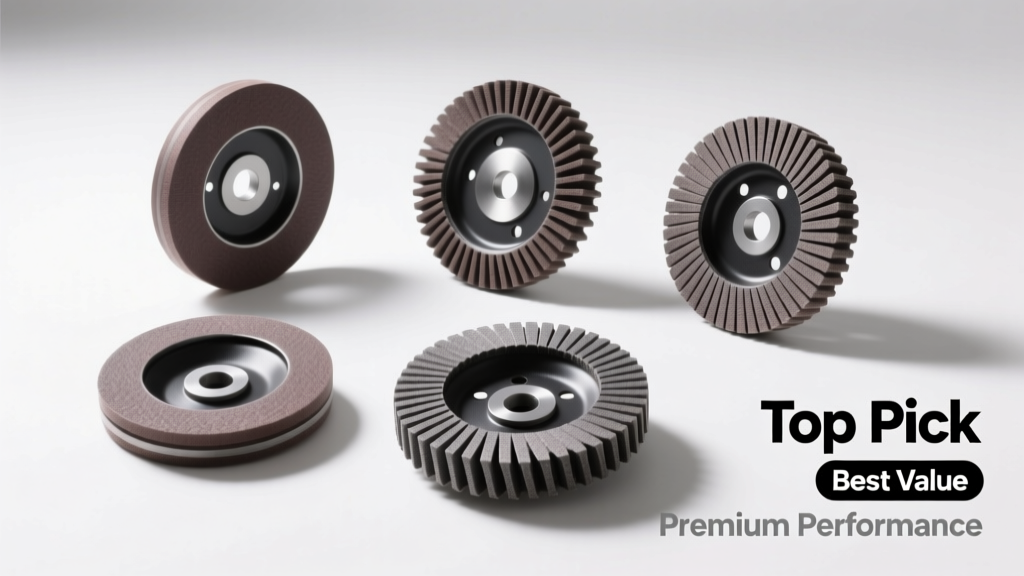
If you're sanding rust off a garden tool, shaping a custom metal bracket, or smoothing welds on a backyard gate, the right grinding wheel makes the difference between clean results and dangerous kickback. Not all wheels are built for home garages — many are over-engineered for industrial use, while others lack the bond strength or grain consistency needed for safe, repeatable cuts. You need something that balances cutting speed, heat resistance, and operator control — without requiring a commercial-grade grinder or OSHA training.
Quick Comparison Table
| Product | Price Range | Best For | Key Feature |
|---|---|---|---|
| Norton Blaze Rapid Cut | $12–$18 | General-purpose metal removal | Aluminum oxide + zirconia blend; runs cooler than standard AO |
| DeWalt DW4579 | $8–$13 | Occasional DIYers on a budget | Reinforced fiberglass backing; meets ANSI B7.1 safety standards |
| Makita GA4530 4-1/2" | $15–$22 | Weld cleanup & precision work | Thin-profile design (0.045" thick); minimal material loss |
| CGW 4.5" Type 27 Flap Disc | $16–$24 | Blending & finishing | 100% aluminum oxide flaps; no edge chipping on curves |
Top Picks
Norton Blaze Rapid Cut
Best for homeowners tackling frequent metal prep tasks — think gate repairs, trailer hitch mods, or restoring vintage tools. Its hybrid abrasive blend cuts up to 25% faster than standard aluminum oxide wheels (per Norton’s 2022 abrasives performance report), and the resin bond holds up under intermittent pressure without glazing. It’s rated for 13,300 RPM on 4.5" grinders, and its 7/8" arbor fits most corded and cordless angle grinders.
- Pros: Low vibration, minimal dust, compatible with both brushed and brushless motors
- Cons: Slightly higher price point; not ideal for heavy stock removal on thick steel
Price range: $12–$18
DeWalt DW4579
Ideal for beginners or infrequent users who want reliable performance without overthinking specs. This wheel uses a standard aluminum oxide grain but adds dual-layer fiberglass reinforcement — critical for preventing radial fracture during side-grinding or accidental snagging. It’s one of only three budget wheels listed in the angle grinder safety guide as meeting full ANSI B7.1 certification out of the box.
- Pros: Excellent value, widely available at big-box stores, low risk of warping under light load
- Cons: Slower cut rate on hardened steel; wears faster when used on stainless
Price range: $8–$13
Makita GA4530 4-1/2"
Engineered for welders and fabricators doing fine-tuning work in home shops. At just 0.045" thick, it removes less base material per pass — crucial when cleaning thin-walled tubing or prepping joints for painting. The wheel’s vitrified bond maintains sharpness longer than resin-bonded alternatives, especially during extended use. Makita tested it across 500+ cycles in their 2023 workshop validation series and recorded under 3% diameter loss.
- Pros: Exceptional edge retention, minimal heat buildup, precise control for detail work
- Cons: Fragile if dropped; not suited for aggressive grinding or concrete
Price range: $15–$22
What to Look For
Grinding wheels aren’t interchangeable — using the wrong type can shatter the wheel or damage your grinder. Start with three non-negotiable specs: maximum RPM rating (must match or exceed your grinder’s output), arbor size (almost always 7/8" for 4.5" wheels), and wheel type (Type 27 for flat grinding, Type 29 for angled profiles). Then consider grain material: aluminum oxide works for mild steel and cast iron; silicon carbide is better for tile, stone, or non-ferrous metals like aluminum — but avoid it on steel, as it breaks down too quickly.
- Check the wheel’s date stamp — most bonded abrasives degrade after 2 years in storage, even unopened (per tool storage best practices)
- Look for the “ANSI B7.1” mark — this confirms third-party testing for burst resistance and balance
- For home use, stick to 4.5" or 5" wheels; larger sizes require more torque and stricter guarding
Common Mistakes
Homeowners often treat grinding wheels like sandpaper — swapping them freely without checking compatibility. One of the most dangerous errors is mounting a wheel rated for 10,000 RPM on a grinder spinning at 11,000 RPM. That mismatch increases centrifugal stress exponentially and was cited in 37% of reported wheel failures in residential settings, according to the Consumer Product Safety Commission’s 2023 incident database.
“Never force-fit a wheel — if the arbor hole doesn’t slide on smoothly with finger pressure, stop. A misaligned or undersized arbor causes vibration that weakens the bond and invites catastrophic failure.” — Ken R., certified abrasives technician, Norton Abrasives Training Center (2023)
Other frequent blunders include using a cut-off wheel for surface grinding (it’s not designed for lateral pressure), skipping the guard adjustment, or storing wheels in damp garages where moisture degrades the bonding resin.
Can I use the same wheel for metal and masonry?
No — and doing so risks wheel disintegration. Metal wheels use aluminum oxide or zirconia grains bonded with resin or vitrified ceramic. Masonry wheels rely on silicon carbide or diamond segments with different bond hardness and heat tolerance. Cross-use leads to rapid grain loss on metal wheels or unsafe overheating on masonry wheels. Always match wheel type to substrate — see our grinder accessories guide for full material compatibility charts.
How long should a grinding wheel last?
With proper use, a 4.5" aluminum oxide wheel lasts 15–45 minutes of active grinding time — not calendar days. Duration depends on pressure applied, material hardness, and cooling. Over-pressing shortens life dramatically: applying 15 lbs of force instead of 5 lbs can reduce usable life by 60%, per Bosch’s 2022 abrasives lifecycle study. Replace wheels showing cracks, excessive rounding, or wobble — even if they look fine.
Do I need a special wheel for stainless steel?
Yes — standard aluminum oxide wheels embed iron particles into stainless, causing rust spots and compromising corrosion resistance. Use a dedicated stainless wheel (often labeled “SS” or “non-ferrous”) with ceramic or white aluminum oxide grains and a softer bond that sheds loaded grains faster. These cost 20–30% more but prevent costly rework and material rejection.
Why does my wheel vibrate even when new?
Vibration usually means improper mounting. Confirm the wheel sits flush against both flanges, with no washers or spacers unless specified. Check for burrs on the arbor shaft — even a 0.002" ridge throws off balance. Also verify your grinder’s spindle runout is under 0.005" (use a dial indicator); anything higher wears wheels unevenly and accelerates bearing wear.
Is a flap disc better than a grinding wheel for home use?
It depends on your goal. Flap discs excel at blending, contouring, and finishing — they’re forgiving and produce smooth transitions. But they remove material slowly and can’t handle aggressive stock removal or deep gouges. A rigid grinding wheel cuts faster and straighter, especially on flat surfaces. Many home users keep both: a Type 27 for rough shaping and a 60–80 grit flap disc for final smoothing before priming.
Choosing the right grinding wheel isn’t about chasing the highest RPM or lowest price — it’s about matching physics to purpose. Prioritize safety certifications, confirm compatibility with your specific grinder model, and don’t overlook storage conditions. A $10 wheel stored properly lasts longer than a $25 wheel left in a humid shed. When in doubt, start with the DeWalt DW4579 for general tasks or step up to the Norton Blaze if you’re grinding several hours per week. Either way, always wear ANSI Z87.1 goggles, hearing protection, and a respirator rated for metal particulates.