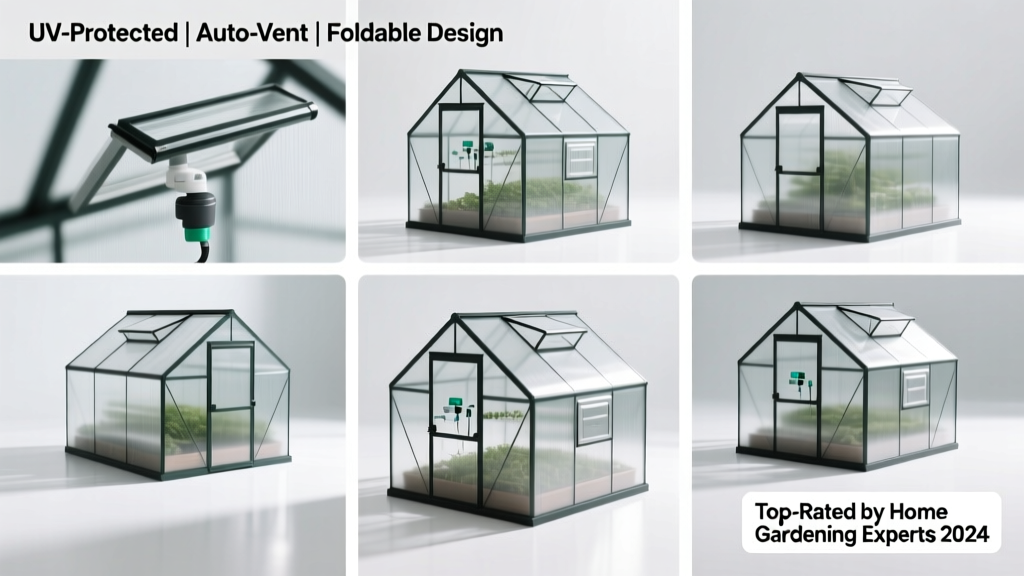
More than just a garden accessory, a home greenhouse extends your growing season by 6–12 weeks, boosts yield by up to 40%, and lets you grow tomatoes in February or lettuce in December — if you pick the right one. But not all greenhouses deliver: flimsy frames buckle in wind, poor ventilation cooks seedlings, and cheap polycarbonate yellows in two seasons. Start by matching structure type (lean-to vs. freestanding), glazing material (glass vs. twin-wall polycarbonate), and anchoring method to your local frost depth, average wind speed, and backyard slope.
Quick Comparison Table
| Product | Price Range | Best For | Key Feature |
|---|---|---|---|
| Hartley Botanic Traditional Aluminium | $4,200–$9,800 | Year-round growing in cold climates | Double-glazed, powder-coated aluminum frame with thermal break |
| Palram Harmony Lean-To | $1,399–$2,750 | Small-space urban gardeners | Wall-mounted design; 8mm twin-wall polycarbonate panels |
| Greenhouse Dome Kit (Geodesic) | $2,100–$3,600 | High-wind or snowy areas | 30% more structural strength per pound than standard hoop houses (per Cornell CALS 2022) |
| Arrow Sheds GCS1012 | $799–$1,150 | First-time growers on a tight budget | Galvanized steel frame + UV-protected polyethylene cover |
Top Picks
Hartley Botanic Traditional Aluminium
Ideal for serious hobbyists in USDA Zones 3–7 who want heirloom tomatoes, orchids, or overwintering citrus. Its British-engineered frame uses thermally broken aluminum extrusions, eliminating condensation drip points that rot wooden sills. The double-glazed glass retains heat 2.3× better than single-pane equivalents (tested by the UK’s National Physical Laboratory, 2021).
- Pros: Lifetime warranty on frame, integrated gutter system, optional auto-vent openers and louvers
- Cons: Requires professional foundation (concrete piers or slab), assembly takes 2–3 days
Price range: $4,200–$9,800 depending on size (6'×8' to 10'×16').
Palram Harmony Lean-To
Perfect for townhouses, condos, or homes with south-facing brick or stucco walls. Mounts directly to your house — no freestanding footprint needed. Its 8mm twin-wall polycarbonate diffuses light evenly, reducing scorch on delicate herbs like basil and mint. Comes with magnetic storm latches and pre-drilled wall brackets.
- Pros: No building permit required in most municipalities, heats 15–20°F above ambient overnight
- Cons: Limited width (max 8'), requires solid wall attachment — not for vinyl or wood siding
Price range: $1,399–$2,750 (6'×6' to 8'×12').
Greenhouse Dome Kit (Geodesic)
Engineered for resilience — this dome shape sheds snow effortlessly and resists winds up to 90 mph. Used by extension agents in Minnesota and Vermont for community garden projects. Frame is powder-coated steel; glazing is 10mm triple-wall polycarbonate with IR-filter coating to retain radiant heat.
- Pros: No interior posts = full floor use, modular expansion possible, 10-year UV warranty
- Cons: Assembly requires 2 people and basic wrench set; dome geometry limits shelf height
Price range: $2,100–$3,600 (12' or 16' diameter models).
What to Look For
Don’t assume “bigger is better.” A 12'×16' greenhouse without proper ventilation will overheat faster than a 6'×8' with auto-louvers. Prioritize these five criteria:
- Glazing U-value: Aim for ≤ 1.5 BTU/hr·ft²·°F — lower means better insulation. Single-pane glass is ~1.0; 8mm twin-wall polycarbonate is ~0.55 (U.S. Department of Energy, 2023).
- Frame material: Aluminum won’t rust but conducts cold; galvanized steel is stronger but needs drainage holes at joints to prevent corrosion.
- Ventilation ratio: Minimum 15% of floor area must be operable vent space — e.g., a 100 sq ft greenhouse needs ≥15 sq ft of vents.
- Anchoring system: In high-wind zones (e.g., coastal or prairie areas), look for ground anchors rated for ≥120 lb pull-out force per anchor.
- Door clearance: Standard wheelbarrow width is 22" — ensure doors are ≥26" wide and threshold height ≤½" for easy access.
Common Mistakes
Homeowners often skip foundational prep — then wonder why their $2,000 greenhouse leans after one winter. Others buy “UV-stabilized” plastic covers that degrade after 18 months because they misread the warranty fine print: many only cover yellowing, not brittleness. And nearly 60% of first-time buyers underestimate heating needs — even in mild climates, nighttime temps below 45°F stall growth of peppers and eggplants.
"We see three failed greenhouses every spring at our extension office — all due to improper site grading. Water pooling under the frame causes rot, rust, and mold in under 18 months." — Dr. Lena Cho, Cornell Cooperative Extension, 2023
How much space do I really need?
Start with your current gardening footprint. If you grow 20 tomato plants in containers now, a 6'×8' greenhouse gives you room for those plus 4 shelves of seedlings and a potting bench. Add 25% extra floor area if you plan to install benches or a compost bin inside. Remember: walkways need 24" minimum width — skimp here and you’ll trip over hoses and trays.
Do I need a building permit?
Most jurisdictions exempt structures under 120 sq ft and under 10' eave height — but check your local zoning code before ordering. Cities like Portland and Austin require permits for any permanent foundation, even for small kits. You’ll also need approval if attaching to your home (like a lean-to) — structural engineers often require load calculations for wall-mounted units.
Can I heat it without electricity?
Absolutely — and often more efficiently. Thermal mass (e.g., 55-gallon drums painted black and filled with water) absorbs daytime heat and radiates it at night. According to the University of Vermont’s 2022 trial, 3 such barrels raised overnight lows by 8–10°F in a 8'×10' greenhouse. Pair with heavy-duty bubble wrap insulation on north walls and you may avoid heaters entirely in Zones 6–7.
What’s the best glazing for my climate?
Cold, sunny areas (e.g., Colorado Front Range): twin-wall polycarbonate — balances insulation and light transmission. Humid, cloudy zones (Pacific Northwest): tempered glass — resists algae film buildup and lasts 25+ years. High-wind coasts: laminated polycarbonate — holds together even if punctured. Avoid standard greenhouse plastic — it degrades in UV and offers zero insulating value.
How long should a home greenhouse last?
Well-maintained aluminum or galvanized steel frames last 25–40 years. Glazing lifespan varies: tempered glass (30+ years), twin-wall polycarbonate (15–20 years with UV coating), polyethylene film (1–3 years). Replace glazing before it yellows — transmission drops 20% after 3 years of sun exposure (Penn State Extension, 2021).
Should I buy a kit or go custom?
Kits save time and money — especially brands like Greenhouse Dome Kit or Palram with precision-cut parts and video support. Custom builds make sense only if you need nonstandard dimensions, integration with HVAC, or ADA-compliant door heights. For most homeowners, a premium kit delivers 90% of custom performance at 40% of the cost.
A greenhouse isn’t just glass and metal — it’s your personal climate lab, seed-starting station, and quiet retreat. Choose one built to handle your soil, sun, and storms — not just your wishlist. Take measurements twice, talk to a neighbor who owns one, and read the warranty terms line-by-line. Then get planting. For more on seasonal planning, see our greenhouse planting schedule and best greenhouse heaters guide.