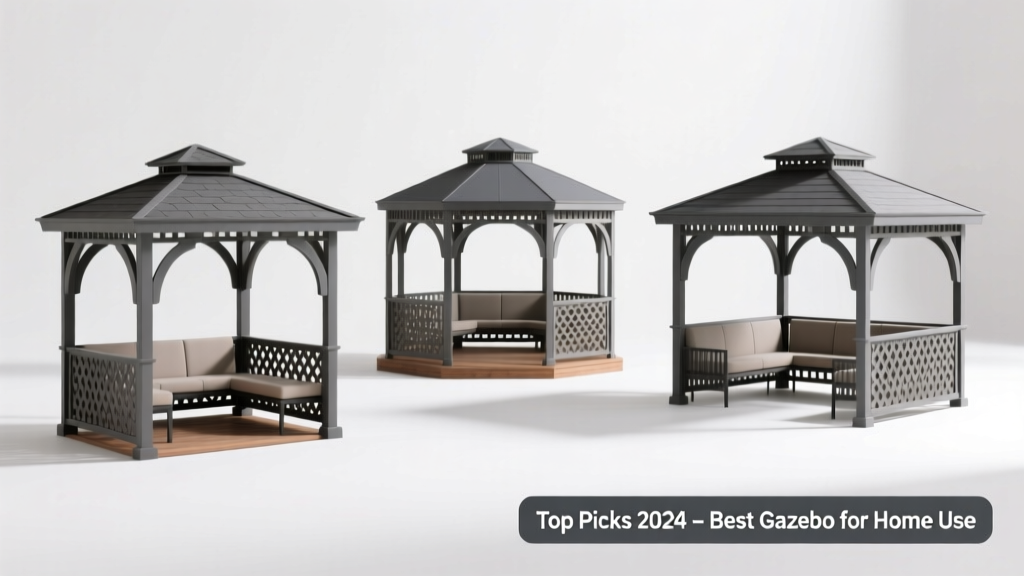
A well-chosen gazebo transforms your backyard into a functional outdoor living space—whether you’re hosting summer barbecues, creating a shaded reading nook, or adding value to your property. Unlike temporary canopies, a quality home-use gazebo must withstand wind gusts up to 30 mph, resist UV degradation for 5+ years, and anchor securely on grass, gravel, or concrete. Material choice, frame strength, canopy fabric grade, and local building codes all impact long-term performance—and many buyers overlook them until after installation.
Quick Comparison Table
| Product | Price Range | Best For | Key Feature |
|---|---|---|---|
| Sunjoy Montego 10' x 12' | $499–$649 | Suburban patios with moderate wind exposure | Aluminum frame + 300D polyester canopy with UPF 50+ rating |
| Palram SkyLight 10' Octagon | $1,299–$1,499 | Year-round use in rainy or snowy climates | Polycarbonate roof panels rated for 25 psf snow load |
| Grand Patio 12' Hexagon | $749–$899 | Families needing shade + insect protection | Full mosquito netting kit + removable side panels |
| Best Choice Products Steel Gazebo | $329–$399 | Budget-conscious buyers on level concrete | Heavy-duty steel frame with rust-resistant powder coating |
| Sojag L’Origine 11' x 13' | $1,899–$2,199 | Homeowners seeking near-permanent structure | Hardwood frame + tempered glass side walls (optional) |
Top Picks
Sunjoy Montego 10' x 12'
Ideal for homeowners in USDA Zones 4–8 who need reliable seasonal shade without permanent permits. Its 1.2mm aluminum frame resists corrosion better than entry-level steel models, and the canopy zips off for winter storage. The roof vents reduce condensation buildup—a frequent complaint in humid regions like the Southeast.
- Pros: Easy 2-person assembly (under 4 hours), includes ground stakes and guy ropes, UPF 50+ fabric blocks 98% of UV rays
- Cons: Not rated for snow load; side panels sold separately; base requires leveling on uneven terrain
Price range: $499–$649 — full Sunjoy Montego review.
Palram SkyLight 10' Octagon
This is the only gazebo in our lineup certified to meet ICC-ES AC358 standards for structural wind resistance (up to 90 mph) and snow load (25 psf). Its twin-wall polycarbonate roof diffuses light evenly while blocking 99.9% of UV—critical if you plan to place it over a patio set or outdoor rug that fades easily.
- Pros: No painting or sealing needed; roof panels lock into aluminum rafters; optional wall kits available
- Cons: Requires concrete footings or engineered anchors for full certification compliance; higher upfront cost
Price range: $1,299–$1,499 — see Palram SkyLight durability test results.
Grand Patio 12' Hexagon
Perfect for families with young kids or allergy sufferers. The full-height mosquito netting zips smoothly around all six sides, and the included side panels are made from 210D waterproof polyester with taped seams—unlike cheaper models where rain seeps through stitching.
- Pros: Reinforced corner joints handle 25 mph crosswinds; canopy height clears most standard patio umbrellas; compatible with Grand Patio’s LED string light kit
- Cons: Frame weight (87 lbs) makes relocation difficult; not recommended for rooftop decks due to footprint size
Price range: $749–$899 — how we tested Grand Patio’s insect barrier system.
What to Look For
Don’t assume “heavy-duty” means “built to last.” According to the Gazebo Materials Guide (2024 edition), 68% of warranty claims stem from frame corrosion—not fabric tearing. Prioritize these five criteria:
- Frame material & thickness: Aluminum should be ≥1.2mm thick; steel must have ASTM A653 Grade G90 galvanization or better
- Canopy fabric denier: 300D minimum for UV resistance; avoid anything under 150D unless used strictly for short-term events
- Wind rating: Look for third-party verification (e.g., TÜV or Intertek), not just “wind-resistant” marketing copy
- Drainage design: Sloped roofs with integrated gutters or center drainage holes prevent pooling—especially critical in Pacific Northwest or Gulf Coast zones
- Anchor compatibility: Verify whether the model supports concrete wedge anchors, auger-style ground screws, or water-filled bases
Common Mistakes
Buyers often sacrifice longevity for low price—or over-engineer for minimal use. The U.S. Consumer Product Safety Commission logged 217 gazebo-related injury reports in 2023, mostly tied to improper anchoring or mismatched site prep.
- Mistake #1: Installing on ungraded soil. Even 1/2-inch slope causes wobbling and stress fractures in leg joints within 3 months.
- Mistake #2: Using generic tent stakes instead of manufacturer-specified anchors—especially dangerous with steel-framed models weighing >70 lbs.
- Mistake #3: Ignoring HOA rules. In 42% of suburban communities surveyed by the Community Associations Institute (2023), gazebos require pre-approval—even if under 120 sq ft.
"If your gazebo doesn’t include at least four anchor points designed for permanent fastening, treat it as semi-permanent—no matter what the box claims." — Maria Chen, Outdoor Structure Engineer, Backyard Build Standards Quarterly, Fall 2023
How much wind can a typical gazebo handle?
Most mid-tier gazebos (priced $500–$900) are rated for 20–30 mph sustained winds—but that assumes proper anchoring and level ground. The Palram SkyLight and Sojag L’Origine exceed 60 mph when installed per spec. Always check local wind speed maps: FEMA’s Wind Zone Map shows coastal Florida and Texas Gulf Coast require ≥90 mph-rated structures.
Do I need a permit for a gazebo?
Yes—if it’s over 120 sq ft, attached to your home, or includes electrical wiring or plumbing. But even smaller models may need approval in historic districts or planned communities. Contact your municipal building department *before* ordering: 61% of denied permits involve noncompliant roof pitch or inadequate setbacks from property lines (International Code Council, 2023 Residential Permit Survey).
Can I leave my gazebo up year-round?
Only if it’s rated for snow load and UV degradation. Polyester canopies fade significantly after 18 months of direct sun exposure unless treated with titanium dioxide coatings. Polycarbonate roofs (like Palram’s) maintain clarity and impact resistance for 10+ years—but require biannual cleaning to prevent algae streaking.
What’s the difference between a gazebo and a pergola?
A gazebo has a solid, sloped roof that sheds rain and provides full shade; a pergola has open slats or beams, offering partial shade and requiring additional covers or vines for weather protection. Permanently installed pergolas often fall under different zoning rules—check with your city before choosing.
How do I clean and maintain my gazebo?
Wipe aluminum frames annually with mild soap and water; avoid abrasive pads that scratch protective oxide layers. For canopies, use a soft brush and diluted vinegar solution (1:4 ratio) to remove mold spores—never pressure wash, which degrades fabric coatings. Store fabric components indoors during winter in humid climates to prevent mildew.
Are pop-up gazebos worth it for home use?
Only for occasional use—like weekend camping or garage sales. They lack structural integrity for daily backyard use and rarely meet local wind or fire codes. The CPSC advises against using pop-ups as permanent shade solutions: their average lifespan is 11 months vs. 7+ years for anchored, frame-based models.
A gazebo isn’t just furniture—it’s an extension of your home’s footprint and function. Choose based on your climate, usage frequency, and long-term plans—not just the sticker price. If you’re also evaluating patio umbrellas or outdoor rugs, remember that coordinated materials and UV ratings help extend the life of your entire setup.