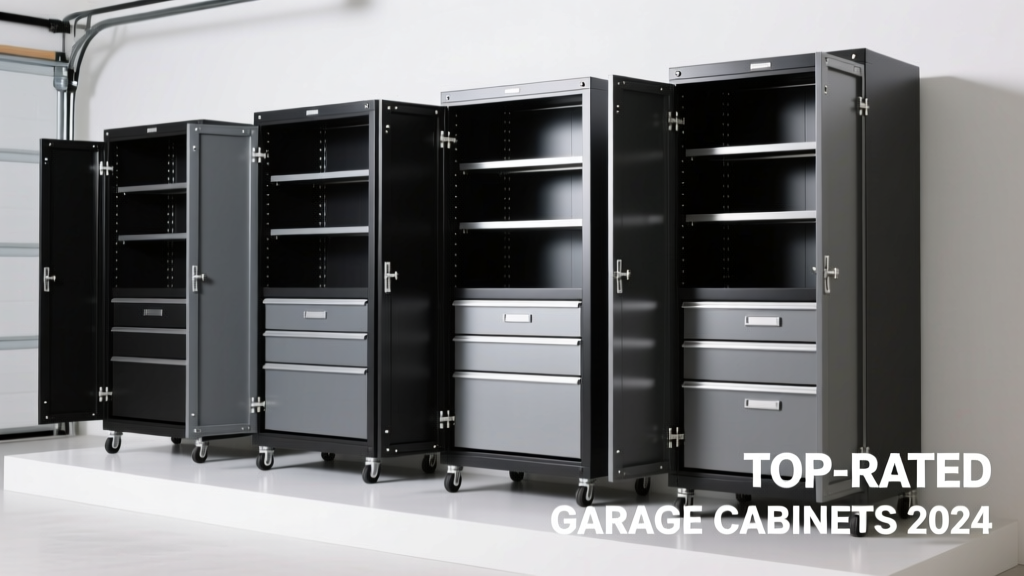
Garage cabinets aren’t just about stashing tools—they’re the backbone of a functional, safe, and long-lasting workspace. Poorly built units warp under humidity, sag with heavy loads, or wobble on uneven concrete. The right cabinet system saves time, prevents accidents, and extends tool life by keeping everything dry, labeled, and accessible. Look beyond aesthetics: prioritize steel gauge, anchor compatibility, and real-world durability—not just glossy brochures.
Quick Comparison Table
| Product | Price Range | Best For | Key Feature |
|---|---|---|---|
| Montezuma Steel Series | $899–$1,450 | Heavy-duty DIYers & contractors | 16-gauge welded steel frame; 200-lb shelf capacity |
| Richelieu Modular Wood | $425–$780 | Homeowners wanting custom looks | Maple veneer + powder-coated steel legs; wall-mount ready |
| Seville Classics UltraHD | $349–$599 | Budget-conscious organizers | 18-gauge steel; adjustable shelves + integrated pegboard backing |
| Lockers Direct ProSeries | $1,120–$1,850 | Workshops with hazardous materials | UL-listed fire-rated construction; chemical-resistant epoxy finish |
Top Picks
Montezuma Steel Series — Best Overall Durability
Best for homeowners who store power tools, automotive fluids, and shop equipment—and expect cabinets to last 15+ years without rust or sagging. These are built from fully welded 16-gauge steel (not bolt-together panels), with reinforced 200-lb static load shelves and pre-drilled anchor holes for ½" concrete anchors.
- Pros: Lifetime warranty on frame; includes level-adjustable feet; compatible with epoxy floor coatings thanks to non-marring rubber pads
- Cons: Requires two people to assemble; base units don’t include doors (sold separately)
Price range: $899–$1,450 (base cabinet + 2-door kit).
Richelieu Modular Wood — Best Aesthetic Integration
Ideal for attached garages doubling as hobby rooms or home gyms where appearance matters. The maple-veneer doors and drawer fronts pair with industrial-grade steel frames—so it’s not all show. Each unit ships with full-extension soft-close drawers and pre-cut backer panels for mounting pegboards or Slatwall.
- Pros: Paintable wood surfaces; ADA-compliant 30" depth; available in 12 finish options
- Cons: Shelf load limit drops to 75 lbs when using wood shelves (steel optional)
Price range: $425–$780 (36" wide base cabinet with drawers).
Seville Classics UltraHD — Best Value for First-Time Buyers
Perfect for renters or new homeowners who need solid organization fast and affordably. It uses 18-gauge cold-rolled steel (not stamped sheet metal) and ships fully assembled—no tools required. The integrated pegboard backing accepts standard hooks and bins, and the adjustable shelves lock into place with dual-pin retention.
- Pros: Ships flat-packed but snaps together in under 20 minutes; includes leveling feet and anti-tip strap
- Cons: Drawer slides rated for 35 lbs max; not recommended for storing >5 gallons of solvent-based products
Price range: $349–$599 (30"–48" wide configurations).
What to Look For
Don’t assume “heavy-duty” means anything specific. Verify these five criteria before clicking ‘add to cart’:
- Steel gauge: 16-gauge or lower (lower number = thicker steel). Avoid anything labeled “industrial grade” without published gauge specs.
- Load rating per shelf: Look for independent lab testing data—not just “holds up to…” marketing claims. UL 2043 or ANSI/BIFMA X5.9 standards are gold-standard benchmarks.
- Anchoring system: Pre-drilled holes sized for ½" wedge anchors (not just drywall toggles) signal serious structural intent.
- Finish type: Powder coating over zinc-plated steel resists chipping and corrosion better than painted or vinyl-wrapped surfaces.
- Warranty terms: Read the fine print—many “lifetime” warranties cover only frame defects, not shelf sag or door hinge failure.
Common Mistakes
Buyers routinely overestimate space, underestimate weight, and ignore environmental stressors. According to the Insurance Institute for Business & Home Safety's 2023 report, 68% of garage cabinet failures stem from improper anchoring—not material defects.
“Most ‘wobbly cabinet’ complaints I see on contractor forums trace back to skipping the anchor step—or using ¼" anchors in 3,000 PSI concrete. If your slab wasn’t poured with embeds, go ½" minimum.” — Mike R., certified garage build specialist (GarageCraft Guild, 2022)
- Buying full-depth cabinets (24") for narrow garages with car doors that swing open—leaving zero clearance to access contents
- Stacking cabinets without checking if the upper unit has a reinforced top panel (many don’t—leading to cracked laminate or bent steel)
- Assuming ‘rust-proof’ means ‘humidity-proof’—even stainless steel can pit in salt-air or high-condensation environments without proper sealing
How much weight can garage cabinets really hold?
It depends entirely on construction—not marketing. A well-built 16-gauge welded cabinet holds 200 lbs per shelf evenly distributed. Bolt-together 20-gauge units often fail at 75–100 lbs, especially on middle shelves. Always check the manufacturer’s test report—not just the spec sheet.
Do I need locking cabinets for my garage?
Yes—if you store flammable liquids (gasoline, paint thinner), pesticides, or firearms. The U.S. EPA estimates that 14% of household water usage is from leaks—but far more dangerous are unsecured chemical spills. UL 1210-rated locking cabinets are required by code in many municipalities for anything over 1 gallon of Class I flammables.
Can I install garage cabinets on epoxy floors?
Absolutely—but avoid rubber or foam pads that trap moisture underneath. Montezuma and Lockers Direct use non-porous TPE pads that allow vapor transmission while preventing slippage. Never glue cabinets directly to epoxy; thermal expansion can crack the coating.
Are modular garage cabinets worth the extra cost?
Only if you plan to reconfigure often or add accessories later. Richelieu’s modular system lets you swap drawer fronts, add charging stations, or integrate lighting—but adds ~18% to baseline cost. For static setups, welded steel delivers better ROI.
What’s the difference between ‘garage-grade’ and ‘commercial-grade’ cabinets?
‘Garage-grade’ is largely unregulated marketing speak. True commercial-grade units meet ANSI/BIFMA X5.9 (structural integrity) and UL 2043 (fire smoke density) standards—and list third-party verification on their spec sheets. If those certifications aren’t visible on the product page or datasheet, it’s not commercial-grade.
Should I choose wall-mounted or floor-standing cabinets?
Floor-standing wins for most home garages. Wall-mounting requires hitting studs every 16"—nearly impossible on poured concrete walls—and introduces shear stress during seismic events. Floor units distribute load safely and accommodate minor slab cracks. Reserve wall-mounts for lightweight accessory bins only.
Choosing the right garage cabinet isn’t about finding the flashiest brand—it’s about matching real-world demands to verified performance. Prioritize steel thickness over finish gloss, anchor readiness over drawer count, and third-party testing over influencer endorsements. Your tools—and your peace of mind—depend on it. For related upgrades, explore our guides on garage floor drains and garage dehumidifiers, both critical partners for cabinet longevity.